

A Practical Guide to Harmonizing Your Space!
What Feng Shui Is and Why It Works
Feng Shui is a practical design system that aligns your surroundings with how you want to feel and live. At its core, Feng Shui helps Qi, the vital flow of energy, move through your home with ease. When Qi meets clear paths, balanced light and supportive shapes, you rest better, think clearly and act with more intention. This guide translates classic Feng Shui into simple actions you can apply in any home.
The Essentials You Need Before You Start
Before changing layouts or buying decor, set a clear intention and prepare the basics that make Feng Shui effective. Small maintenance tasks and light daily habits open space for Qi to circulate and make every other adjustment more potent.
Quick Prep Routine
Declutter by category for fifteen minutes a day so you build momentum without overwhelm. Fix what is broken because maintenance supports smooth Qi. Open windows daily to refresh air and light. Take quick photos before and after each change so you can evaluate results and stay motivated.
How the Feng Shui Framework Works
Feng Shui blends timeless principles with everyday design. Three pillars guide your decisions in any room and help you adapt ideas to your realities without superstition or excess.
Qi Flow
Qi behaves like a breeze and a stream. It slows down in cluttered corners and accelerates in long corridors. Use furniture placement, lighting and soft curves to guide a calm, steady flow through doors, hallways and main rooms.
Yin and Yang
Yin is restorative and soft. Yang is active and bright. Bedrooms and reading nooks thrive with more yin, while kitchens and home offices benefit from more yang. Define the main purpose of each room, then layer a touch of the opposite quality to avoid extremes.
The Five Elements in Practice
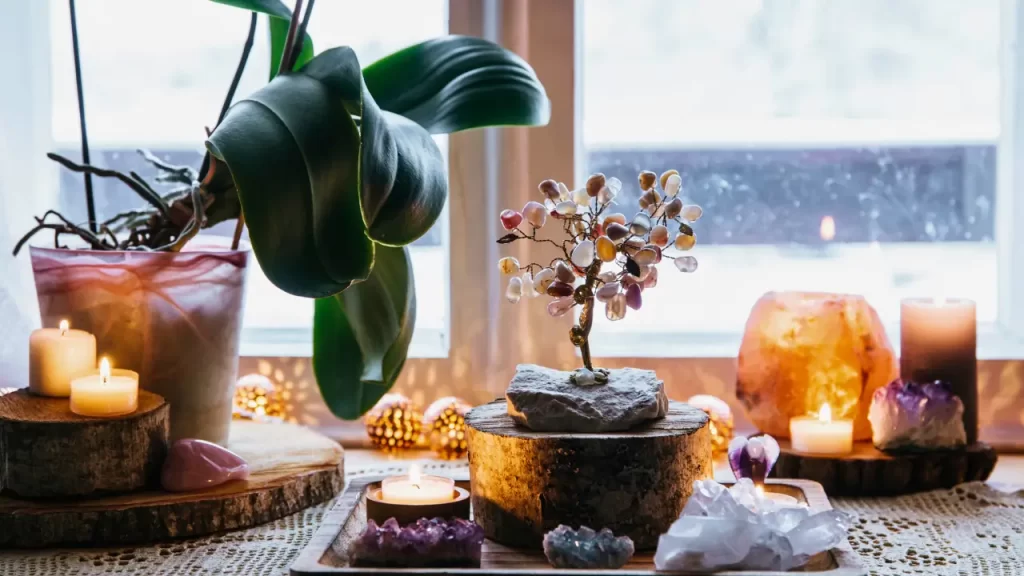
The five elements of Feng Shui are wood, fire, earth, metal and water. Each one carries colors, materials and shapes that nudge behavior and mood. Start with a neutral base, then use small accents to dial the feeling you want.
Wood
Supports growth, learning and fresh starts. Add vertical plants, bookshelves with upward lines and green accents.
Fire
Brings visibility, passion and drive. Use warm bulbs, candles used safely and small triangular motifs in art.
Earth
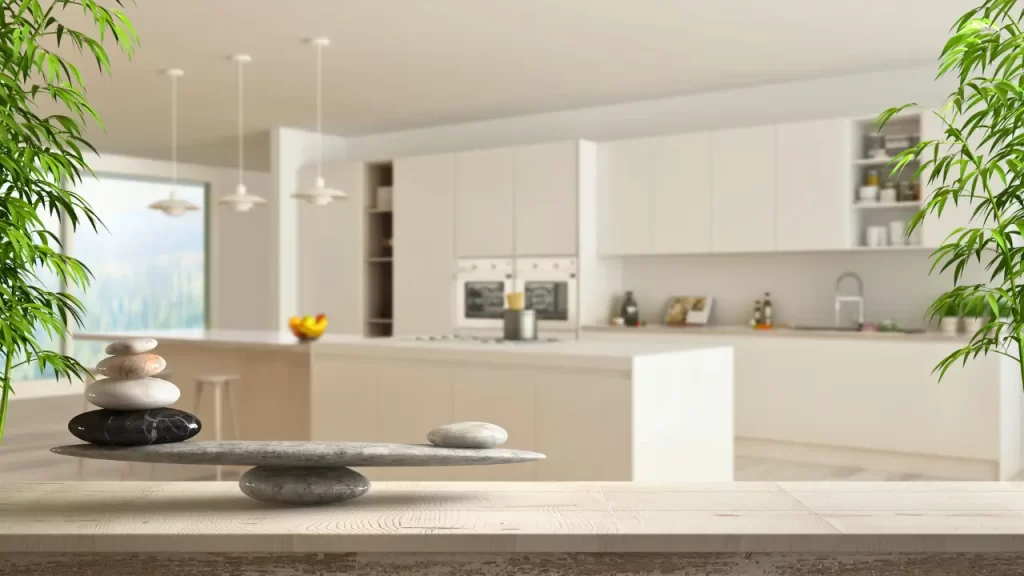
Builds stability and care. Add ceramics, stone, clay planters and square or low horizontal shapes.
Metal
Sharpens clarity and focus. Favor round shapes, metallic finishes and a simple, edited palette.
Water
Nourishes intuition and flow. Use deep blues, mirrors that reflect nature and gentle curves.
The Bagua Map in Simple Words
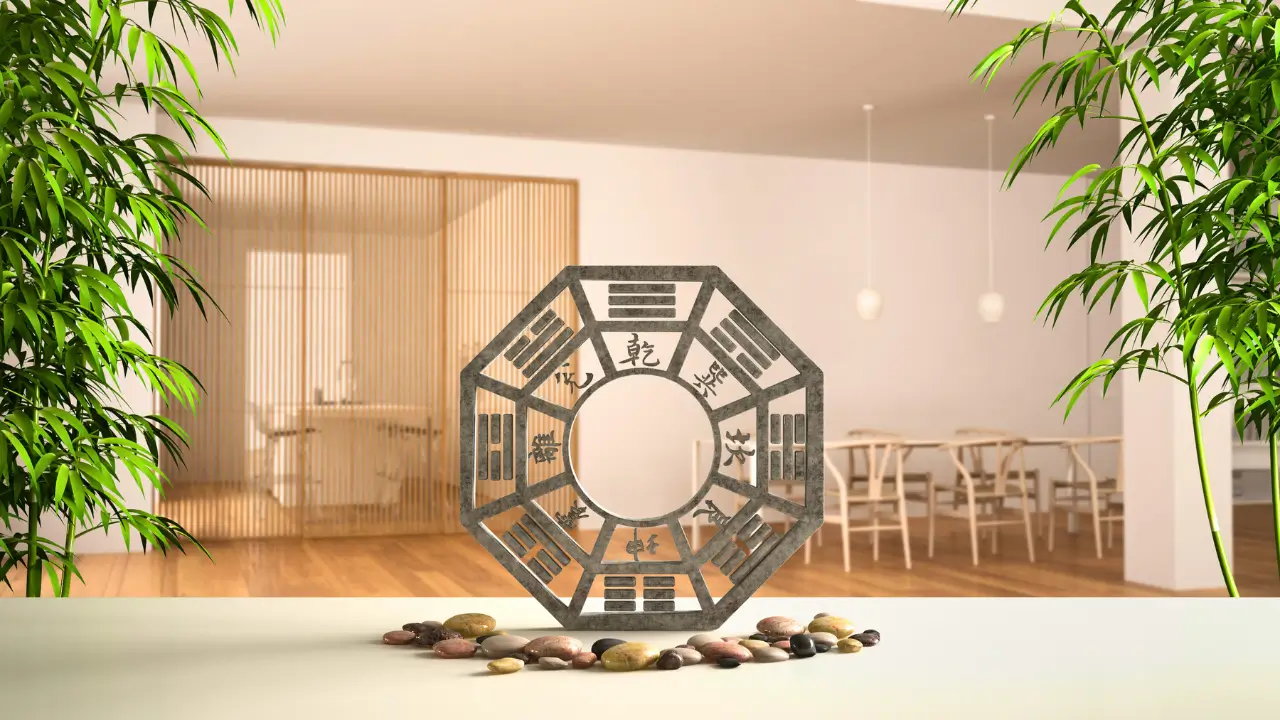
The Bagua divides a home into nine life areas such as career, knowledge, family, wealth, fame, love, creativity, helpful people and health in the center. You can overlay this map on your whole floor plan or on a single room to focus intentions and choose targeted upgrades that match your goals.
How to Place the Bagua at Home
Placing the Bagua is easier than it seems when you follow one consistent reference. Use the wall that contains your main entrance as the base line and keep orientation the same for the whole floor plan.
Step by Step
Stand at the main entrance from inside and face the room. Visualize or sketch a three by three grid over your floor plan. Label the bottom left as knowledge, bottom center as career and bottom right as helpful people. The center square is health. The top left is wealth, top center is reputation and the top right is love. Choose one life area to support for the next ninety days and focus your changes there.
Common Placement Mistakes
Trying to activate all nine areas at once dilutes effort. Relying on a single lucky object ignores flow, light and daily routines. Favor small, repeatable actions and review results every two weeks.
Twelve Practical Feng Shui Steps You Can Do This Month
Each step below includes a clear intention and a simple action so you feel progress quickly. Start with the entrance, then move clockwise through your home.
Clear the Entrance
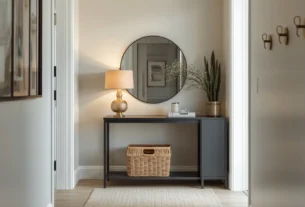
The entrance is the mouth of Qi. Keep the door opening wide and smooth. Add a clean mat, a healthy plant and good lighting. Remove piles of shoes and boxes. Place a small tray for keys to reduce visual noise and welcome opportunities in.
Create a Restful Bedroom
The bedroom anchors rest and repair. Position your bed so you can see the door without being directly in line with it. Use a solid headboard attached to the frame for support. Choose layered, dimmable lighting and breathable bedding. Keep the space under the bed clear to let Qi circulate.
Balance the Living Room for Connection
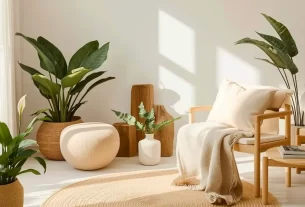
Your living room sets the tone for connection. Arrange seating in a gentle U or circle so conversation feels natural. Keep pathways open from door to sofa. Mix elements with plants for wood, a soft rug for earth and a round side table for metal. Avoid mirrors that bounce the front door back out.
Strengthen the Kitchen for Vitality
Kitchens represent nourishment and abundance in Feng Shui. Keep the stove clean and use all burners weekly to symbolize active resources. If sink and stove face each other, add wood between them with a cutting board or a potted herb to harmonize water and fire. Store knives out of sight and keep counters mostly clear.
Support Bathrooms so Energy Does Not Drain
Bathrooms contain many drains that can symbolically pull energy. Close lids and doors when not in use. Add earth tones with towels and a bath mat, and living plants to bring life back in. Ensure good ventilation and adequate light. Replace worn shower curtains and fix drips promptly.
Upgrade Your Home Office for Focus
Clarity at your desk translates into better decisions. Place the desk in command position where you see the door. If not possible, use a small rear facing mirror near the monitor to see who enters. Tidy cables, keep paperwork in closed storage and add a plant for steady growth. A round clock or tray brings metal clarity.
Improve Light and Air Quality
Light and air shift mood within minutes. Layer overhead, task and ambient lamps. Lift heavy curtains during the day. Clean filters and open windows daily. Choose easy plants like pothos or ZZ plant to naturally freshen the space and support smoother Qi.
Choose Colors by Intention
Color is one of the easiest Feng Shui tools. Decide how you want to feel, then add small accents to match. Greens and teals support renewal, soft reds and corals motivate action, sandy tones stabilize, whites and grays simplify and deep blues calm.
Use Art and Symbols that Match Your Goals
Art acts like a script for your subconscious. Select images that represent what you want more of. Landscapes suggest expansion, joyful family photos reinforce connection. Avoid lonely or chaotic images in the bedroom if you are calling in partnership. Place art at eye level and give it breathing room.
Bring Nature Inside with Materials that Feel Good
Natural textures calm the nervous system. Choose wood, cotton, wool, rattan and clay for warmth and tactile comfort. A single branch in a vase can refresh a shelf. Use rounded edges on high traffic pieces to keep flow soft and safe.
Make Small Spaces Work Hard
Limited space makes intention even more important. Define zones with rugs and lighting rather than walls. Use closed storage to hide visual clutter. Shield the bed from the door with a folding screen or bookcase. Choose tables with rounded corners and mirrors that reflect light or nature.
Create Weekly and Seasonal Rituals
Consistency multiplies results. Do a fifteen minute weekly reset to clear surfaces, water plants and open windows. With each season, rotate art, refresh cushion covers and revisit the Bagua area you chose for the quarter to keep momentum alive.
Room by Room Feng Shui Checklist
A quick checklist helps you repeat the basics without overthinking. Use it after your weekly reset and adapt it to your layout as needed.
Entryway
Clear floor. Working lamp. Healthy plant. Welcoming mat.
Living Room
Circular conversation. Open pathways. Plants and soft textures.
Bedroom
Commanding view of door. Solid headboard. Clear under bed. Dim light at night.
Kitchen
Clean stove. All burners used. Wood between sink and stove if they face.
Bathroom
Lids and doors closed. Earthy textiles. Fresh air and light.
Home Office
Desk in command. Cables hidden. Plant and a round metal accent.
Color Guide by Element
Use this guide to fine tune mood without redecorating the whole room. Add one or two accents at a time and observe how the space feels for a week.
Wood
Use greens, vertical lines and plants to support learning and new starts.
Fire
Use warm light and small crimson accents to energize and boost visibility.
Earth
Use sandy tones, ceramics and square shapes when you need stability and care.
Metal
Use whites, grays and round shapes to simplify and focus.
Water
Use deep blues, mirrors and curved lines to encourage insight and flow.
Plants that Pair Well with Feng Shui
Healthy plants lift stagnant corners and refresh air. Pothos, rubber plant, ficus, dracaena and peace lily are friendly options for most homes. Place upright plants in corners to lift Qi and avoid spiky cacti next to the bed or seating where you want to relax.
Small Space and Renter Friendly Adjustments
You do not need renovations to apply Feng Shui. Use removable hooks, peel and stick backsplashes and plug in sconces. Swap hardware on drawers for a subtle metal boost. Use fabric panels or a folding screen to define zones and hide work items after hours.
Common Mistakes to Avoid
It is easy to overdo when you are excited. Doing everything at once instead of building habits causes clutter to return. Overloading rooms with decor blocks movement. Ignoring squeaky doors, burnt bulbs and wobbly handles erodes results. Favor gentle, repeatable upkeep.
Your Ninety Day Starter Plan
A ninety day horizon helps you create change that sticks. Move through one focus area at a time and schedule a short review every two weeks to track wins and remove friction.
Weeks 1 to 2
Entrance refresh, light replacement and quick maintenance fixes that remove daily irritants.
Weeks 3 to 4
Bedroom reset. Headboard check, bedding update and clearing the space under the bed.
Weeks 5 to 6
Kitchen tune up. Clean stove, use all burners and place a small herb pot by the sink.
Weeks 7 to 8
Living room flow. Reposition seating, add a plant and soften sharp corners.
Weeks 9 to 10
Office clarity. Command desk, cable management and closed storage for papers.
Weeks 11 to 12
Bathroom balance. Ventilation check, fresh textiles and the habit of closing lids.
Key Takeaways and Next Steps
Feng Shui works best when it becomes a gentle rhythm. Instead of chasing one perfect object or an overnight makeover, choose small actions you can repeat. As you clear paths, balance light and align furniture with intention, Qi flows more freely and your home starts supporting how you want to live. Over a few weeks the results compound. Sleep deepens, focus gets easier and routines feel lighter. Return to your plan, revisit one Bagua area at a time and let each improvement guide the next.
If this guide helped you, share it with someone who is setting up a new home or save it to revisit during your next seasonal refresh.
Read next:
- 10 Powerful Indoor Plants to Transform Your Mood
- 7 Powerful Eco-Friendly Tips for a Healthier, Happier Home
- 5 Easy DIY Decor Ideas to Instantly Cozy Up Your Home
- 10 Powerful Benefits of Journaling for Daily Wellbeing
- 5 Simple Breathwork Exercises to Reduce Anxiety

Gui Perine
Gui Perine is the creator of Your Life in Full Bloom, a lifestyle website for women who want to live with more intention, beauty, and freedom after 50.
Through thoughtful articles on home, travel, reinvention, and everyday choices, she explores what it means to build a fuller life in a new season — one that feels calmer, more personal, and more aligned with who you are becoming.
Her work is inspired by real-life transitions, the desire for independence, and the belief that life after 50 can be a time of clarity, possibility, and renewal.

1 thought on “Feng Shui Made Easy: 12 Steps to Transform Your Home”