

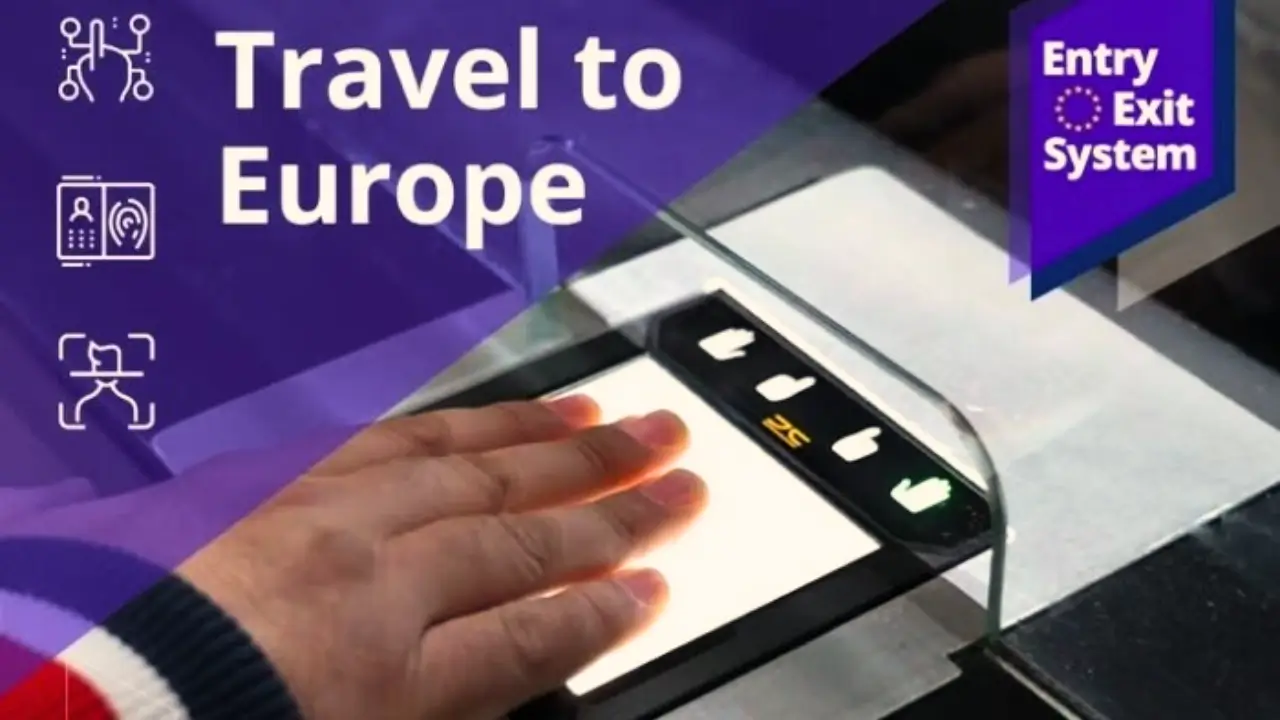
A new era has begun for travelers heading to Europe. Since October 12, 2025, the continent has introduced the Europe digital entry system (EES), marking the end of passport stamps and the start of biometric verification. Travelers’ fingerprints, facial images, and travel documents are now registered electronically as part of a digitalized border control process.
The goal is greater security, efficiency, and migration control, but the first days have been far from smooth. Airports across the continent faced long lines, technical glitches, and confusion as passengers adapted to the new reality.
In this guide, you’ll find what’s changing at European borders, how to register correctly, and what every non-EU traveler—including Brazilians—needs to know before boarding. Let’s explore how this major shift is reshaping the experience of arriving in Europe.
1. Europe’s Digital Entry System Is Officially in Place
After years of preparation and multiple delays, the Entry/Exit System (EES) officially launched across 29 Schengen countries. Created by the eu-LISA agency, the system replaces manual passport stamping with digital biometric registration.
It records each traveler’s entry and exit automatically, including name, passport number, travel dates, and location. The system is designed to improve border efficiency, detect overstays, and reduce irregularities.
For the first time, every non-European visitor is entered into a centralized database—a technological milestone that brings both innovation and new challenges.
2. Goodbye Passport Stamps: How the New System Works
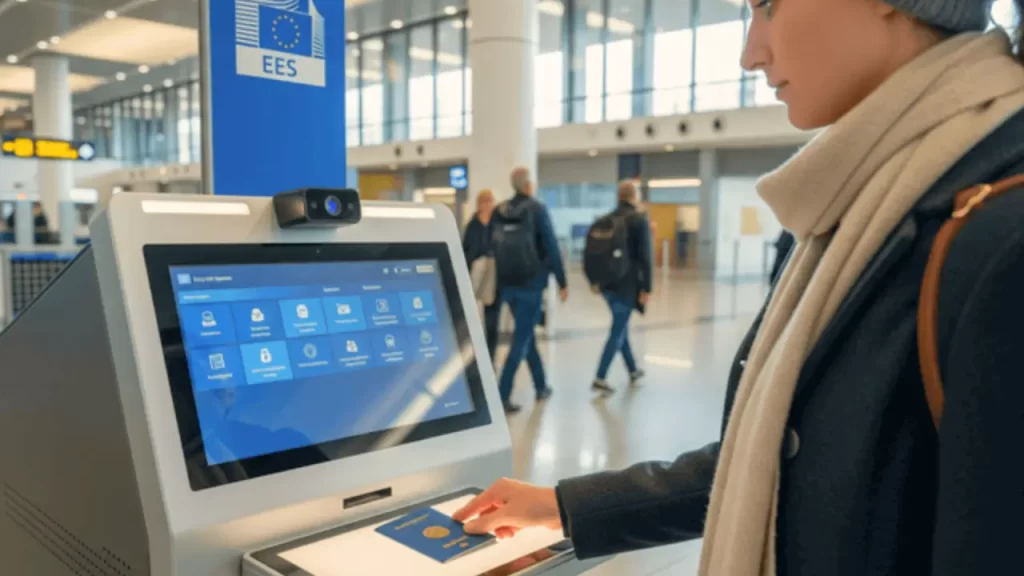
Upon arrival, travelers now go through an automated kiosk that captures:
- A digital scan of the passport
- Four fingerprints
- A facial photograph
All this information is securely stored and cross-checked with EU migration databases such as SIS II (Schengen Information System).
The system also calculates how long travelers stay within the 90-day limit in any 180-day period. When leaving Europe, their departure is automatically logged—no more manual checks or ink stamps.
This promises to streamline travel in the future, but during its first days, airports like Paris, Lisbon, Madrid, Milan, and Amsterdam faced major slowdowns as agents and machines adapted.
3. A Chaotic Start: Long Queues and Technical Failures
The launch week exposed operational difficulties. Reports from multiple European airports showed queues lasting up to four hours, particularly for passengers from non-EU countries.
In Lisbon’s Humberto Delgado Airport, travelers described endless lines, limited staff, and confusion about procedures. Many missed connections because of the delays. In Milan Malpensa, biometric scanners malfunctioned frequently, forcing staff to intervene manually.
Authorities acknowledged “temporary difficulties,” yet emphasized that such delays are expected during the rollout phase. Officials promised technical improvements and additional staff training in the coming months.
4. What It Means for Brazilian Travelers
For Brazilian citizens and other visa-exempt visitors, the EES changes the arrival experience significantly. During the first trip under the new system, travelers must complete the full registration process:
- Scan their passport.
- Provide four fingerprints.
- Have their facial photo taken.
- Wait for data validation before clearance.
The biometric record will remain valid for three years, meaning future trips will only require quick facial or fingerprint recognition.
EU citizens and legal residents will not go through this process; the system targets only non-EU visitors.
5. Expect Delays and Plan Ahead
Airlines such as TAP Air Portugal, Air France, and Lufthansa have started warning passengers to arrive at least three hours before departure for flights entering the Schengen area.
The European Commission confirmed that technical issues are being addressed and called this “an inevitable learning phase.” A six-month adaptation period is expected until April 2026, when the EES should be fully stable and synchronized across all member countries.
Travelers connecting through major European hubs are advised to allow longer layovers, stay patient, and follow airport guidance carefully.
6. Coming Next: The ETIAS Travel Authorization
The EES is only the first step in Europe’s border modernization plan. The next phase, the ETIAS (European Travel Information and Authorization System), is scheduled to start in late 2026.
Much like the U.S. ESTA program, ETIAS will require travelers from visa-exempt countries—such as Brazil—to complete an online pre-travel authorization and pay a small fee before boarding.
Once active, ETIAS will connect directly to the EES, automatically verifying past entries and exits. Together, they will create a digital framework that combines border security with pre-screening efficiency, reshaping the way people plan trips to Europe.
7. Privacy, Security, and the Future of Border Control
While the EES improves migration management, it also raises concerns about privacy and data protection. Advocacy groups like European Digital Rights (EDRi) warn that centralizing biometric data could increase surveillance risks.
The EU assures that all information is safeguarded under the General Data Protection Regulation (GDPR) and stored for only three years, unless the traveler violates immigration rules.
Experts see this system as the biggest transformation of border control since Schengen’s creation in 1995. For travelers, it represents a new digital identity at the frontier—each face and fingerprint now part of a continental database.
Practical Tips for a Smooth Arrival
- Arrive early: Plan to reach the airport at least three hours before departure.
- Keep documents ready: Have your passport and travel details easily accessible.
- Be patient: Queues may still occur while systems stabilize.
- Avoid short layovers: Choose longer connection times for international flights.
- Stay informed: Follow airline and EU border updates before your trip.
Did You Know?
- The EES currently operates in 29 countries, including Iceland, Norway, Liechtenstein, and Switzerland.
- Ireland and Cyprus remain outside the system due to independent border policies.
- The system will soon expand to land and sea borders, including Channel Tunnel crossings between France and the UK.

A Digital Era for Travelers – Europe Digital Entry System
Europe’s digital entry system marks a significant leap toward smarter borders—but innovation comes with growing pains. Travelers today face longer waits and stricter controls, yet these are the first steps toward faster, paper-free travel in the near future.
The familiar passport stamp is giving way to biometrics, algorithms, and instant verification. Adapting to this shift means understanding the process, preparing in advance, and embracing technology as part of the journey.
Planning to visit Europe soon? Share this article with fellow travelers and explore more inspiring travel guides on YourLifeInFullBloom.com to make every journey meaningful.
Read also:
- 7 Powerful Reasons Slow Travel Changes Everything
- 7 Hidden Wellness Retreats for an Unforgettable Escape
- Montreal: 12 Incredible Experiences in Quebec’s Cultural Hub
- 7 Soulful Destinations for Solo Female Travelers
- 7 Solo Female Travel Destinations for Unforgettable Self-Discover

Gui Perine
Gui Perine is the creator of Your Life in Full Bloom, a lifestyle website for women who want to live with more intention, beauty, and freedom after 50.
Through thoughtful articles on home, travel, reinvention, and everyday choices, she explores what it means to build a fuller life in a new season — one that feels calmer, more personal, and more aligned with who you are becoming.
Her work is inspired by real-life transitions, the desire for independence, and the belief that life after 50 can be a time of clarity, possibility, and renewal.



ok