


Self reflection journals can become a quiet space where you meet yourself with more honesty, patience, and compassion.
In a world full of noise, notifications, opinions, and constant movement, it is easy to lose touch with what you actually feel. You may know what you need to do next, but not what you need emotionally. You may keep moving through the day, answering messages, solving problems, taking care of others, and still feel disconnected from yourself.
A self reflection journal can help you slow down.
It gives your thoughts somewhere to go. It helps you notice patterns, name emotions, process experiences, and ask better questions. It can support healing, personal growth, emotional clarity, self-compassion, and the quiet work of starting over.
You do not need to be a writer. You do not need perfect sentences. You do not need a beautiful routine, expensive notebooks, or one hour every morning. A healing writing practice can begin with a few honest lines.
The goal is not to write something impressive. The goal is to create a private space where you can tell the truth.
If you are curious about self reflection journals, this guide will help you understand how they work, why they can be helpful, and how to begin a simple journaling practice that supports your emotional well-being.
What Are Self Reflection Journals?
Self reflection journals are notebooks, guided journals, or writing spaces used to explore your thoughts, feelings, choices, habits, memories, and personal growth.
Unlike a planner, which focuses on tasks and schedules, a self reflection journal focuses on your inner life. It helps you understand what is happening beneath the surface.
A self reflection journal may include:
- daily thoughts;
- emotional check-ins;
- gratitude lists;
- healing prompts;
- questions about your habits;
- reflections on relationships;
- notes about dreams and goals;
- lessons from difficult experiences;
- self-compassion exercises;
- patterns you want to change;
- intentions for a new chapter.
Some people use blank notebooks. Others prefer guided journals with prompts. Some use digital journals. Others enjoy writing by hand because it feels slower and more personal.
There is no single correct way to use a self reflection journal.
The best journal is the one you will actually return to.
Why Journaling Can Support Emotional Healing
Journaling can support emotional healing because it helps you slow your thoughts down enough to understand them.
When emotions stay only in your mind, they can become tangled. One worry leads to another. One memory brings up a fear. One disappointment turns into a story about who you are. Writing creates a little distance between you and what you are carrying.
A journal allows you to look at your thoughts instead of being completely inside them.
This can be especially helpful during seasons of:
- grief;
- transition;
- heartbreak;
- burnout;
- anxiety;
- loneliness;
- self-doubt;
- starting over;
- emotional confusion;
- personal reinvention.
Writing does not erase pain. But it can help you process it.
Sometimes, healing begins when you finally admit what you have been avoiding. Other times, it begins when you realize you are not as lost as you thought. A journal can reveal both.
It can help you move from “I feel terrible” to “I feel disappointed, overwhelmed, and afraid of what comes next.”
That kind of clarity matters.
When you can name what is happening inside you, you can begin to care for yourself more wisely.

1. Start With a Simple Emotional Check-In
If you are new to self reflection journals, start with a simple emotional check-in.
You do not need to write pages. You only need to pause and ask yourself what is true right now.
Try writing:
- Today I feel…
- What I need most today is…
- Something that is weighing on me is…
- Something I am grateful for is…
- One thing I can do gently for myself is…
This kind of check-in helps you build emotional awareness.
Many people go through the day without naming what they feel. They notice stress only when it becomes exhaustion. They notice sadness only when it becomes isolation. They notice resentment only when it becomes distance.
A daily emotional check-in can help you catch feelings earlier.
It also teaches you that emotions do not need to be dramatic to deserve attention. You can be a little tired. A little hopeful. A little disappointed. A little proud. A little unsure.
Your journal gives all of it a place to land.
2. Use Journal Prompts When You Do Not Know What to Write
One of the main reasons people stop journaling is because they do not know what to write.
This is where journal prompts can help.
A prompt gives your mind a doorway. Instead of staring at a blank page, you respond to a question. That question can guide your reflection and help you discover something you may not have noticed on your own.
Helpful self reflection journal prompts include:
- What am I avoiding because it feels uncomfortable?
- What do I need to forgive myself for?
- What kind of life am I trying to build?
- What is no longer working in my routine?
- Where am I saying yes when I want to say no?
- What do I wish someone understood about me?
- What would feel like relief right now?
- What am I learning about myself in this season?
- What would I choose if I trusted myself more?
- What does my next chapter need from me?
Prompts work best when you answer honestly, not perfectly.
You do not have to write the “right” thing. You only have to write what comes up.
Sometimes the first answer is not the deepest one. Keep going for a few more lines. The truth often appears after the polite answer.
3. Write About Patterns, Not Just Events
A self reflection journal becomes more powerful when you use it to notice patterns, not just record events.
Writing “I had a difficult conversation today” can be useful. But going deeper can help you understand yourself better.
You might ask:
- Why did that conversation affect me so much?
- What did it remind me of?
- Did I speak honestly?
- Did I hide what I felt?
- Did I over-explain?
- Did I abandon my needs to keep peace?
- What pattern is repeating here?
Patterns reveal where growth is needed.
Maybe you notice that you always say yes too quickly. Maybe you avoid conflict until resentment builds. Maybe you feel anxious when someone takes too long to reply. Maybe you keep choosing situations that make you feel small. Maybe you feel guilty every time you rest.
A journal can help you see these patterns without judging yourself.
Awareness is not the same as blame. You are not writing to criticize yourself. You are writing to understand what your life keeps trying to show you.
Once you see a pattern, you can begin to choose differently.
4. Create a Gentle Morning Journaling Practice
Morning journaling can help you begin the day with more intention.
This does not need to be a long routine. Even five minutes can shift your energy.
A simple morning journaling practice might include:
- How do I feel this morning?
- What matters most today?
- What can wait?
- What kind of energy do I want to bring into the day?
- What is one small promise I can keep to myself?
Morning writing helps you enter the day before the world starts asking for your attention.
Instead of immediately checking your phone, reading news, answering messages, or reacting to other people’s needs, you create a moment of connection with yourself.
This can be especially helpful if you often feel scattered, overwhelmed, or pulled in too many directions.
A morning journal does not need to be positive all the time. Some mornings, the most honest sentence may be: “I am tired, and I need to move slowly today.”
That is still valuable.
Self reflection is not about forcing optimism. It is about beginning with truth.
5. Try Evening Reflection to Close the Day
Evening journaling can help you process the day before carrying it into sleep.
Many people go to bed with their minds still active. They replay conversations, worry about tomorrow, remember unfinished tasks, or scroll through their phones because they do not know how to settle.
A short evening reflection can create closure.
Try writing:
- What happened today that I want to remember?
- What felt heavy today?
- What did I handle better than before?
- What can I release tonight?
- What is one thing I appreciate about myself today?
Evening journaling can be especially useful for people who are trying to become more emotionally aware. It helps you notice not only what you did, but how you felt while doing it.
You may discover that certain people drain you. Certain activities energize you. Certain habits make your evenings more peaceful. Certain thoughts return every night.
These observations can guide better choices.
A self reflection journal can become a bridge between the day you lived and the rest you need.
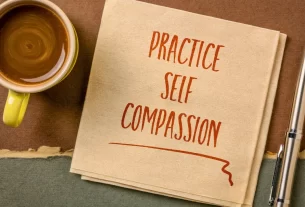
6. Use Journaling to Practice Self-Compassion
Self reflection journals are not only for analyzing what went wrong. They can also help you practice being kinder to yourself.
Many people use journaling as another place to criticize themselves. They write about mistakes, regrets, failures, and things they should have done better. While honesty matters, healing requires more than self-correction.
It also requires self-compassion.
Try writing to yourself the way you would write to someone you love.
Instead of:
“I always ruin things.”
Try:
“I am noticing a pattern I want to change, and I can begin again.”
Instead of:
“I should be over this by now.”
Try:
“This still hurts, and I am allowed to heal at a human pace.”
Instead of:
“I am behind.”
Try:
“I am building a life from where I am, not from where I thought I would be.”
Your journal can become a place where you stop attacking yourself for being human.
This matters because people rarely heal through shame. They may change temporarily because of shame, but they do not become free there.
Self-compassion creates the safety needed for honest growth.

7. Make a List of What You Are Ready to Release
A self reflection journal can help you understand what you are carrying that no longer belongs in your next chapter.
Releasing does not always mean forgetting. It does not mean pretending something did not matter. It means recognizing what is too heavy, outdated, painful, or misaligned to keep living from.
You might write a list that begins with:
“I am ready to release…”
Then continue with anything that feels true.
Examples:
- the need to please everyone;
- guilt for changing;
- old versions of success;
- relationships that require self-abandonment;
- the belief that it is too late;
- habits that keep me stuck;
- comparison;
- fear of being judged;
- stories that make me feel small;
- the idea that healing must be perfect.
You do not have to release everything at once. Writing it down is often the first step.
Some things take time. Some patterns return. Some grief needs more tenderness. Some fears need repeated reassurance.
The purpose of this exercise is not pressure. It is clarity.
When you know what you are ready to release, you can begin making choices that no longer feed it.
8. Write About the Life You Want to Create
Self reflection is not only about the past. It is also about the future.
Your journal can help you imagine the life you want to create with more detail and honesty.
Instead of writing vague goals, explore how you want your life to feel.
Ask yourself:
- What kind of mornings do I want?
- What relationships feel healthy to me?
- What does peace look like in my daily life?
- What kind of work or purpose feels meaningful?
- What do I want more of?
- What do I want less of?
- What would make my home feel supportive?
- What would make my body feel cared for?
- What would make this season feel more honest?
This type of journaling helps you move from abstract dreams to real choices.
A life does not change only through big decisions. It changes through repeated small adjustments: what you say yes to, what you stop tolerating, what you prioritize, what you practice, what you make space for.
Writing about the life you want can help you recognize the next small step.
Not the entire path.
Just the next step.
9. Keep a “Things I Am Learning” Page
One beautiful way to use a self reflection journal is to keep a page called “Things I Am Learning.”
This page can become a record of growth.
You can add to it whenever something becomes clear.
Examples:
- I am learning that rest is not laziness.
- I am learning that I do not have to explain every boundary.
- I am learning that some endings are protection.
- I am learning that I can be afraid and still move.
- I am learning that loneliness does not mean I am unlovable.
- I am learning that my needs matter.
- I am learning that starting over can be quiet.
- I am learning that peace feels unfamiliar at first.
- I am learning that I can trust myself again.
This kind of page helps you see progress that might otherwise go unnoticed.
Healing can feel slow when you only focus on what is still unresolved. But when you write down what you are learning, you begin to notice movement.
You are not the same person you were in every previous chapter.
Your journal can prove that to you.
10. Do Not Turn Journaling Into Another Obligation
A self reflection journal should support you, not pressure you.
You do not have to write every day. You do not have to fill pages. You do not have to use perfect handwriting, beautiful layouts, stickers, color coding, or a strict routine.
If those things bring you joy, use them. If they make journaling feel like another performance, let them go.
Your journal is allowed to be simple.
You can write:
- one sentence;
- one list;
- one question;
- one memory;
- one prayer;
- one honest paragraph;
- one thing you are grateful for;
- one thing you are trying to understand.
The goal is not consistency for the sake of consistency. The goal is connection.
Some seasons may invite daily writing. Other seasons may only need occasional reflection. Both can be useful.
A journal is not a test of discipline. It is a place to return.
You can begin again on any page.
Helpful Amazon Categories for Self Reflection Journaling
A self reflection journal does not require many supplies. But a few thoughtful items can make your writing practice feel more inviting, comfortable, and easy to return to.
Instead of shopping randomly, think in helpful categories:
Guided self reflection journals
Guided journals with prompts can help you begin when you do not know what to write.
Blank notebooks and writing journals
A simple notebook gives you freedom to write thoughts, lists, reflections, letters, and emotional check-ins.
Comfortable writing tools
Pens, highlighters, sticky notes, bookmarks, and book tabs can help you organize ideas and make the process more enjoyable.
Reading and reflection space
A warm lamp, tea mug, soft blanket, reading pillow, or small side table can turn journaling into a calming ritual.
Personal growth books
Books about emotional healing, self-compassion, boundaries, starting over, and mindfulness can give you ideas to explore in your journal.
If you want to start with one supportive step, explore guided journals, notebooks, and emotional healing books on Amazon.
Shop self reflection journals and guided notebooks on Amazon
As an Amazon Associate, Your Life in Full Bloom may earn from qualifying purchases, at no additional cost to you.

A 7-Day Self Reflection Journal Practice
If you want to begin but do not know where to start, try this simple 7-day practice.
Day 1: Write about how you feel right now, without editing yourself.
Day 2: Write about something you are ready to release.
Day 3: Write about a pattern you are beginning to notice.
Day 4: Write a compassionate letter to yourself.
Day 5: Write about what you need more of in this season.
Day 6: Write about one choice that would make your life feel lighter.
Day 7: Write a list called “Things I am learning.”
You can repeat this practice anytime you feel disconnected from yourself.
The point is not to solve everything in seven days. The point is to create a small doorway back to your inner life.
When Journaling Brings Up Difficult Emotions
Self reflection can sometimes bring up emotions you were not expecting.
You may write about one topic and suddenly feel sadness, anger, fear, grief, or anxiety. This does not mean journaling is bad. It may mean you touched something tender.
When that happens, slow down.
You can close the journal. Drink water. Breathe. Step outside. Talk to someone you trust. Return later if it feels safe.
If journaling consistently brings up intense memories, panic, emotional overwhelm, or thoughts of self-harm, it is important to seek support from a qualified professional.
A journal can be a powerful tool, but it does not have to hold everything alone.
Healing is not about forcing yourself to go deeper than you are ready for.
It is also about learning to feel safe.
Final Thoughts on Self Reflection Journals
Self reflection journals are not about becoming a perfect version of yourself.
They are about creating space to listen.
Listen to your emotions.
Listen to your needs.
Listen to your patterns.
Listen to the part of you that wants something different.
Listen to the quiet truth beneath the noise.
A healing writing practice can begin with one notebook, one question, and a few honest minutes.
You do not have to know exactly what you are doing. You do not have to write beautifully. You do not have to understand everything right away.
Just begin.
Write what feels true.
Write what feels heavy.
Write what feels hopeful.
Write what you are learning.
Write what you are ready to release.
Write what your next chapter might need.
Your journal does not judge you.
It waits.
And every time you return to the page, you return a little more to yourself.
Read More:

Gui Perine
Gui Perine is the creator of Your Life in Full Bloom, a lifestyle website for women who want to live with more intention, beauty, and freedom after 50.
Through thoughtful articles on home, travel, reinvention, and everyday choices, she explores what it means to build a fuller life in a new season — one that feels calmer, more personal, and more aligned with who you are becoming.
Her work is inspired by real-life transitions, the desire for independence, and the belief that life after 50 can be a time of clarity, possibility, and renewal.


1 thought on “Self Reflection Journals: 10 Powerful Prompts to Heal and Grow”