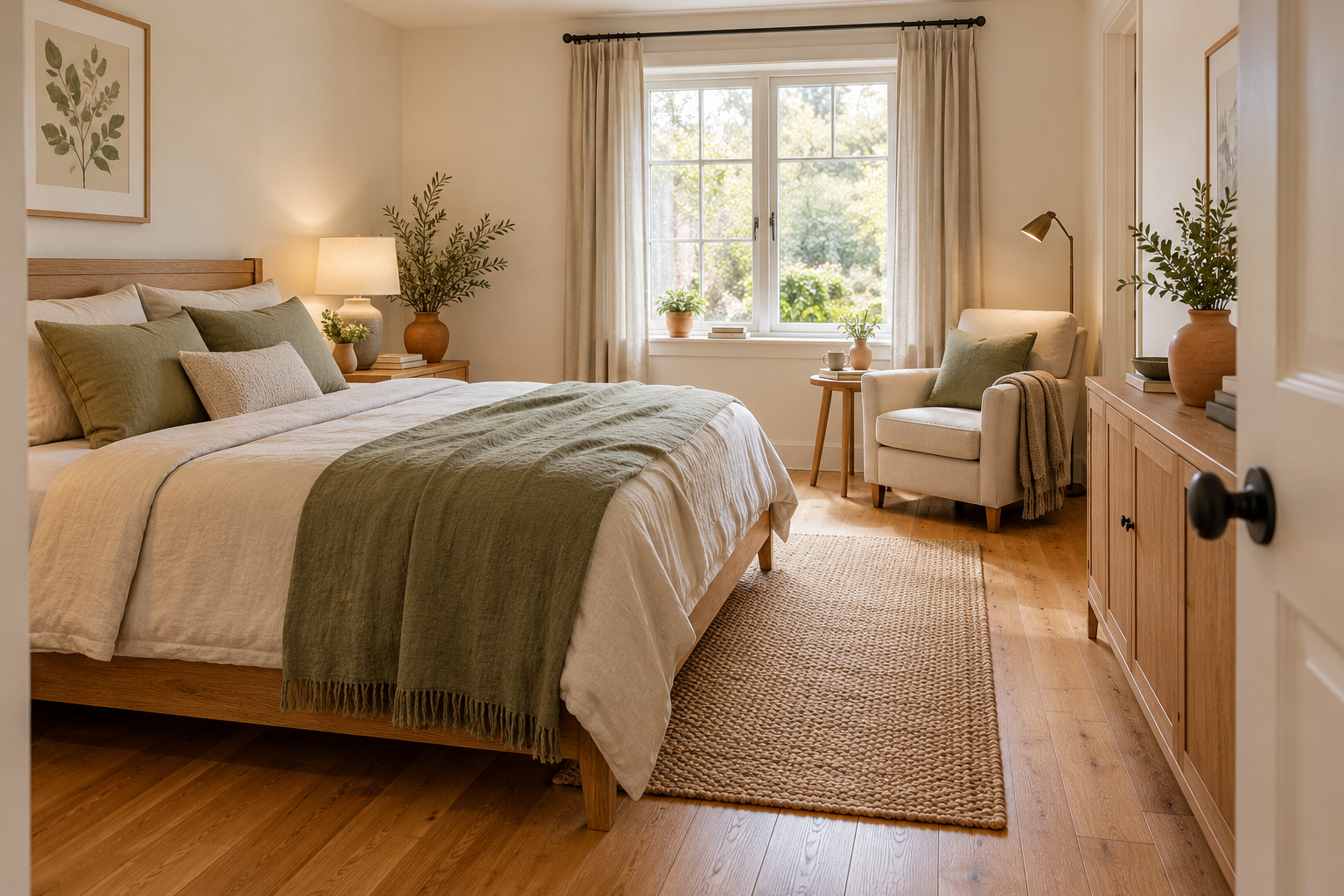
The bed is made, the wardrobe is partly full, and the room no longer has an obvious place in your everyday life. Perhaps your child visits regularly. Perhaps you would love somewhere to work, read, or make things. You may also feel reluctant to change a space that still holds so much family history.
Deciding what to do with an empty nest bedroom starts with understanding what the room needs to do now. Paint colors and furniture can wait until you have answered that question.
What to Do With an Empty Nest Bedroom?
Choose among three starting points: keep it primarily for guests, give it a second everyday purpose, or turn it into a dedicated space for something you regularly do. Keeping it unchanged while you decide is also reasonable.
The best fit depends on actual overnight visits, any agreed plans for your child to return, your household’s unmet needs, and the room’s limitations. A comfortable guest room may be valuable even when it is not used daily. Equally, a room reserved for one annual visit may deserve a second function.
Begin with one sentence: “This room needs to support while still allowing.” For example: “This room needs to support weekday work while still allowing our daughter to stay comfortably at holidays.”
Use that sentence to decide what to do with an empty nest bedroom before choosing furniture.
What Does Your Home Need More Than Another Spare Room?
Before deciding how to transform the room, take a closer look at your everyday life. The most useful changes often begin with recognizing what your home is currently missing, rather than imagining an entirely new space. A few practical questions can help you identify a purpose that genuinely fits your needs.
Which activities would actually happen here?
Look at the past few weeks. Have you worked at the kitchen table, packed away sewing halfway through a project, or searched for somewhere quiet to read? These are useful clues because the activities already exist.
An imagined future hobby deserves a trial before it receives an entire room. Borrowing a small table for painting will tell you more than ordering studio furniture.
Choose one primary activity and, at most, one secondary function. A bedroom that must also serve as an office, gym, craft studio, library, and storage room will involve compromises you may not enjoy.
If you share your home, include the other people who use it. Agree on access, quiet hours, and which items can move.
What would make this room easier to use?
Measure the room and existing furniture. Mark doors, windows, outlets, radiators, and wardrobe openings on a simple sketch. Notice daylight, noise, and where a chair could pull out.
Think through complete actions: opening a drawer, carrying laundry, making the bed, or walking to the door at night. For broader ideas about lighting, reach, and comfort, see Home After 50: 9 Smart Updates for Easier Living.
What Should You Discuss With Your Adult Child Before Making Changes?
Separate three questions: who uses the room, who owns its contents, and what future stays are realistically expected. A bedroom can become shared space while personal belongings remain your child’s to decide about.
Try an invitation such as:
“I’d like to use the room during the week, and I want you to feel welcome when you visit. Could we talk about what you need when you’re here and which belongings you want to take or keep?”
Ask about upcoming visits and any likely return home for study, work, or another transition. Distinguish a concrete arrangement from a distant possibility. Family expectations differ; make yours explicit rather than assuming everyone understands “your room” in the same way.
How can you agree on belongings and storage?
Discuss available storage, collection arrangements, and a review date. If your child lives far away, photographs of ordinary objects can help you identify what needs a decision. Avoid sharing private documents or personal correspondence.
Do not donate, sell, or discard their possessions without agreement. When decisions stall, start with your own items or a mutually agreed area. The broader relationship adjustment is explored in Empty Nest After 50: 9 Ways to Find Yourself Again.
Which New Use Fits Your Life Best?
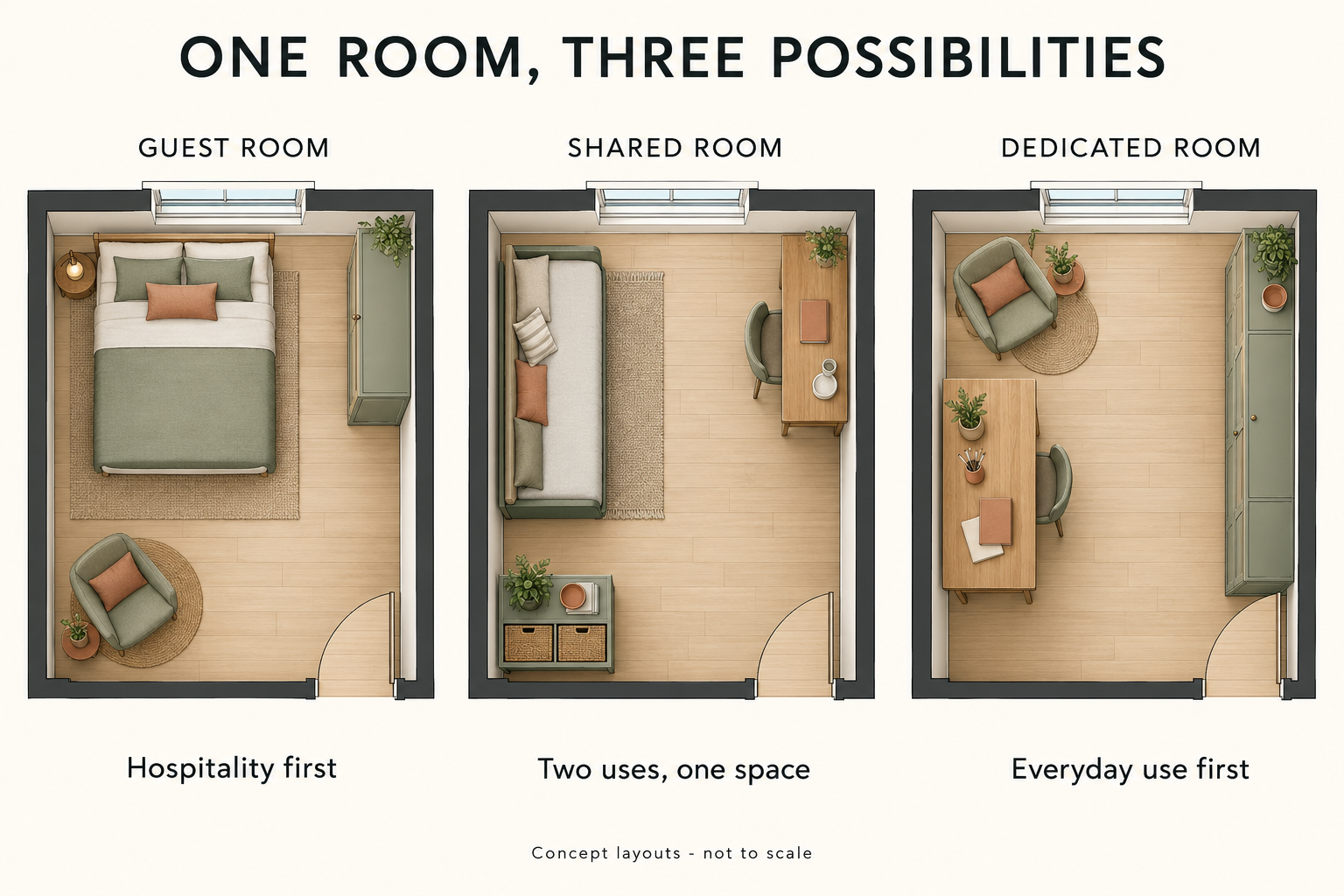
Use this matrix to narrow your options. It is a planning aid, not a scoring system. Start with arrangements your family has already made, then consider everyday use.
| Your situation | A sensible starting point | Check before changing anything | A reversible first step |
|---|---|---|---|
| Frequent overnight visits or a return home already agreed | Guest bedroom first | Length of stays, privacy, and clothing storage | Keep the bed; add one small reading or working area |
| Occasional visits and a regular need for another activity | Shared room | Space with the bed in use and effort needed to reset | Rearrange existing furniture and rehearse a guest arrival |
| Rare visits, frequent personal use, and a workable hosting alternative | Dedicated room | Whether the alternative genuinely suits future guests | Try the activity with borrowed or existing furniture |
| Many belongings still await family decisions | Gradual transition | Ownership, storage capacity, and collection plans | Sort one agreed shelf or cupboard together |
| No clear need for the space yet | Leave options open | Which activities you naturally bring into the room | Test one use without buying anything |
When does keeping a guest bedroom make sense?
A proper bed may be the right priority when family stays frequently, visits for several weeks, or needs a predictable place to return. Consider the people who actually stay, including their comfort and privacy.
The room can still serve you between visits. A reading chair, a clear surface for correspondence, or space to listen to music may be enough. There is no requirement to maximize every square foot.
When is a dual-purpose room the better choice?
A guest room and hobby room combination works when the two uses can take turns without major disruption. Reading materials are usually easier to put away than an unfinished sewing project covering several surfaces.
Before choosing a daybed or sleeper sofa, check its sleeping dimensions, how it opens, and where other furniture must go. Consider whether you can operate it comfortably and whether it suits your guests. Replacing a usable bed is optional.
When is a dedicated room worth considering?
A dedicated room makes sense when a regular activity needs uninterrupted space and hosting can realistically happen elsewhere. Name that alternative: another bedroom, an agreed arrangement nearby, or a different plan for visits.
Do not remove the bed solely because you hope to become someone who paints every morning. Let actual use establish the case first.
How Can You Make a Shared Room Work in Practice?
The following examples are hypothetical planning scenarios. Each solves a different conflict between everyday use and overnight stays.
Guest room and reading room
You want a quiet place most afternoons, and family visits several times a year. Keep the existing bed, place a comfortable chair where it has useful light, and add a reachable surface for a book or drink.
The potential problem is accumulation: books, blankets, and reading glasses gradually occupy every guest surface. Reserve a drawer or basket for your things and leave space for a visitor’s bag. Before calling the layout finished, sit in the chair and check that you can move easily around the bed.
Guest room and home office
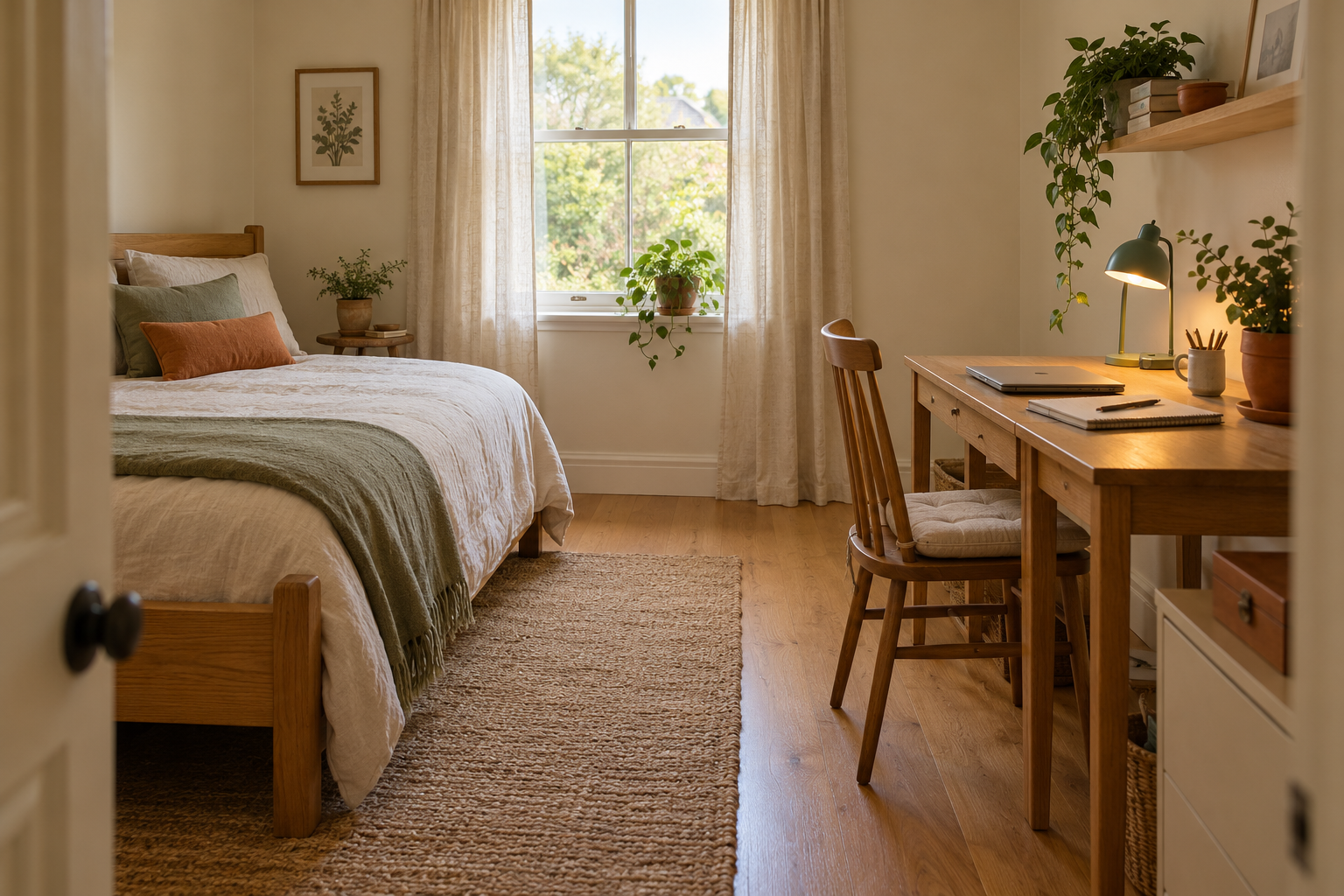
You need a door for weekday calls, while visitors stay occasionally. A modest desk may fit beside the existing bed, but consider what happens when both uses are needed at once.
Will you work elsewhere during visits? Can guests sleep without passing through your workspace? Store papers privately, and avoid expecting visitors to leave the room for every meeting. If there is no workable overlap plan, the room may not be suitable as your only office.
Guest room and creative space
You sew, draw, or work on paper projects several times a week. Give the activity a defined surface and storage that can hold the materials when guests arrive.
In a small room, begin by removing a duplicate function. If clothing no longer fills the dresser, an agreed redistribution of its contents may free space for supplies without adding another cabinet. Check the actual storage volume before removing it; replacing visible clutter with overflowing cupboards will not make the room easier to use.
Try packing away an unfinished project without losing your place. If that requires dismantling equipment or carrying heavy boxes, simplify the setup. Projects involving fumes, dust, or specialist equipment need a more suitable arrangement than a casual bedroom conversion.
For a cohesive look once the layout works, Warm Minimalism: 10 Ideas for a Calm and Cozy Home offers ideas for combining useful storage, natural textures, and personal details.
How Do You Sort Belongings Without Rushing the Process?
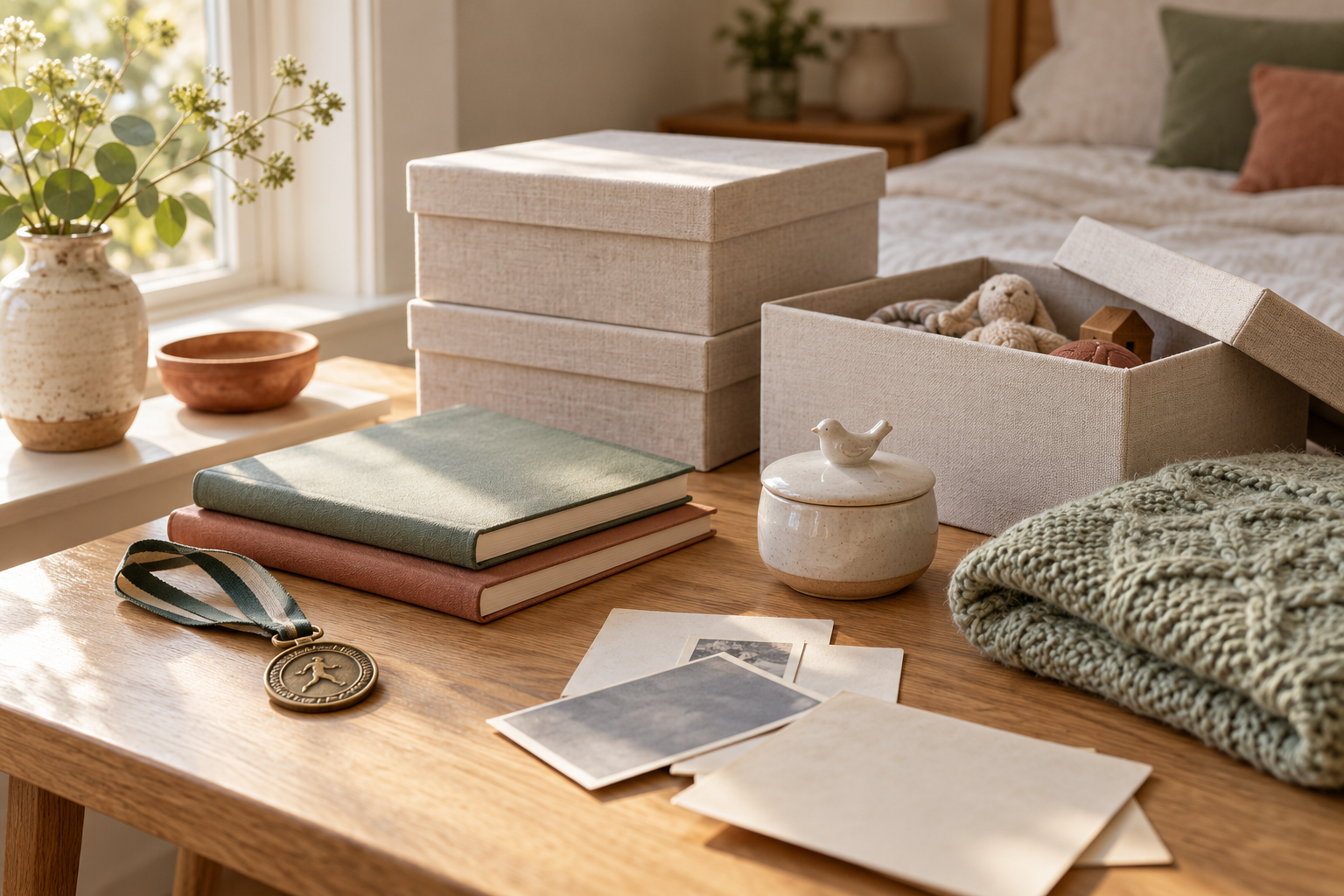
Start with one contained area rather than emptying the entire wardrobe onto the bed. A small finished task leaves the room usable and makes the next session easier to approach.
Use four destinations:
- Take: items your child wants in their current home, with a practical collection or delivery plan.
- Store by agreement: belongings assigned a specific shelf, drawer, or container.
- Pass on by agreement: items their owner has approved for donation, sale, or another recipient.
- Review later: unresolved items with an agreed date to revisit them.
Keep important documents and private correspondence separate for their owner to handle. Label containers clearly enough to find things later, without displaying sensitive information.
Mississippi State University Extension’s guidance on sentimental clutter recommends deciding how much space to allocate and selecting representative keepsakes from collections. Apply that idea collaboratively: one treasured object may matter more than a box kept only because nobody has discussed it.
A photograph can preserve the appearance of a bulky object, but it does not replace permission to give the object away. You may also have your own attachment to something your child no longer wants. Make a separate decision about whether you wish to keep it.
What Can You Test Before Buying Furniture?
Give the preferred use a short trial. Two to four weeks can be a useful starting point, adjusted to your schedule; it is a practical suggestion, not a proven formula.
University of Georgia Extension’s Project FIND encourages looking through what you already own before buying more. A spare lamp, an existing chair, or a table from another room may be enough to test your idea.
Write a simple trial brief:
“For the next three weeks, I will use this room for sewing twice a week. The guest bed stays. Materials must fit in the agreed cupboard, and I will test putting everything away before the trial ends.”
Then follow four steps:
- Prepare one usable area. Clear only the space needed, with agreement about any belongings you move.
- Use it on ordinary days. A weekend spent styling the room will not reveal whether it supports your routine.
- Record the friction. Note awkward lighting, noise, unreachable supplies, uncomfortable seating, or the effort of setting up.
- Rehearse the secondary use. Prepare for an overnight guest, open the bed if needed, and check where clothes and bags will go.
Avoid purchases that solve untested problems. If you never use the desk, a larger desk may not help. If you use it often but cannot see your notebook clearly, a better-positioned lamp addresses something specific.
How Will You Know Whether the New Setup Works?
Review what happened, including the days you did not enter the room. Was the activity unnecessary, or did the setup make it inconvenient? Change the obstacle before committing to the whole concept.
Before spending, confirm that:
- You used the room for its intended purpose on ordinary days.
- Doors, drawers, and any convertible furniture can open fully.
- You can reach what you need and move through the room comfortably.
- Work or hobby materials have a realistic storage place.
- Preparing for guests involves an amount of work you accept.
- Agreements about visits and belongings are understood.
- The proposed purchase solves a problem you actually observed.
If your child later needs to return, revisit the arrangement together. Discuss the expected length of stay, privacy, storage, and where the everyday activity will move. A successful trial does not lock the room into one purpose forever. Keeping a simple sketch and a record of where stored furniture went can make another transition easier.
Choose a spending limit only after identifying those problems. A useful order is to rearrange first, improve a specific function second, and decorate once the arrangement earns its place.
What Is One Useful Step You Can Take Today?
Write your room brief, arrange a conversation, or clear one agreed surface. When deciding what to do with an empty nest bedroom, start with the step that removes the next uncertainty.
Your child’s place in the family does not depend on an unchanged furniture arrangement. The room can hold memories, offer hospitality, and support your present life in different proportions. You can decide those proportions gradually, using the space itself to show you what works.

Gui Perine
Gui Perine is the creator of Your Life in Full Bloom, a lifestyle website for women who want to live with more intention, beauty, and freedom after 50.
Through thoughtful articles on home, travel, reinvention, and everyday choices, she explores what it means to build a fuller life in a new season — one that feels calmer, more personal, and more aligned with who you are becoming.
Her work is inspired by real-life transitions, the desire for independence, and the belief that life after 50 can be a time of clarity, possibility, and renewal.