

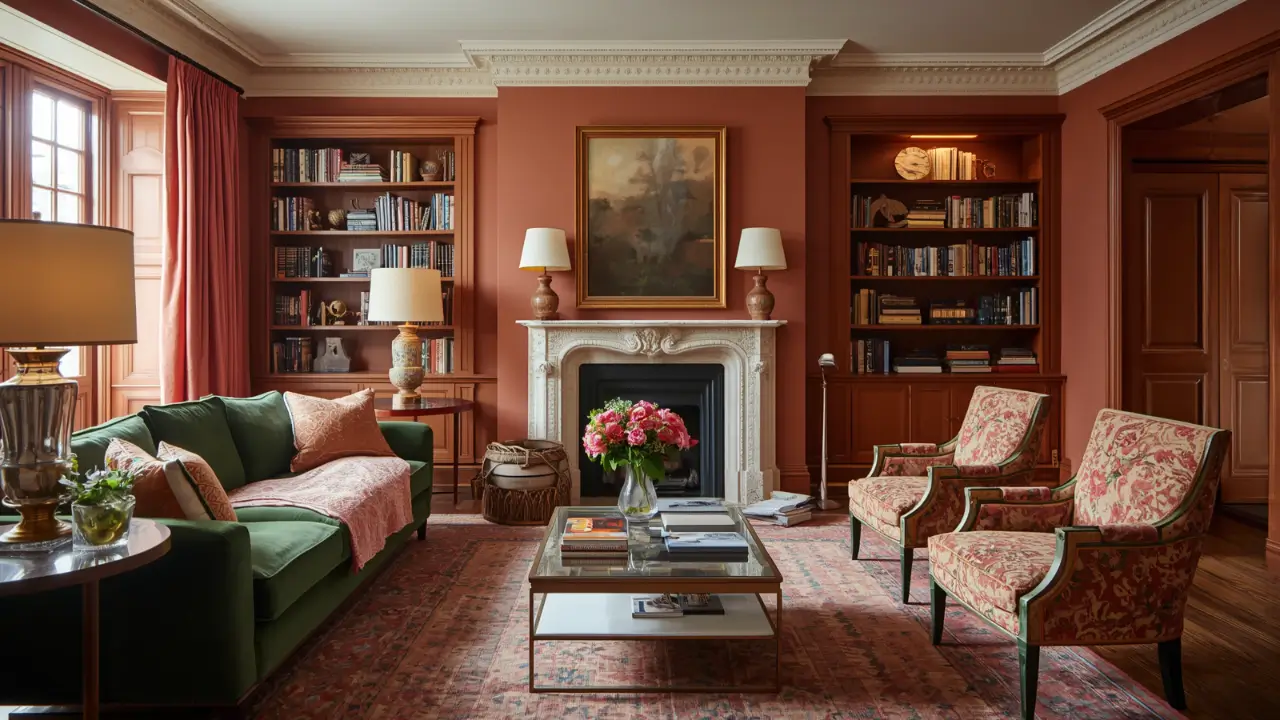
A calmer home is not an empty home.
It is not a perfect home, a beige home, a minimalist showroom, or a place where nobody is allowed to live freely.
A calmer home is a home that supports you.
It helps your mornings feel less rushed. It makes daily tasks easier. It gives your eyes places to rest and your life enough beauty to feel cared for. It holds your routines, your memories, your people, your quiet moments, and your next chapter without making everything feel heavy.
For many women, especially after 50, the home begins to ask different questions.
Not only: “Does this look good?”
But also: “Does this make my life easier?”
“Does this space still fit who I am now?”
“Am I keeping too much because of guilt?”
“Is my home helping me rest, create, connect, and live well?”
A calmer home does not mean removing personality.
It means removing the daily friction that makes life feel harder than it needs to be.
It can include color, flowers, books, art, family photos, beautiful objects, travel memories, and joyful details. Calm does not have to be cold. It can be warm, alive, elegant, practical, and full of character.
The goal is not to create a home that looks untouched.
The goal is to create a home that feels easier to live in.
Here are 10 beautiful ways to begin.
1. Start With the Spaces That Affect Your Day Most
When you want a calmer home, it is tempting to begin everywhere at once.
The kitchen. The bedroom. The closets. The living room. The bathroom. The entryway. The drawers. The pantry. The laundry area. Suddenly, the whole house feels like a project, and you feel tired before you even begin.
Instead, start with the spaces that affect your day most.
For many people, these are:
- the entryway;
- the bedroom;
- the kitchen counter;
- the bathroom sink;
- the place where bags and keys land;
- the chair that collects clothes;
- the dining table;
- the area where paperwork gathers.
These places matter because they shape your daily rhythm.
If your morning begins with searching for keys, stepping over shoes, moving clutter from one surface to another, or looking at a crowded counter, your home is already asking for energy before the day has even started.
Choose one high-impact area and improve it first.
Not perfectly. Practically.
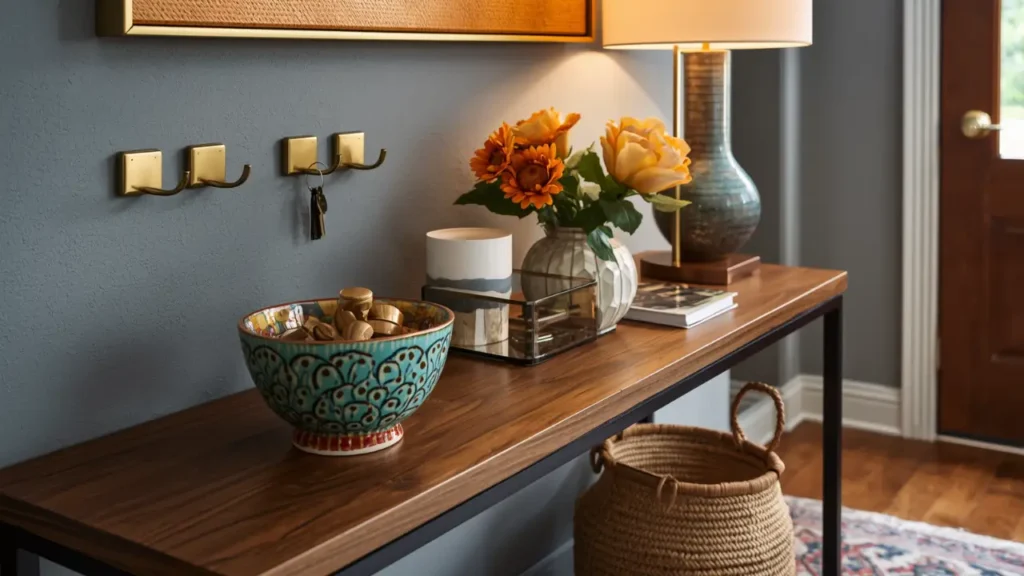
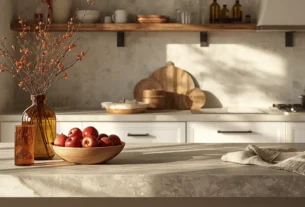
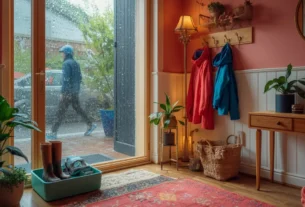
Clear the surface. Add a tray. Create a place for keys. Remove what does not belong there. Add one beautiful detail: a small plant, a colorful bowl, a lamp, fresh flowers, or a framed photo that makes you smile.
A calmer home often begins with one corner that finally works.
2. Keep What Supports Your Current Life
Many homes are full of past versions of ourselves.
Clothes from a body, job, or lifestyle that no longer fits. Kitchen items used once years ago. Décor bought for a house you no longer love. Gifts kept out of guilt. Hobby supplies from a season that passed. Furniture chosen for a life that has changed.
A calmer home asks a kinder but honest question:
Does this support my current life?
Not the woman you were 20 years ago.
Not the version of you who hosted large dinners every weekend.
Not the version who had small children at home.
Not the version who dressed for a former workplace.
Not the version who bought things because she thought she “should.”
The woman you are now.
Your home does not need to erase your history. But it should not be a storage unit for every chapter you have already completed.
Try walking through one room and asking:
- Do I use this?
- Do I love this?
- Does this make my life easier?
- Does this still belong in this season?
- Am I keeping this from joy or obligation?
You do not have to remove everything.
But even small edits can change the energy of a room.
A home becomes calmer when it stops holding too many unfinished conversations with the past.
3. Use Color With Intention, Not Fear
A calm home does not have to be colorless.
One of the biggest mistakes in modern home inspiration is the idea that calm means beige, gray, white, and nothing else. Those palettes can be beautiful, but they are not the only way to create peace.
Color can bring warmth, vitality, personality, and joy.
The secret is intention.
Instead of filling every room with random colors, choose a palette that feels alive but coordinated. You might work with:
- deep green and warm cream;
- terracotta and soft blue;
- coral, ivory, and natural wood;
- navy, brass, and white;
- olive, blush, and stone;
- mustard, warm brown, and linen;
- soft turquoise with sandy neutrals;
- berry tones with warm metallic accents.
A calmer home can have colorful art, patterned pillows, flowers, ceramic bowls, rugs, curtains, books, or a painted cabinet.
Color becomes stressful when it feels accidental. It becomes beautiful when it feels chosen.
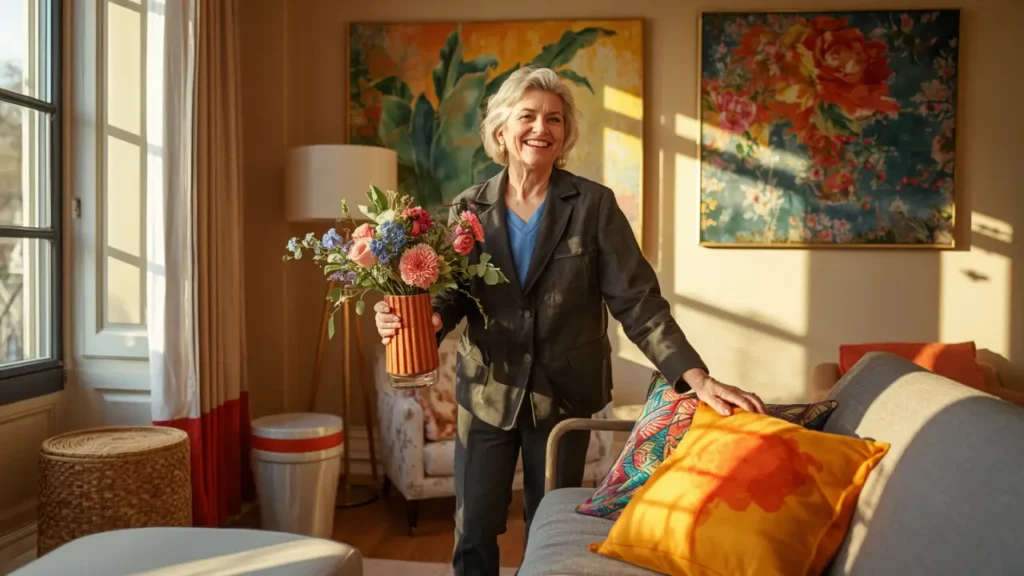
If you are afraid of color, start small. Add one vivid detail to a neutral room: a vase, a throw, a lamp, a cushion, a bowl of fruit, a piece of art, or flowers.
A room can feel calm and still have life.
In fact, for many women, the most calming home is not the one with no color.
It is the one that finally feels like them.
4. Create Clear Landing Places
A home feels more stressful when everyday items have no place to land.
Keys, mail, glasses, bags, shoes, chargers, receipts, medication, headphones, books, papers, and small personal items often create clutter not because people are messy, but because the home has not given those objects a clear destination.
A calmer home needs landing places.
A landing place is a simple, visible, practical spot where something naturally belongs.
For example:
- a tray for keys;
- a basket for shoes;
- a hook for bags;
- a bowl for sunglasses;
- a drawer for chargers;
- a folder for important papers;
- a shelf for books in progress;
- a small box for medication;
- a tray for daily skincare;
- a basket for laundry that actually lands on the floor.
The best landing places are close to where the habit already happens.
If you always drop your bag by the door, do not create a bag system in the bedroom. Put a hook, bench, or basket near the door.
If mail gathers on the kitchen counter, create a small mail station there or close to it.
Organization works better when it respects reality.
A calmer home is not built by forcing yourself into impossible systems.
It is built by creating better homes for the things you use every day.
5. Make Maintenance Easier, Not More Complicated
A beautiful home that is exhausting to maintain will not feel calm for long.
This matters even more in a new stage of life, when energy, time, priorities, health, and daily rhythms may have changed. A home should not require constant effort just to look acceptable.
Look for ways to make maintenance easier.
This may mean:
- fewer objects on surfaces;
- washable rugs;
- easy-care fabrics;
- practical storage;
- better lighting;
- baskets that are easy to use;
- furniture that is easy to move;
- fewer items in high-dust areas;
- kitchen tools stored where they are used;
- cleaning supplies kept close to the rooms they serve.
Sometimes the answer is not more storage. It is fewer items to manage.
Sometimes the answer is not a prettier basket. It is admitting that you do not need what the basket contains.
A calmer home should reduce the number of tiny decisions you make every day.
Where does this go?
Why is this here?
Do I still need this?
Where did I put that?
Why is this always messy?
Every unresolved item creates a small mental tab.
Closing some of those tabs is one of the most powerful ways to make a home feel lighter.
6. Design One Place for Daily Beauty
A calmer home should not be only practical.
It should also offer beauty.
Not the kind of beauty that impresses visitors, but the kind that quietly supports your daily life.
Choose one place in your home and make it intentionally beautiful. It could be:
- a breakfast corner;
- a reading chair;
- a bedside table;
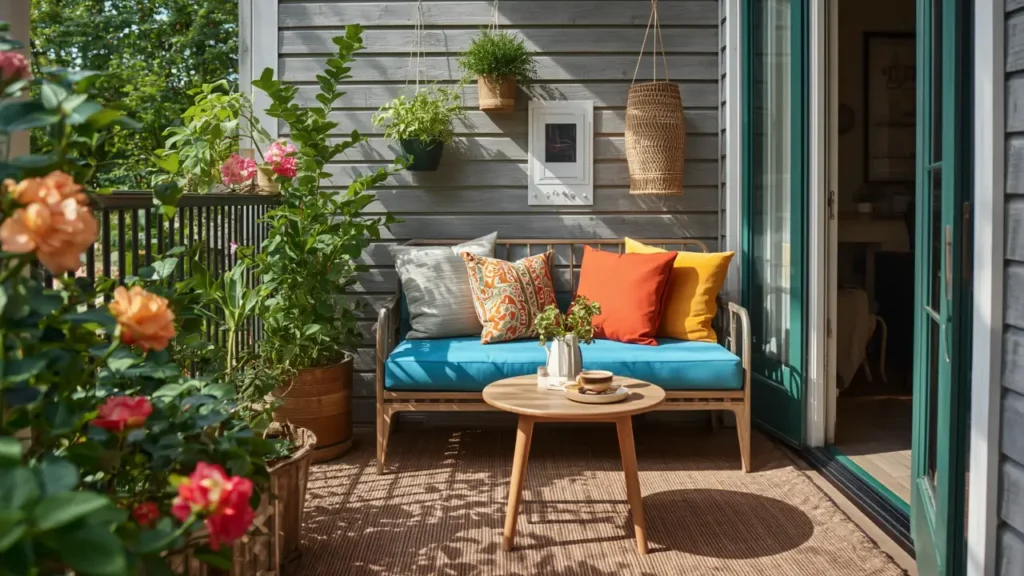
- a balcony;
- a kitchen shelf;
- the bathroom counter;
- a small desk;
- the entryway;
- a garden corner;
- a place where you drink coffee.
Add beauty in a way that feels personal.
Fresh flowers. A colorful bowl. A candle. A lamp with warm light. A framed photo. A travel object. A bright cushion. A ceramic mug. A plant. A small piece of art. A linen napkin. A beautiful tray.
This is not about buying more things.
It is about reminding yourself that your everyday life deserves care.
Many women spend years making spaces functional for everyone else. A calmer home includes beauty that is not only for guests, children, partners, or special occasions.
It is for you.
One beautiful daily place can change the way you experience your home.
7. Let Light Change the Mood
Light has a powerful effect on how a home feels.
A cluttered room with good light often feels better than a perfectly organized room under harsh, cold lighting. Light affects energy, mood, comfort, and the sense of welcome.
To create a calmer home, pay attention to both natural and artificial light.
During the day, open curtains when possible. Clear windowsills. Move heavy objects blocking the light. Use mirrors to reflect brightness into darker areas.
In the evening, avoid relying only on overhead lights.
Layer the light with:
- table lamps;
- floor lamps;
- wall sconces;
- candles;
- warm bulbs;
- small lights on shelves;
- under-cabinet lighting;
- outdoor string lights on a balcony or patio.
Warm, layered lighting can make a room feel softer and more intimate. It can also help your body understand that the day is slowing down.
Think of lighting as atmosphere, not just function.
A calmer home is not only what you see.
It is how the space makes you feel at different hours of the day.
8. Create Room for Movement
A calm home is easier to move through.
This sounds simple, but many homes are arranged in ways that make daily movement harder. Furniture blocks paths. Chairs become storage. Shoes gather near doors. Cabinets are too full to open easily. Objects sit where hands need space to work.
Look at your home as a place your body moves through every day.
Can you walk easily from room to room?
Can you open drawers without moving things first?
Can you prepare food without clearing the counter every time?
Can you sit down without removing piles?
Can you reach what you use often?
Can you leave the house without searching?
A home that allows movement feels more generous.
This does not require a large house. Small spaces can feel calm when pathways are clear and objects have purpose.
Sometimes creating room for movement means removing a small table, changing the position of a chair, clearing a hallway, storing seasonal items elsewhere, or finally dealing with the pile that everyone walks around.
Physical obstacles become emotional noise over time.
A calmer home gives your body fewer things to fight.
9. Add Nature in a Way You Can Actually Maintain
Nature brings life into a home.
Plants, flowers, herbs, branches, natural textures, fresh fruit, shells, stones, wood, sunlight, water, and views of the sky can make a home feel more grounded and alive.
But nature should not become another source of guilt.
If you love plants and enjoy caring for them, bring them in generously. If plants always die in your home, choose easier options or use flowers, branches, herbs, or natural materials instead.
A calmer home can include:
- a vase of colorful flowers;
- a bowl of lemons or oranges;
- a low-maintenance plant;
- fresh herbs near the kitchen;
- a balcony garden;
- woven baskets;
- wooden trays;
- linen fabrics;
- a view arranged around natural light;
- seasonal branches or greenery.
Nature adds softness and movement.
It reminds the home that life is not only screens, tasks, bills, and schedules.
Even one vase of flowers can shift the mood of a room.
The goal is not to create a perfect indoor garden.
The goal is to let the home breathe.
10. Give Your Home a Weekly Reset
A calmer home is maintained through rhythm, not perfection.
A weekly reset can keep small messes from becoming overwhelming. It also helps you notice what is working and what is not.
Choose one time each week, even 30 minutes, and reset the areas that affect daily life most.
You might:
- clear the entryway;
- return items to their places;
- refresh flowers or plants;
- wipe kitchen surfaces;
- empty old papers;
- put away clothes;
- reset the bedside table;
- organize the bathroom counter;
- prepare a simple grocery list;
- check what needs repair;
- remove one item you no longer need.
This is not a deep cleaning day.
It is a reset.
A way of saying: “I want my home to support me this week.”
The weekly reset also prevents the home from becoming a silent source of pressure. Instead of waiting until everything feels out of control, you create small moments of return.
A calmer home is not a one-time project.
It is an ongoing relationship.
And like any relationship, it becomes better with attention.
What a Calmer Home Is Not
A calmer home is not a home without personality.
It is not a home where everything is hidden, neutral, expensive, or perfectly styled.
It is not a home where you cannot leave a book open, cook real food, welcome people, keep memories, use color, or enjoy beautiful things.
A calmer home is not about erasing life.
It is about making life easier to live.
It gives you space to move, rest, think, cook, create, connect, and begin again. It respects your current season. It holds your routines without making every day feel like a battle.
It allows color, but not chaos.
It allows memory, but not burden.
It allows beauty, but not performance.
It allows comfort, but not clutter that steals your peace.
A calmer home should still feel alive.
Maybe even more alive than before.
Because when a home is lighter, more intentional, and easier to care for, you have more energy left for the life happening inside it.
Helpful Ideas to Support a Calmer Home
A calmer home does not require buying everything new. Most of the change comes from editing, simplifying, rearranging, and choosing more consciously.
Still, a few practical items can help your home work better:
Decorative trays
Useful for gathering keys, skincare, jewelry, candles, mail, or coffee table items in a way that looks intentional.
Beautiful baskets
Helpful for blankets, shoes, magazines, pet items, children’s toys, laundry, or anything that needs an easy landing place.
Warm lamps
A table lamp, floor lamp, or small accent light can completely change the mood of a room.
Washable rugs
A good option for busy spaces where you want color, comfort, and practicality.
Wall hooks
Simple hooks can organize bags, coats, hats, scarves, keys, or everyday items without taking floor space.
Colorful pillows or throws
An easy way to bring energy, warmth, and personality without redesigning the whole room.
Low-maintenance plants or fresh flowers
A simple way to bring life, color, and softness into the home.
Shop practical and beautiful home essentials on Amazon
As an Amazon Associate, Your Life in Full Bloom may earn from qualifying purchases, at no additional cost to you.
To Make Home Feel Easier Again
A calmer home is not built by chasing perfection.
It is built by paying attention.
To what feels heavy.
To what gets in the way.
To what no longer belongs.
To what gives you energy.
To what makes daily life softer, simpler, brighter, and more beautiful.
You do not need to transform every room this week.
Start with one area that affects your day.
One surface.
One drawer.
One basket.
One lamp.
One colorful detail.
One decision to stop keeping what no longer supports you.
A calmer home is not less alive.
It is more available for the life you actually want to live.
And sometimes, when home becomes easier, you do too.

Gui Perine
Gui Perine is the creator of Your Life in Full Bloom, a lifestyle website for women who want to live with more intention, beauty, and freedom after 50.
Through thoughtful articles on home, travel, reinvention, and everyday choices, she explores what it means to build a fuller life in a new season — one that feels calmer, more personal, and more aligned with who you are becoming.
Her work is inspired by real-life transitions, the desire for independence, and the belief that life after 50 can be a time of clarity, possibility, and renewal.

1 thought on “A Calmer Home: 10 Beautiful Ways to Make Life Feel Easier”