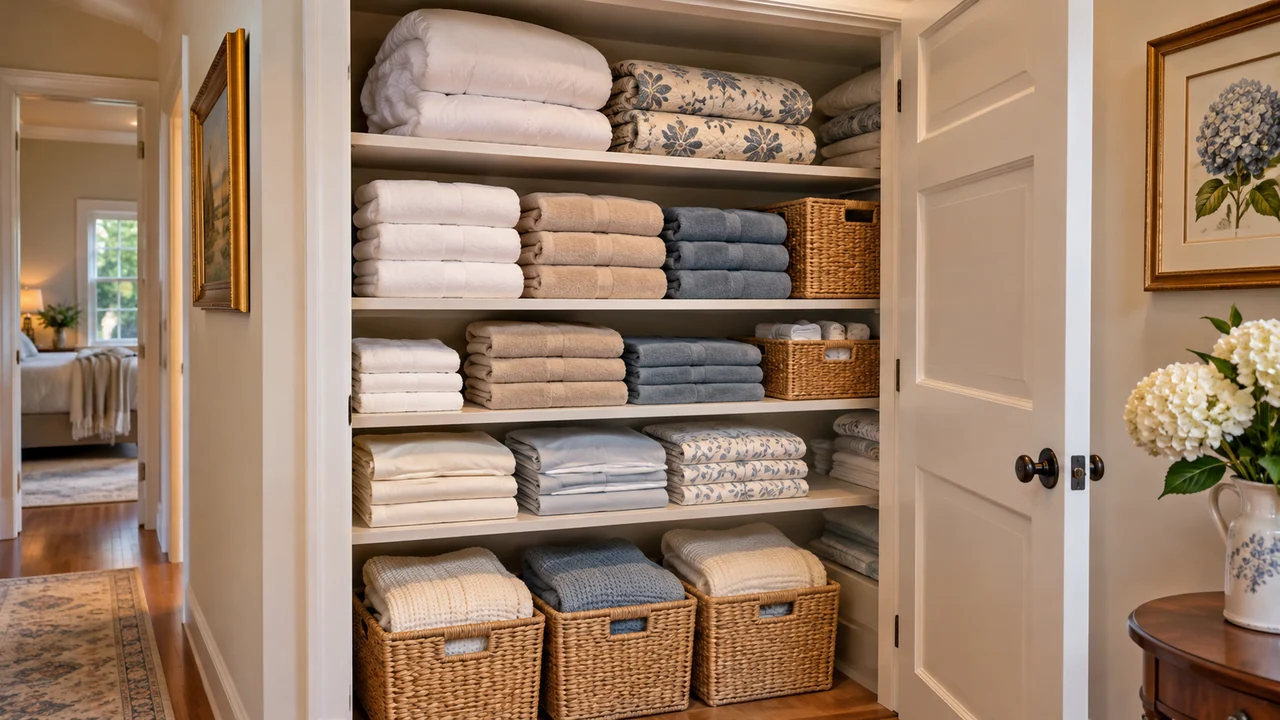
Deep linen closet organization begins with the bottom of a stack. If you can’t take out a bath towel without lifting three others or put the clean sheets back without reaching through a wall of blankets, the layout needs a change. Deep shelves can hold a lot. They work best when you decide which items you want to see from the doorway and which ones can come out in a single, easy-to-move container.
You can start with one shelf and the baskets or boxes you already have. The aim is to make daily linens easy to reach, give extras a clear address, and leave room for everything that comes back from the wash. Measure what you can use, sort by what comes out together, and test the arrangement on an ordinary laundry day before spending money on containers.
Measure the Space You Can Actually Reach
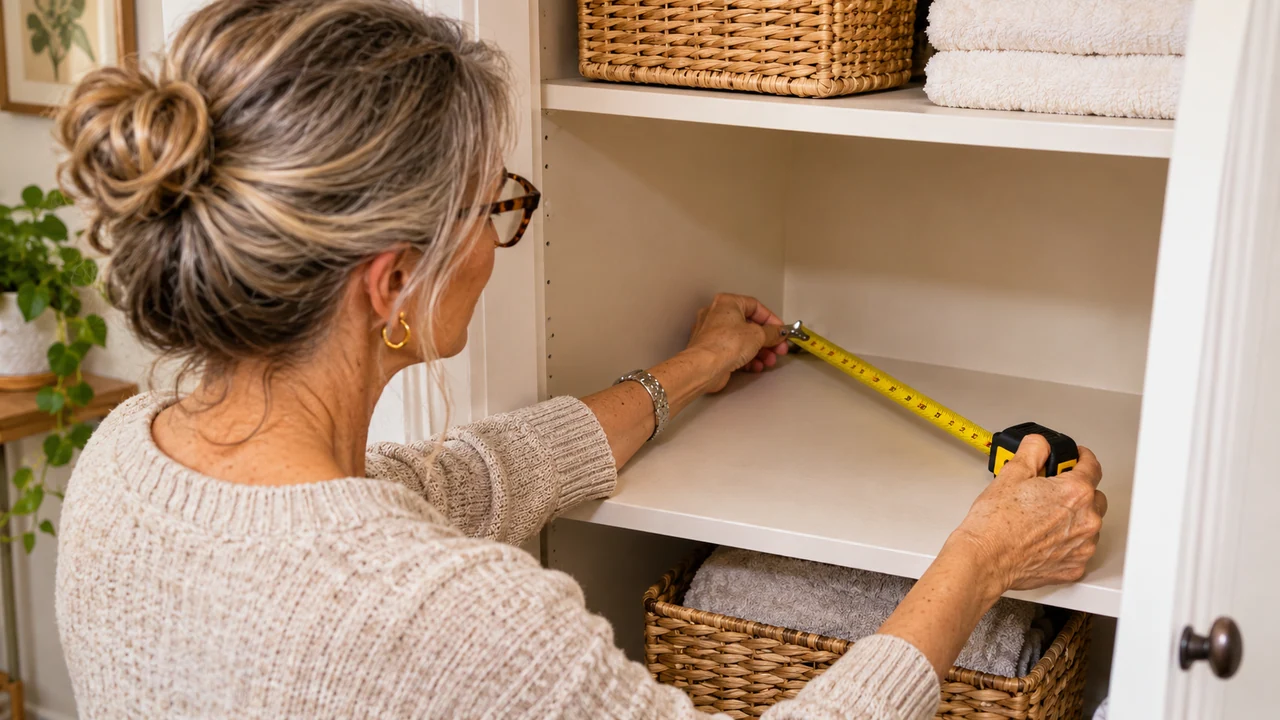
Start with the shelves still in place. Measure each shelf from its front edge to the back wall. Record the clear width between any brackets or side trim and the height to the underside of the shelf above. Then open the door all the way and measure the clear opening. A basket that fits neatly on paper can still catch on a hinge or the door stop as you try to lift it out, especially if several baskets are placed side by side.
Next, reach straight into an empty shelf at three heights: waist, chest, and eye level. Notice where you have to lean, raise your shoulder, or stand on your toes. The first part of a deep shelf may count as easy storage, while the rest is useful only for something you can slide toward you. If someone else uses the closet, have them make the same reach test. Design the spaces for the people who actually fetch the towels and put the sheets away. See the broader guide to making your home easier to use after 50 if this closet is one of several spots where reach has become a daily frustration.
Test a container through the door
A shelf that is 24 inches deep might have an awkward 18-inch opening once a door swings against a wall. A container can still work if you have room to pull it straight out and turn it after it clears the jamb. Use a cardboard box as a mock-up, including the height it will reach once it’s full. Check whether your fingers can fit around its front edge and whether you can lift it without scraping the shelf above. Repeat this test when the box holds a few folded towels so you can feel the actual load.
Measure bins at their widest point, including handles and a lip around the top. A tapered basket can be several inches wider at the top than at its base. Allow room to grip the handles and see labels. You can check The Home Depot’s linen closet organizing guide for common organizer types, then use your own measurements to decide what would fit.
Give Every Shelf One Main Job
Take out the contents of one shelf and divide them by use. Everyday bath towels, sheets for occupied beds, guest bedding, seasonal blankets, and household extras are distinct groups. Sort sheets by mattress size before you decide where they go. If you can’t identify a fitted sheet from its color or fold, test it on the bed and mark its size once you know. As you sort, write down any sets with missing pieces so you can see which ones are ready to put into service.
Choose the most reachable shelf for things you take out on a normal week. Give a second shelf to items that come out occasionally. Reserve less convenient locations for light extras you can move as one unit. If you already keep towels in the bathroom, put the closet’s replenishment towels near the front and give guest bedding a separate labeled place. The layout should follow the route that laundry actually takes through the house.
Make two rows only when the second row has a purpose
Two loose rows of daily linens usually turn the back into a holding area: the towels in front get washed and replaced while the extras behind them sit unseen. On a reachable shelf, try one low, handled bin that spans most of the depth for hand towels. You can pull the bin out and see all of them in one motion. For bath towels, a front stack with room to get your hands around it may take less effort than sliding a large loaded bin.
If you use a second row, store the same kind of item in front and back, or choose a clearly marked reserve that only comes forward when it’s needed. A matching set of spare pillowcases behind its everyday set makes sense. An unknown bag behind a stack of towels will make you unpack the shelf when you look for it. Include the word “spare” on the front label if the back stock isn’t visible, and leave enough space to remove what sits behind without upsetting a tall stack.
Decide what belongs somewhere else
Use a separate place for items that make the linen shelf difficult to use, such as a bulky appliance box or things waiting to go back to another room. If you store spare toiletries here, give them a shallow tray and keep liquid containers upright and separate from dry fabrics. Put heavy items where you can lift them comfortably with both hands. Store occasional lightweight bedding higher only if you have a stable way to reach it. If you have to make a special effort every time you take it down, move it lower.
Some fabrics earn their place for reasons other than daily use. A handmade quilt or a child’s old blanket deserves a deliberate decision and a separate home from active linens. If sorting brings up items with memories attached, see the guide to decluttering sentimental items and set that decision aside until you have time for it. The rest of the closet can be finished first.
Fold for the Shelf You Have
For bath towels, fold one and put it on the shelf so you can see how much front-to-back room it takes. Turn it a quarter turn and see whether the shelf becomes easier to use. Make a short stack and remove the middle towel. If the stack shifts, lower the pile or put everyday towels side by side on a wide shelf. Try placing small towels upright in a low container so you can lift one by its fold. Match the method to the size of each item and how it behaves when someone takes it out.
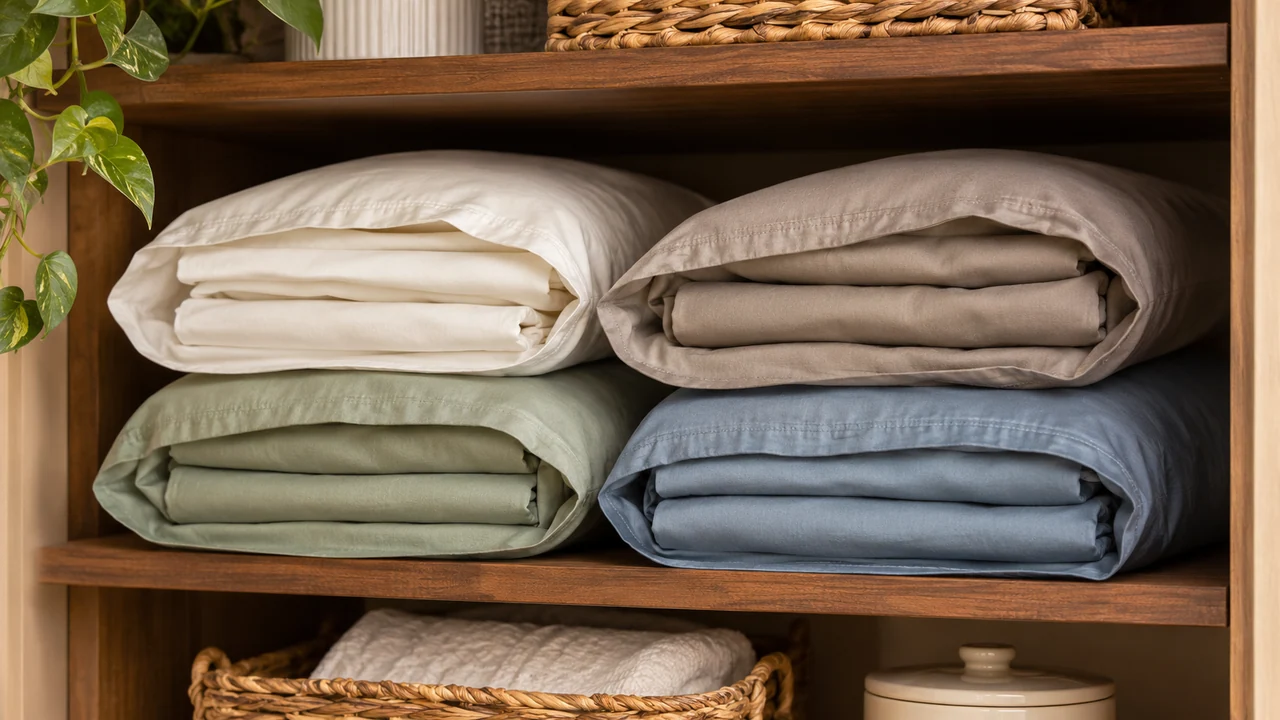
For sheets, fold the flat and fitted sheets and tuck them into a matching pillowcase if that makes a compact bundle. Fold the open end over lightly so the bundle stays together. Set the set on its side in a low bin or lay it flat on a shelf where the label shows. On a low shelf, test whether you can remove the whole bundle with one hand. If the package is too bulky, put all the pieces of one size in a labeled bin instead of squeezing the bundle to fit.
Choose labels that answer a question at a glance
Use the names the people in the house already use. “Guest queen sheets” tells someone both the size and where they go. “Blue room” works only if everybody knows which mattress is in that room. Test paper tags before deciding where a permanent label should go. On an upper shelf, put the tag on the shelf edge or the part of the bin you can see from below. For a fabric bin with a flexible front, choose a tag that stays readable after the contents settle.
When you have two spare sets that look alike, use separate labels or different colored fabric ties to distinguish their sizes. Give family or guests directions you can say out loud in a sentence. If a visitor asks for a towel, “middle shelf, left side” should be enough. One clear place to start is more useful than a row of nearly identical containers with small decorative labels.
A Deep Linen Closet Organization Plan for Four Shelves
Imagine a hall closet with four fixed shelves and a door that swings into a narrow hallway. At waist height, keep two low stacks of everyday bath towels and a short container of washcloths. Leave a gap large enough for a fresh load of towels to come back from the dryer. At chest height, keep the regularly used sheet sets in labeled pillowcase bundles or low bins. Read the labels from the doorway before you decide the job is done.
One shelf higher, store lightweight spare bedding in a container you can grip from both sides. Keep frequently used sheets and guest linens lower if you tend to change beds by yourself. On the lowest shelf, place heavier blankets you can pull forward without reaching up or lifting them out over other items. If the bottom shelf is low enough to make you kneel, keep the handles at the very front and slide the blanket out at your own pace.
Adapt the plan for a shared closet or a small opening
If the closet serves more than one household member, make one reachable stack for hand towels and assign each person a spot for bath linens. For a closet beside a guest room used only occasionally, reserve one bundle with a complete set of sheets and pillowcases. There’s no need to open several bins while making up one bed. If the doorway is a few inches narrower than the shelf, test narrower containers placed front to back or leave one side of the shelf open for turning a bin.
Try to keep the shelf assignment steady even if the exact container changes. Whether you use a box you already have or an open basket, keep the same purpose and visible label so people can find what they need after you tidy up. Once this closet works, the same approach can help you set up other calmer and more functional spaces at home.
Run the Laundry-Day Test
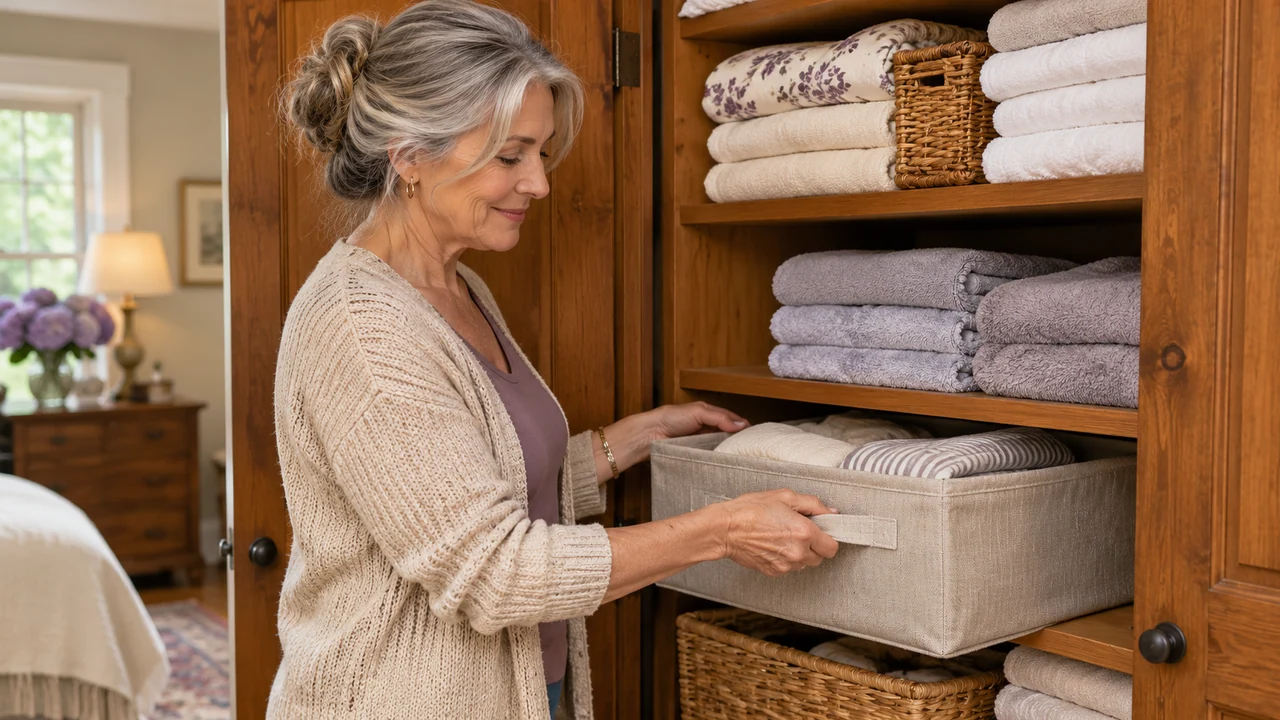
Use the closet for two regular laundry cycles. Pay attention when you take something out and when you put things back. Which shelf makes you turn sideways? Which items stay in the laundry basket because there isn’t room for them? If you have to take something out to put towels away, reduce the depth of the daily stack or move reserve items to a shelf where they won’t compete for space. Make the change while the problem is fresh in your mind.
Give the new arrangement a quick check when you change seasonal bedding. Read the labels, bring forward any extras you want to use, and clean the shelf before you put everything back. Store linens completely dry. If a towel smells musty, check whether laundry is going away slightly damp or whether the closet itself shows signs of moisture. Fully dry the towels before returning them, and give stacks some space so you can keep an eye on the problem.
Frequently Asked Questions
These choices come up when a shelf is deeper than you can comfortably reach. Start with the items you use every week and work outward from there.
How do you keep items from getting lost at the back of a deep linen closet?
Use a handled container when the category is small enough to pull out comfortably. Keep heavy or frequently used linens near the front. If you use the back for surplus linens, identify them on a label at the front and store them so you can remove them without disturbing a whole stack.
Are clear bins or baskets better for deep shelves?
Clear bins make the sides visible if you can see them from the doorway. An open basket with a front handle can be easier for everyday items, especially at waist height. Choose the option that comes out easily after it is loaded. Use an open container when you need to dip in repeatedly during the week.
How many towels and sheet sets should I keep?
Start by counting the linens you use between washes and any complete sets you need for guests or occasional bed changes. Use that number to plan the shelf and adjust it after laundry day. Keep the spare sets that solve a recurring need, such as making up the bed while the other set is in the wash, and designate one reachable spot for them.
Can I organize deep shelves without buying anything?
Yes. Use short stacks at the front, keep sheet sets together in their pillowcases, and test a sturdy box you already own as a pullout. Add a temporary paper label. Buy an organizer only after you know the measurements and which category would be easier to reach inside it.
A well-set shelf should make it easy to take out a towel and just as easy to return one. Begin with the shelf you use most often, and see how it feels the next time you carry a load of clean laundry down the hall.

Gui Perine
Gui Perine is the creator of Your Life in Full Bloom, a lifestyle website for women who want to live with more intention, beauty, and freedom after 50.
Through thoughtful articles on home, travel, reinvention, and everyday choices, she explores what it means to build a fuller life in a new season — one that feels calmer, more personal, and more aligned with who you are becoming.
Her work is inspired by real-life transitions, the desire for independence, and the belief that life after 50 can be a time of clarity, possibility, and renewal.