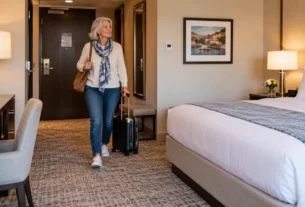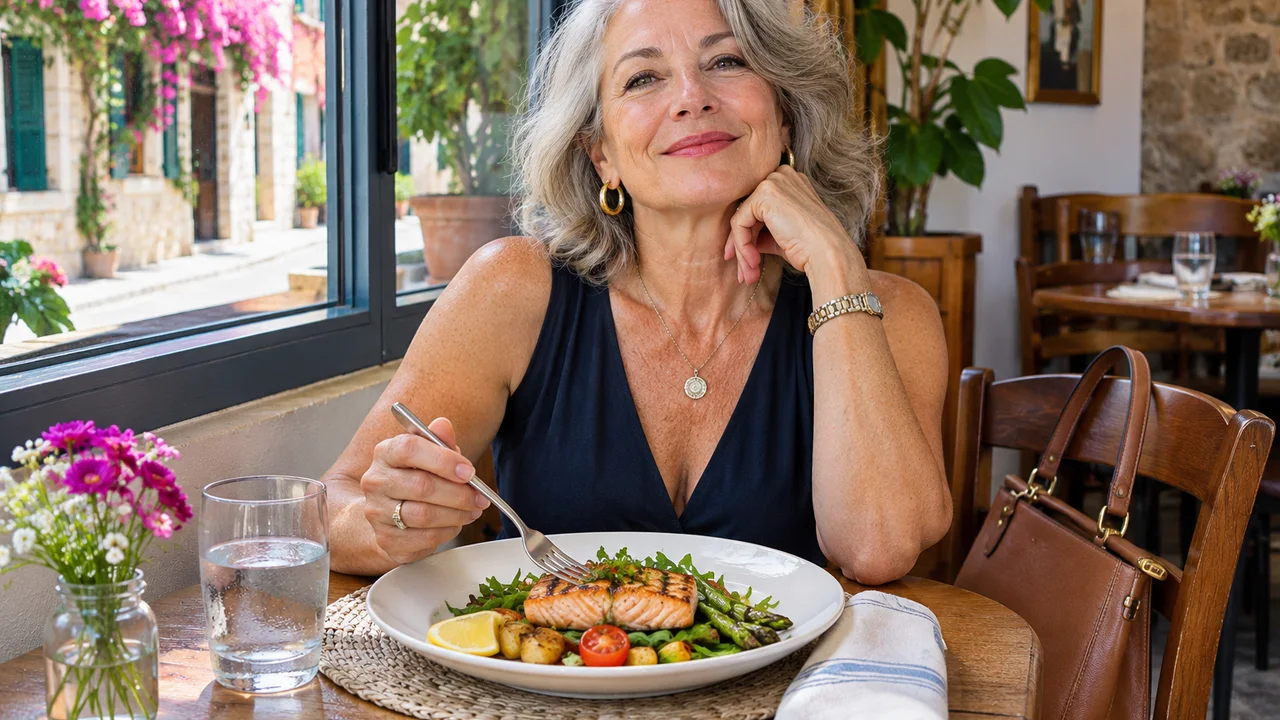
Eating alone while traveling is easier to approach when you plan the first meal as carefully as the first night’s accommodation. Choose a place you can reach comfortably, check the menu and booking rules, and have a simple way to ask for the table you want.
You do not have to become a person who loves every dinner alone. You may enjoy a quiet breakfast, want conversation at lunch, and prefer takeout after a long sightseeing day. A good plan leaves room for all three.
For women traveling independently after 50, comfort can matter as much as confidence: a supportive chair, readable menu, manageable noise level, suitable food, and a straightforward journey back. These nine practical steps help you make those choices without turning each meal into a challenge to overcome.
1. Make eating alone while traveling a familiar routine
If a long formal dinner feels intimidating, try a café lunch or an early meal in a place with a menu you understand. You are practicing a sequence: entering, asking for a seat, ordering, enjoying the food, and paying. You do not need to make every part unfamiliar at once.
Before your trip, you can try the sequence near home. Choose somewhere you would genuinely like to eat, rather than somewhere you dislike simply because it feels less visible. A successful practice meal is one you completed on terms that worked for you.
Our broader solo female travel tips cover planning beyond the restaurant. Here, the focus is the meal itself: choosing the setting, asking clear questions, and keeping the experience flexible.
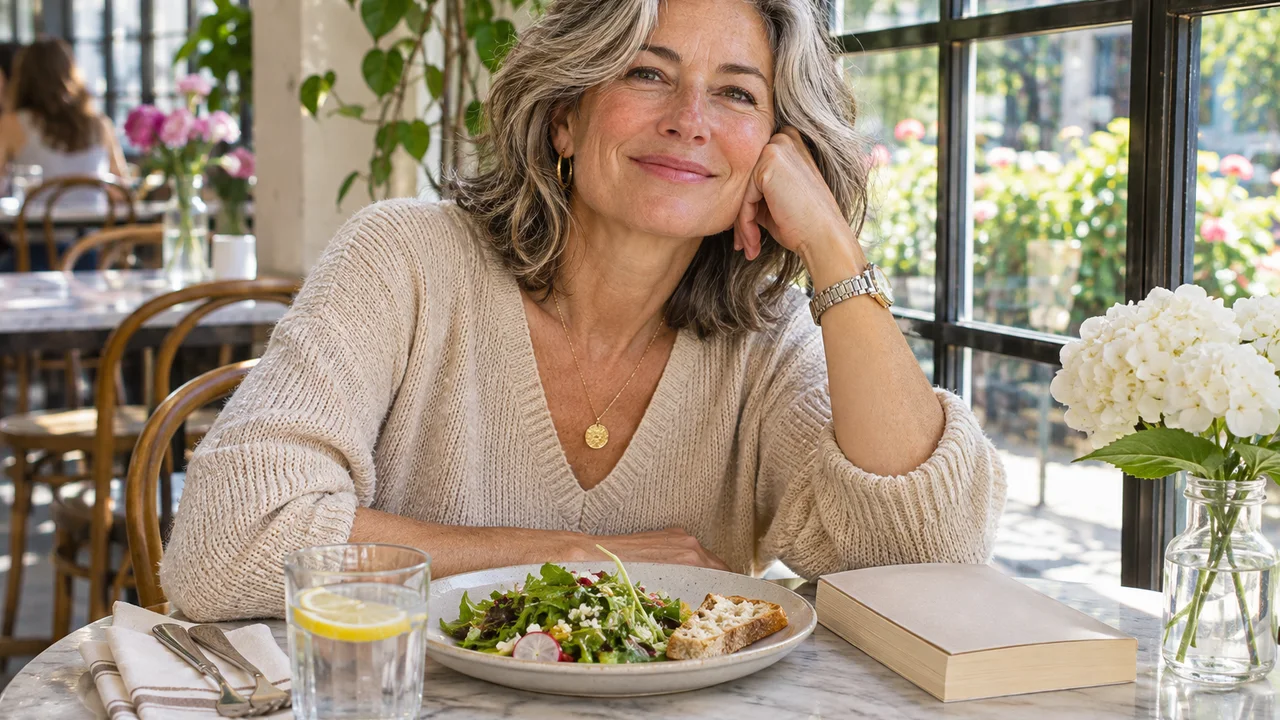
2. Choose the setting before choosing the perfect dish
When eating alone while traveling, look at the restaurant’s current website, menu, opening hours, and recent guest photographs. A beautiful plate is only one part of a pleasant meal. Check whether you can comfortably reach the entrance, sit for the length of the meal, and hear the person taking your order.
If something is important to you, ask directly. Photographs do not reliably establish step-free access, chair height, bathroom access, or the noise level at a particular time. The restaurant is the appropriate place to confirm what it can provide.
| Setting | Why you might choose it | What to check first |
|---|---|---|
| Café or casual lunch spot | A shorter, less formal first meal | Ordering system, available seating, opening hours |
| Restaurant table | A full meal at your own pace | Reservations for one, menu, seating preferences |
| Dining counter | A view of the kitchen or optional conversation | Seat height, back support, whether food is served there |
| Food hall or market | Several options in one place | Seat availability, carrying food, payment and dietary information |
| Booked food experience | Company with a planned activity | Group size, duration, inclusions, dietary suitability, cancellation terms |
| Takeout at your accommodation | A quieter evening when you want rest | Collection or delivery, utensils, where you can eat |
3. Check reservations for one and the actual price
When booking for eating alone while traveling, remember that some online systems show availability differently for one guest. If you cannot book a single seat, contact the restaurant and ask whether a table or dining counter is available. Do not assume that an unhelpful booking screen means you are unwelcome.
Before confirming, check minimum spends, tasting-menu requirements, deposits, cancellation fees, and whether any supplement applies to your booking. Read the terms for the specific venue and date. You should not have to discover the cost after sitting down.
A clear reservation question
“I would like to book for one person on Thursday around 6:30. Do you have a table or a dining counter available? Are there any minimum-spend or cancellation conditions I should know about?”
You can add a concrete seating request: “I need a regular-height chair with a back,” or “Is there a quieter table?” A request does not guarantee availability, so ask the venue to confirm anything essential.
4. Ask for a table without explaining your personal life
At the entrance, “A table for one, please” is enough. You do not owe the host an explanation of your relationship status or why you are traveling independently.
If offered a seat that does not work for you, ask about an alternative before ordering. A counter may be sociable, but a high stool is not automatically comfortable. A tucked-away table may be peaceful, but you may prefer a window. Your preference counts.
Try: “Would that table by the window be available?” or “Do you have a chair with back support?” If the venue cannot meet an important need, choosing somewhere else is a practical decision.
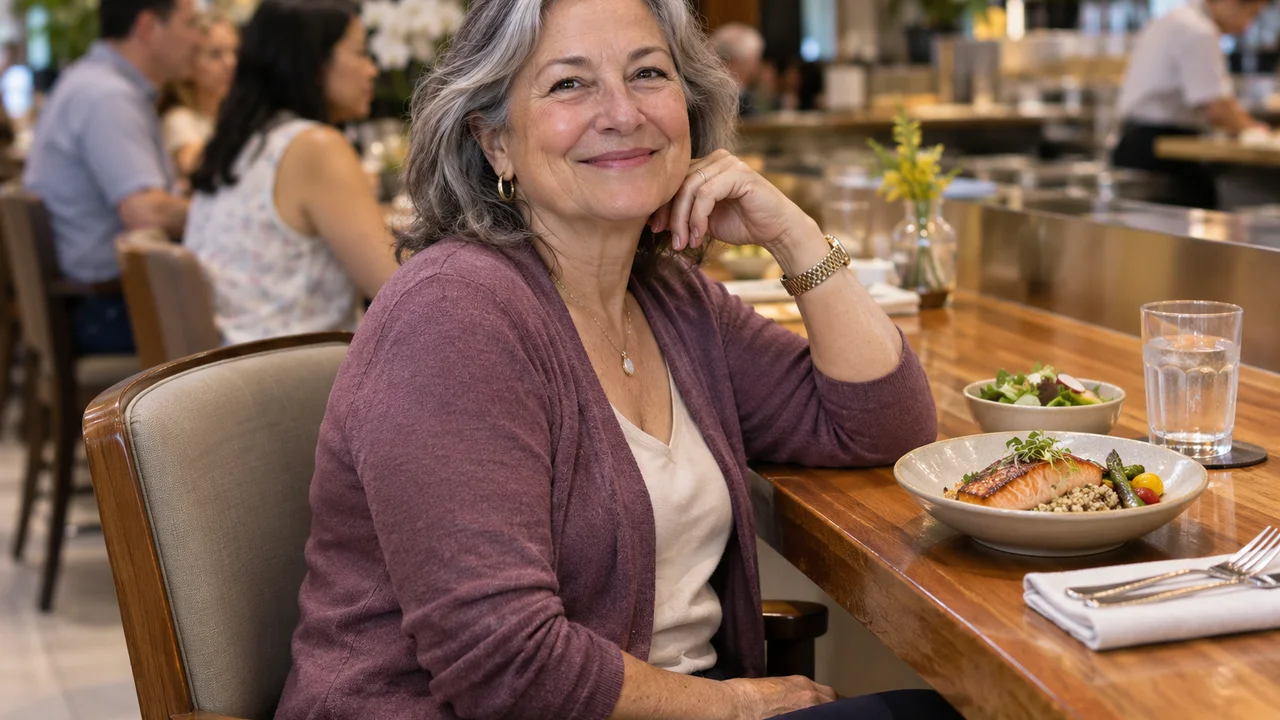
5. Decide what you want to do while waiting
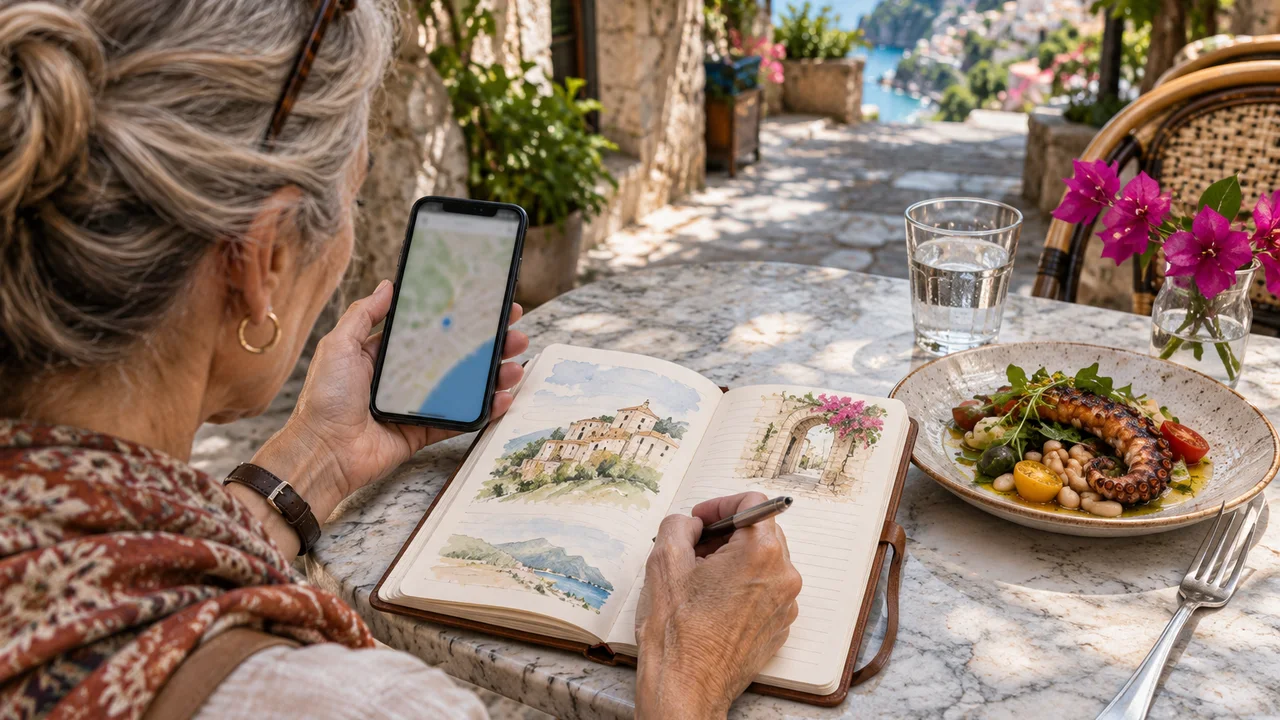
When eating alone while traveling, the gap between ordering and receiving food can feel more awkward than the meal. Give yourself a few options: read a few pages, write a postcard, make a short journal note, or simply notice the room.
You do not need to look busy for other people’s benefit. A book is useful if you enjoy reading, but it does not have to become a shield. Keep any belongings you bring within your control, and avoid spreading valuable items across the table.
If you use your phone, save the restaurant details and return route before the battery runs low. A few photographs of the meal can be enjoyable; you can then put the phone away if you would rather focus on the food. Respect other diners’ privacy when taking pictures.
6. Make room for company without depending on strangers
You may want conversation on some days. A small-group food tour, cooking lesson, or hosted meal can offer a planned social setting. Check what is included, the pace, transport, accessibility, group size, and dietary arrangements before paying.
A dining counter can also allow casual conversation, but staff and other guests may be busy or prefer privacy. Treat a friendly exchange as a possibility rather than something the seat guarantees.
You can be sociable while keeping personal information private. There is no need to disclose your accommodation address, room number, or full itinerary to someone you just met. A simple “I have plans afterward” can close a conversation when you are ready to leave.
7. Order for your appetite and ask about the menu
Shared plates and large portions can make eating alone while traveling more complicated than expected. Ask which dishes are suitable for one person and whether smaller portions are available. A restaurant may not be able to adapt its menu, but a question can prevent an unsuitable order.
If ingredients or dietary requirements matter, discuss them with staff rather than relying on a photograph or an automatic translation. If the venue cannot give you the information you need, choose another option. This is especially important when you need reliable allergen information. FARE’s dining-out guidance offers questions to discuss with restaurant staff when managing food allergies.
Look at the full cost, including any service charge, cover charge, or locally applicable taxes. Tipping customs vary, so check the bill and local expectations. Our retirement travel budget guide can help you make meals part of the overall trip plan.
8. Plan the journey back before dinner
A restaurant can be close on a map and still be inconvenient after dark or when you are tired. Check the route, transport hours, and where a taxi or other prearranged ride can collect you. Conditions and services vary by destination, so verify the details locally.
Keep your phone charged and have an alternative if your usual payment or transport option is unavailable. Follow local guidance, keep control of your drink and belongings, and avoid sharing more personal information than the situation requires.
If a place or interaction feels uncomfortable, you can leave and seek assistance from appropriate staff or local services. No seating arrangement or planning tip guarantees safety. Make the decisions that suit the situation in front of you.
9. Keep a fallback meal and a flexible definition of success
For eating alone while traveling, save two realistic options near your accommodation: somewhere to sit down and somewhere to collect a meal. Check their current opening hours and how to order. This is particularly useful for an arrival evening when delays may change your plans.
Use the alternative when you want it. Takeout, a hotel restaurant, or a simple meal in your room can be a sensible choice after a tiring day. You do not need to prove independence by making every dinner an event.
Afterward, note one thing that worked and one thing to change: “Lunch felt easier than dinner,” “The counter stool was uncomfortable,” or “Booking ahead meant I could relax.” These details are more useful for your next meal than judging whether you looked confident.
Your first solo travel meal: a simple plan
- Choose one nearby restaurant you would genuinely like to try.
- Check its menu, hours, seating, and booking conditions.
- Reserve for one if appropriate and confirm essential needs.
- Save the route back and one fallback option.
- Bring a book or notebook only if you want to use it.
- Ask clearly for your table and order at your own pace.
- Notice what you enjoyed and adapt the next meal accordingly.
For additional perspectives, Solo Traveler’s guide to eating alone discusses restaurant tactics and alternatives. Different travelers prefer different settings; use the ideas that fit your comfort and plans.
Frequently asked questions
Is eating alone while traveling awkward?
It can feel unfamiliar, especially at first, but you can make the experience more manageable. Start with a setting you like, check the practical details, and choose a meal length that suits you. Feeling a little self-conscious does not mean the meal has gone badly.
What should I do while eating alone in a restaurant?
When eating alone while traveling, enjoy the food, read, write a short note, or watch the room. Conversation is optional. Keep your belongings close and be considerate when using a phone. You do not have to entertain yourself continuously or appear busy.
Should I sit at the bar when dining alone?
Only if you like it and the seat works for you. Ask whether the full menu is served there and check the stool height and back support. A regular table may be more comfortable, quieter, or better for the meal you have planned.
Can I make a restaurant reservation for one?
Many venues accept reservations for one, but availability and policies differ. If the website does not offer the option, contact the restaurant. Confirm any deposits, minimum spends, supplements, and cancellation terms before booking.
How can I avoid eating every meal alone on a solo trip?
Mix independent meals with a booked food experience, a cooking class, or a meal with someone you already know. Check arrangements in advance. You can enjoy traveling independently while choosing company for part of the day.
A table that suits the way you travel
Eating alone while traveling becomes more personal as you learn your preferences. You might like a leisurely lunch, an early dinner, or a mix of social and quiet meals. Begin with one well-chosen table, ask for what you need, and leave room to change your plans.

Gui Perine
Gui Perine is the creator of Your Life in Full Bloom, a lifestyle website for women who want to live with more intention, beauty, and freedom after 50.
Through thoughtful articles on home, travel, reinvention, and everyday choices, she explores what it means to build a fuller life in a new season — one that feels calmer, more personal, and more aligned with who you are becoming.
Her work is inspired by real-life transitions, the desire for independence, and the belief that life after 50 can be a time of clarity, possibility, and renewal.