Hobbies for women over 50 at home can begin with one small project, a comfortable place to sit, and supplies you already own. You do not need a talent you discovered in childhood, a room devoted to crafting, or a plan to turn your spare time into income.
The most useful starting point is choosing something you would like to do again, even if your first attempt looks ordinary. Perhaps you want a quiet evening activity, a creative break from screens, or something that belongs to you after years of organizing everyone else’s time.
This guide compares nine beginner-friendly hobbies for women over 50 at home, explains what to try first, and offers a two-week experiment before you spend much money. The times below are suggested trial sessions, not promises about how quickly you will learn.
How to choose hobbies for women over 50 at home
Choose hobbies for women over 50 at home around your real space and schedule. A hobby that requires an hour of setup may be a poor fit for a shared dining table. An activity you can keep in a small basket may be easier to return to. Consider your lighting, storage, comfort, and whether you prefer following instructions or experimenting.
Ask yourself three questions: Do I want to make something, learn something, or simply enjoy the process? How much cleanup will I tolerate? Would I still enjoy this if I never posted it online? Your answers matter more than an impressive list of benefits.
| Hobby | First trial | Start with | Space and cleanup |
|---|---|---|---|
| Pencil sketching | 15 minutes | Pencil and paper | Small tray; almost no cleanup |
| Watercolor | 20 minutes | Small paint set, brush, suitable paper | Protected table; rinse brush |
| Hand embroidery | 20 minutes | Small hoop, needle, thread, fabric | Small pouch; store sharp tools safely |
| Phone photography | 15 minutes | Your existing phone | Window or tabletop |
| Creative writing | 15 minutes | Notebook or document | Any comfortable writing spot |
| Reading exploration | 20 minutes | Library book or ebook | A chair and useful light |
| Collage | 20 minutes | Scrap paper, scissors, glue | Protected table; recycle offcuts |
| Language practice | 10 minutes | Library audio or a beginner lesson | Quiet corner; optional headphones |
| Recipe notebook | One familiar recipe | Food you planned to cook anyway | Your normal kitchen setup |
1. Try pencil sketching without buying an art kit
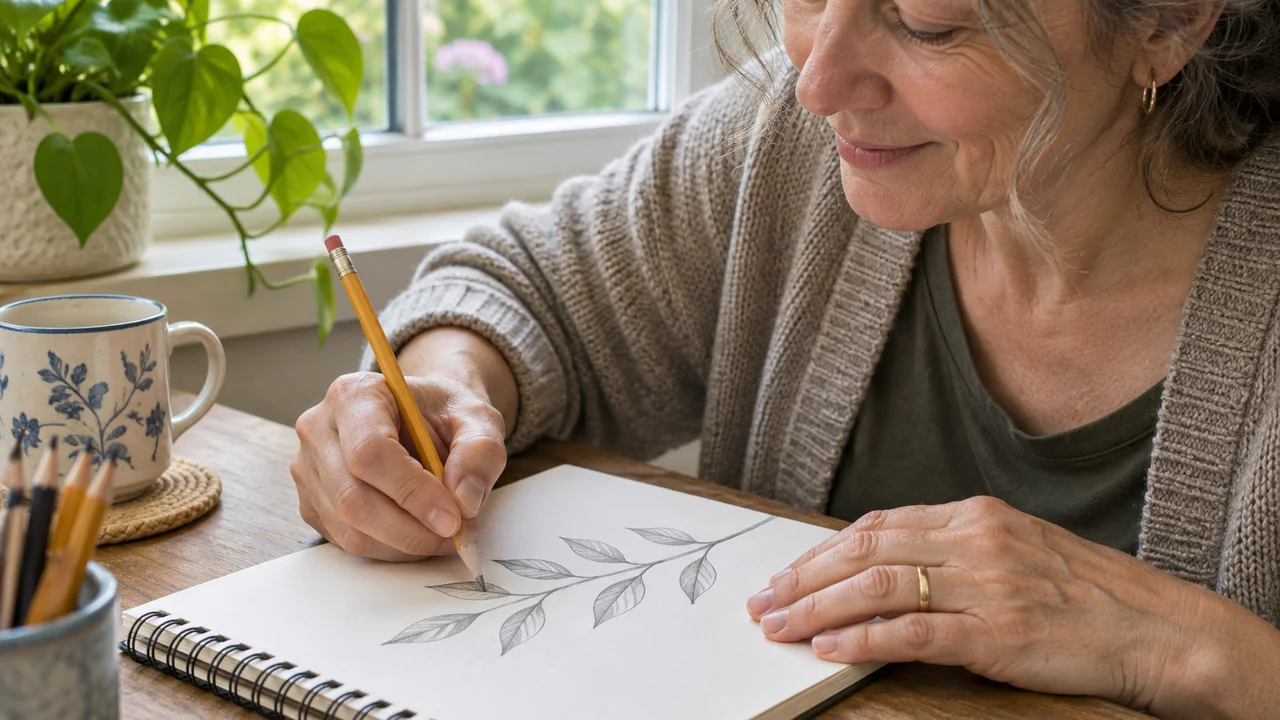
Draw a mug, a leaf, or the outline of your own hand. Set a short timer and concentrate on looking at the object rather than making a polished picture. Ordinary paper and a pencil are enough to discover whether you like the process.
Your first small project
Draw the same mug three times: once slowly, once without erasing, and once using only a few lines. Date the page so you can revisit it later. If a blank page feels intimidating, divide it into four small boxes. A small rectangle asks less of you than a whole sketchbook.
Use a comfortable grip and position the page where you can see it clearly. Adjust the activity to your own needs rather than forcing yourself to work through discomfort.
2. Explore watercolor through color, not perfect pictures
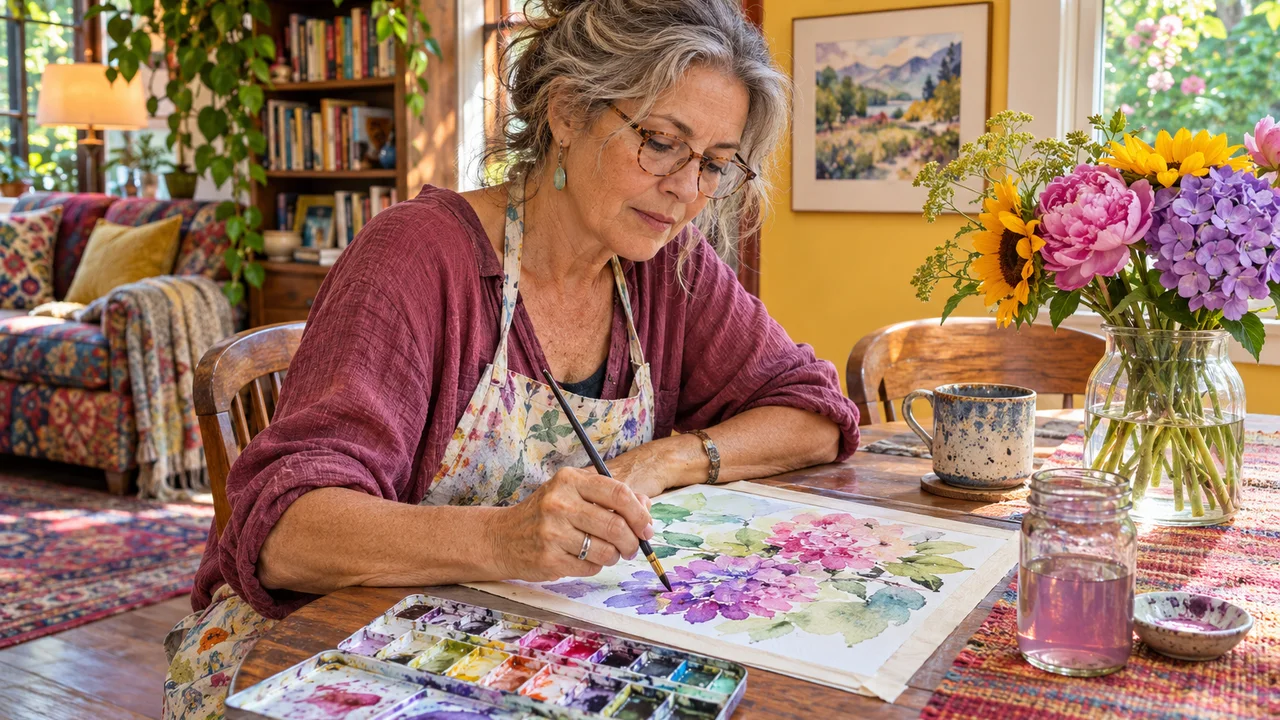
Watercolor is an option if you enjoy watching color move. Begin with a small palette, one brush, water, and a few sheets of paper intended for watercolor. You can test a borrowed set or attend a beginner session before buying more.
Paint rows of color swatches, then simple leaves using one or two brushstrokes. Let a page dry before deciding whether you like it. A first session can simply teach you how much water your brush holds.
Keep the setup on a washable tray or protect the table. If getting everything out becomes the reason you avoid painting, reduce the number of supplies rather than upgrading them.
3. Start hand embroidery with one stitch
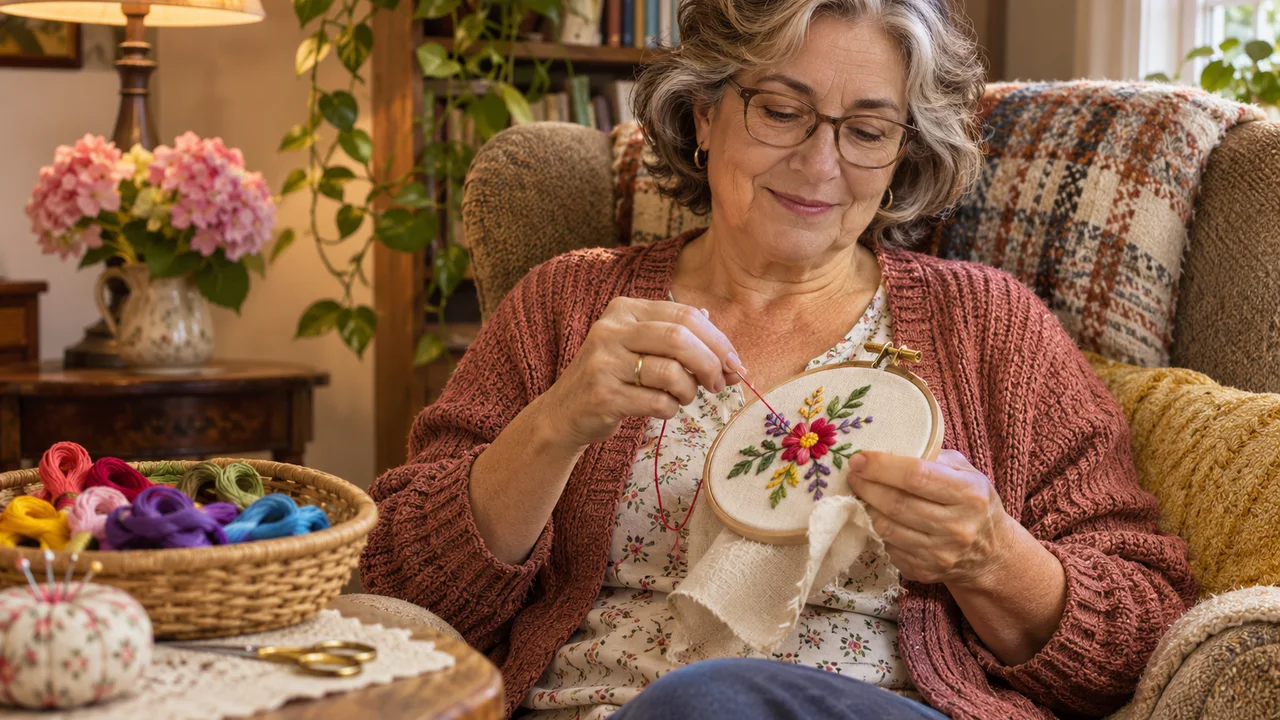
Choose a small piece of fabric and practice a running stitch before attempting a complicated design. A line, a flower stem, or your initial gives you a manageable first project. Use a needle and thread appropriate to the fabric and follow the instructions supplied with your materials.
Good lighting, a supported chair, and a place to put the hoop down make a difference. Stop and adjust if close work becomes uncomfortable. Keep needles, scissors, and loose thread away from children and pets.
A small beginner kit can be convenient, but check that it includes clear instructions. Buying several unfinished projects at once usually creates more obligation than opportunity.
4. Make a phone photography project at home
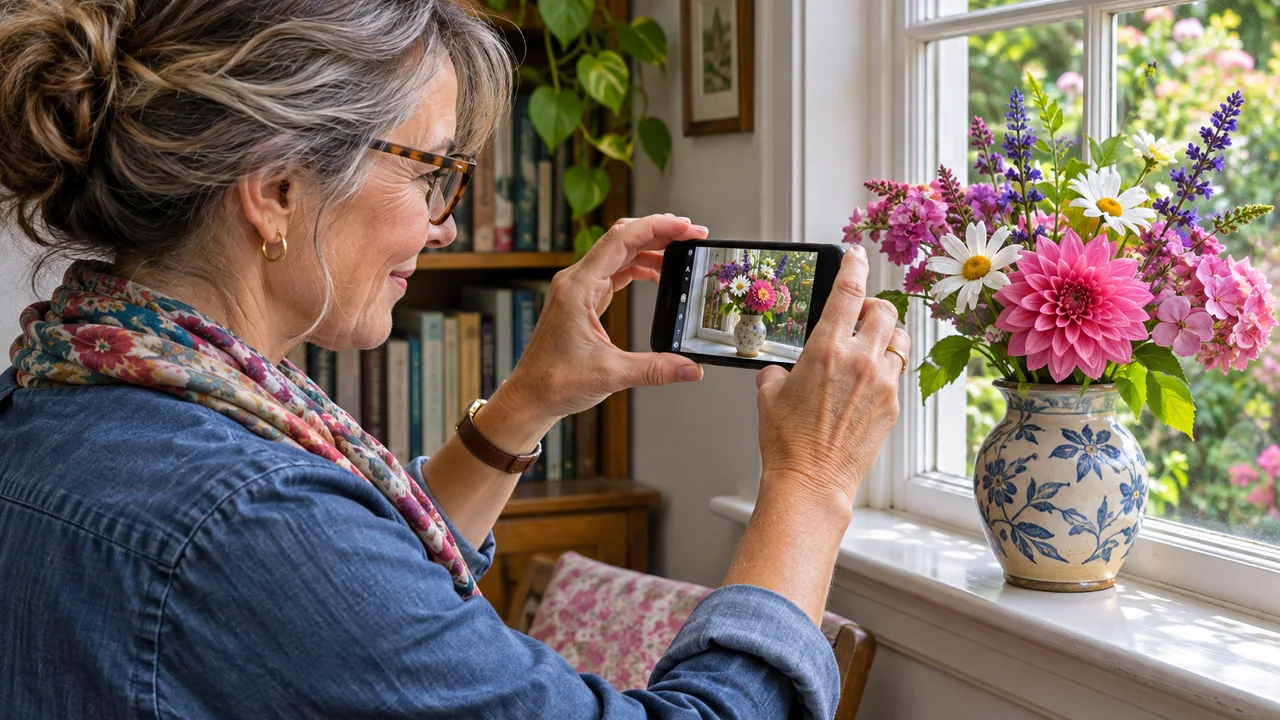
You do not need a new camera to explore composition. Choose one subject, such as flowers, breakfast, or light falling across a chair. Photograph it from three angles at different times of day.
Clean the phone lens, check the background, and move yourself before relying on zoom. Compare the images and choose one favorite. The project is learning to notice; it does not require buying props.
For a simple weekly theme, photograph five examples of one color around your home. Keep private documents, addresses, and other people’s faces out of images you plan to share.
5. Write short scenes instead of committing to a memoir
A whole life story can feel too large to begin. A single scene is easier: the kitchen in your childhood home, your first apartment, or the day you learned a useful skill.
Write what you remember seeing, hearing, and doing. You can leave gaps where details are uncertain. Keep the first draft private so you can experiment without deciding how family members will react.
If reflective writing appeals to you, our guide to self-reflection journals offers another starting point. Creative writing can also be entirely fictional; it does not need to become emotional work.
6. Give your reading a gentle theme
Choose a theme that makes selecting your next book easier: novels set in one city, short biographies, gardening essays, or mysteries by a new-to-you author. Start with one book rather than building an ambitious reading schedule.
Ask your public library about borrowing options, accessible formats, and any available discussion groups. USAGov’s guide to libraries can help you find local library resources. Availability and membership rules vary. A few notes after each chapter can help you remember what interested you without turning reading into homework.
If you want company later, invite one person to discuss a chapter over tea or a call. You do not need to organize a formal club.
7. Create a small paper collage
Use scrap paper, old magazines you own, or prints you have permission to use. Choose a simple theme such as a favorite color, a garden, or a place you hope to visit. Arrange the pieces before gluing them onto a postcard-sized sheet.
For paper-based hobbies for women over 50 at home, a small format keeps the project contained. Store reusable scraps in one envelope, and recycle the pieces you do not want. Check image rights before selling or distributing work that includes someone else’s protected material.
8. Learn a few phrases in a language you are curious about
Choose a situation rather than a vague goal of becoming fluent: introducing yourself, ordering tea, or asking for directions. Listen to a short beginner lesson, repeat aloud, and write three phrases you want to use.
Try library resources or a free sample before subscribing to a course. Check renewal terms before paying. If you prefer paper, a beginner book with audio can provide structure without requiring long periods on a screen.
Ten attentive minutes can be a reasonable trial. If you enjoy the routine, expand it gradually and look for a conversation opportunity when you feel ready.
9. Build a personal recipe notebook
Choose a dish you already cook and record the version that works for your household. Note the pan, portion size, timing, and one adjustment you would make next time. Add a photograph if you like.
This differs from collecting dozens of recipes you never use. You are building a small reference of meals you enjoy preparing. Follow safe food handling and storage guidance, and keep any dietary requirements in mind when experimenting.
You can also write the story of a family dish without feeling obliged to recreate every complicated step. Your notebook can be practical, creative, or both.
A two-week plan to find a hobby you actually enjoy
Use this plan to compare hobbies for women over 50 at home before buying more supplies. Include setup time and cleanup when deciding what fits your week.
- Days 1–2: Choose two options and set a small spending limit. Gather existing supplies.
- Days 3–6: Try each activity once, for a short session that fits your day.
- Day 7: Ask which activity you wanted to continue. Include setup and cleanup in your judgment.
- Days 8–12: Repeat your favorite twice. Make the project smaller if you keep postponing it.
- Days 13–14: Decide whether to continue, adapt, or try another option. Buy only the missing item that would solve a real problem.
If this season has opened up unfamiliar time, you may also find our empty nest after 50 guide helpful. A new activity can be one part of a fuller week without becoming a test of whether you are using your time correctly.
Frequently asked questions
What is a good hobby for a woman in her 50s?
Good hobbies for women over 50 at home fit your interests, space, comfort, and budget. Pencil drawing, phone photography, reading, writing, and small embroidery projects are useful options to test because you can begin with a modest project. There is no single best activity for every woman.
Which hobbies can I try at home without spending much?
Inexpensive hobbies for women over 50 at home can start with supplies you own: write in a notebook, photograph household details with your phone, borrow a library book, or sketch with pencil and paper. Borrowing or sampling materials before buying can keep the experiment inexpensive.
What if I have never been creative?
Choose an activity with a clear first step and allow yourself to be a beginner. Following a simple stitch pattern, photographing one object, or writing a short memory does not require an artistic identity. Enjoyment is a valid reason to continue.
How do I avoid abandoning another hobby?
Keep supplies easy to reach, choose a small project, and try a few short sessions before investing. If you dislike the activity after a fair trial, changing direction is reasonable. You have learned something about your preferences.
Choose one small beginning
The best hobbies for women over 50 at home are the ones you want to return to. Choose one option, prepare a small space, and give yourself permission to make an ordinary first attempt. You can build skill later. For now, noticing what you enjoy is enough.

Gui Perine
Gui Perine is the creator of Your Life in Full Bloom, a lifestyle website for women who want to live with more intention, beauty, and freedom after 50.
Through thoughtful articles on home, travel, reinvention, and everyday choices, she explores what it means to build a fuller life in a new season — one that feels calmer, more personal, and more aligned with who you are becoming.
Her work is inspired by real-life transitions, the desire for independence, and the belief that life after 50 can be a time of clarity, possibility, and renewal.