A fall kitchen reset is one of the most useful ways to prepare your home for the season ahead. As summer routines fade and the holidays move closer, the kitchen usually becomes busier. There are warmer breakfasts to prepare, soups to simmer, school or work lunches to pack, guests to welcome, and family meals to organize.
But a kitchen cannot support all that activity when every cabinet is crowded, the freezer is impossible to navigate, and the countertops have become a landing place for everything that enters the house.
The good news is that you do not need a renovation, a new pantry, or an entire weekend of intense organizing. You need a focused reset that removes what is expired, broken, duplicated, or no longer useful.
This kitchen reset checklist will help you work through ten common clutter zones before the busiest months of the year. You can complete it in a single day, spread it across a weekend, or tackle one area at a time.
The goal is not to create a picture-perfect kitchen. It is to make your kitchen easier to use.
Why Is Fall a Good Time to Reset Your Kitchen?
Fall naturally changes the way many households use the kitchen. Meals become warmer and more substantial. Baking supplies return to the front of the pantry. Slow cookers, roasting pans, casserole dishes, and large serving pieces begin working harder. Holiday plans also bring groceries, guests, and additional cooking.
That makes early fall an ideal moment to see what is taking up space before you need that space.
A seasonal reset can help you:
- find ingredients before buying duplicates;
- make room for fall groceries and holiday supplies;
- reduce food waste;
- simplify meal preparation;
- clean areas that are normally difficult to reach;
- identify tools that need replacing;
- create safer, clearer pathways through the kitchen;
- make hosting feel less stressful.
This is also a practical opportunity to notice whether your kitchen still fits your life. You may cook differently than you did five or ten years ago. Your household may be smaller. Your food preferences may have changed. You may want simpler meals, easier storage, or fewer objects to maintain.
Your kitchen should support the way you live now, not preserve every habit and object from the past.
How Should You Begin a Fall Kitchen Reset?
Do not empty the entire kitchen at once. That approach often creates a large, discouraging mess and makes it harder to finish.
Instead, work in small zones. Choose one cabinet, drawer, shelf, or appliance at a time. Keep four containers nearby:
- Keep: useful items that belong in the kitchen.
- Relocate: items that belong somewhere else in the house.
- Donate: usable items you no longer need.
- Discard or recycle: expired, damaged, unsafe, or unusable items.
Before donating food, check the policies of your local food bank. Many organizations accept unopened, unexpired pantry goods but have specific rules about packaging and dates.
As you work, clean each empty shelf or drawer before putting anything back. This keeps the reset efficient: you declutter, clean, and reorganize one space in a single pass.
Now begin with the areas most likely to create daily frustration.
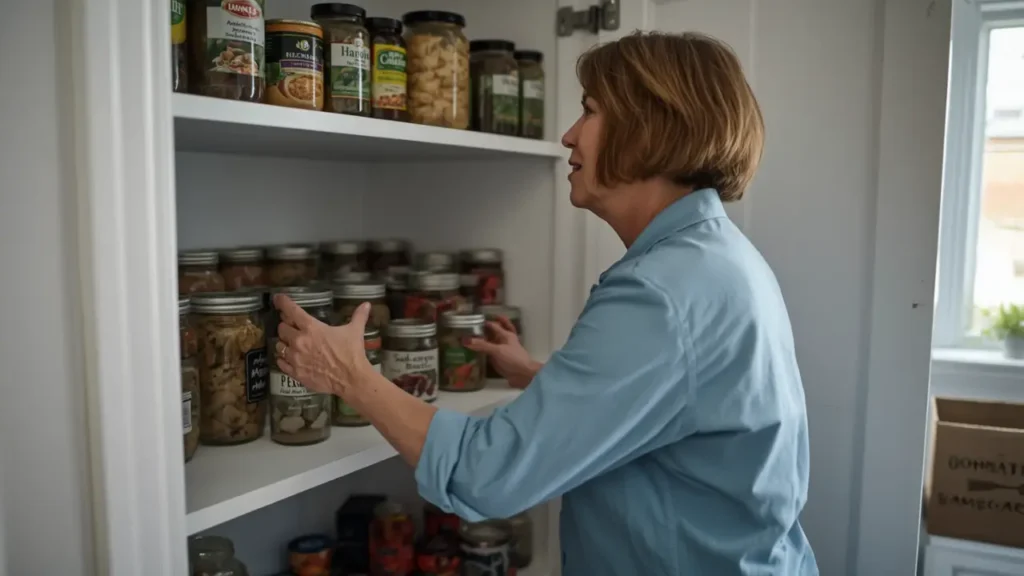
1. Which Spices and Pantry Foods Should You Remove?
Start with the pantry or the cabinets where you store dry food. Remove items one shelf at a time and check expiration or best-by dates, packaging, and condition.
Look for:
- spices with little aroma or flavor;
- open bags that were never sealed properly;
- stale crackers, cereal, or baking ingredients;
- cans that are badly dented, bulging, leaking, or rusted;
- foods purchased for a recipe you no longer plan to make;
- ingredients your household does not enjoy;
- several open packages of the same food;
- products you cannot identify or remember buying.
Do not assume that every product must be discarded simply because a best-by date has passed. Date labels can indicate different things, and food safety depends on the product, its packaging, and how it was stored. When in doubt, follow current food-safety guidance and use your judgment about damaged or questionable items.
After sorting, group similar foods together: breakfast, baking, grains, canned goods, snacks, sauces, and meal ingredients. Place foods that should be used soon where you can see them.
Create a small “use first” basket if that helps. It can hold an open bag of rice, a nearly finished box of pasta, or canned goods you want to include in upcoming meals.
The most effective pantry system is not the most decorative one. It is the one that helps you know what you have.
2. How Many Food Storage Containers Do You Really Need?
Food storage containers are one of the fastest-growing forms of kitchen clutter. Lids disappear, plastic becomes stained, sets get mixed together, and new containers arrive before old ones leave.
Take every container and lid out of the cabinet or drawer. Match them carefully.
Remove:
- containers without lids;
- lids without containers;
- cracked or warped pieces;
- heavily stained containers you no longer want to use;
- shapes that are difficult to stack;
- duplicates that exceed your realistic needs;
- takeout containers you have been saving without a plan.
Keep a practical range of sizes for leftovers, lunches, meal preparation, and freezer storage. If you live alone or with one other person, a huge collection may create more work than value.
Store lids vertically in a divider or small bin when possible. Nesting containers by shape can save space, but do not stack so many that removing one causes everything else to fall.
A container system should make saving food easier, not turn every leftover into a matching game.
3. Is It Time to Let Go of Chipped Mugs and Dishes?
Mugs and dishes often carry memories, which can make them surprisingly difficult to edit. But everyday cabinets can become crowded with pieces that are chipped, uncomfortable to hold, never used, or left over from incomplete sets.
Look honestly at what you reach for.
Remove pieces that are:
- chipped or cracked;
- difficult to clean;
- too heavy or awkward;
- rarely chosen because you dislike them;
- part of a large collection you no longer enjoy;
- taking space needed for frequently used dishes.
Chipped dishes can hold bacteria in damaged surfaces and may continue to crack. They are not good candidates for donation as tableware. Depending on the material and local recycling rules, they may need to be discarded or repurposed for a non-food use.
You do not need to keep twelve mismatched promotional mugs when you consistently use the same three. Keep the pieces that are comfortable, useful, and genuinely meaningful.
Opening a cabinet without objects pressing against the door is a small but noticeable improvement.
4. Which Small Appliances Are Taking Up Too Much Space?
Small appliances promise convenience, but some create more clutter than value. A bread maker, juicer, waffle iron, ice cream machine, air fryer, slow cooker, blender, food processor, and coffee system may all be useful in the right household. They do not all need to be useful in yours.
Ask these questions about each appliance:
- Have I used it in the past year?
- Does it perform a task another appliance already handles?
- Is it easy enough to use and clean?
- Does it fit the way I cook now?
- Would I buy it again today?
- Am I keeping it because I use it or because I feel guilty?
Test appliances you are unsure about. Confirm that all necessary parts are present and that the cord is in safe condition. Donate only clean, functional equipment.
Appliances used weekly deserve accessible storage. Appliances used occasionally can live on a higher shelf or in another storage area. Appliances that are never used should not occupy the most valuable space in the kitchen.
5. Do You Have Too Many Duplicate Utensils and Pans?
Duplicates often accumulate gradually. One spatula becomes six. A second muffin pan arrives for a special occasion. Several can openers remain in the drawer even though only one works well.
Empty the utensil drawers and examine each category together. You may discover:
- multiple peelers, whisks, or ladles;
- bent or uncomfortable utensils;
- knives that are unsafe or never used;
- gadgets designed for one task you rarely perform;
- pans with badly damaged cooking surfaces;
- baking sheets that no longer sit flat;
- several versions of the same serving tool.
You may need more than one wooden spoon or sheet pan, especially if you cook frequently. The purpose is not to force every category down to a single item. It is to keep the number that matches your real routines.
Place everyday tools close to where they are used. Cooking utensils belong near the stove. Baking tools should stay together. Rarely used serving pieces can be stored away from the main work zone.
Fewer, better tools make drawers easier to open and cooking easier to begin.
6. What Summer Items Can Be Stored Elsewhere?
Seasonal transitions are easier when the most relevant items receive the most accessible space.
In early fall, look for summer-specific objects that are still occupying prime kitchen storage:
- outdoor dining pieces;
- picnic supplies;
- popsicle molds;
- large beverage dispensers;
- grilling accessories;
- coolers and insulated bags;
- reusable pool or beach drinkware;
- seasonal party decorations.
Clean and dry these items completely before storing them. Group them in one labeled bin or designated area so they are easy to retrieve next year.
Then move fall and holiday tools into more convenient locations. Roasting pans, pie plates, casserole dishes, slow cookers, soup pots, and baking ingredients should not be hidden behind equipment you will not use for months.
This seasonal rotation costs nothing and makes the kitchen feel more responsive to the life happening now.
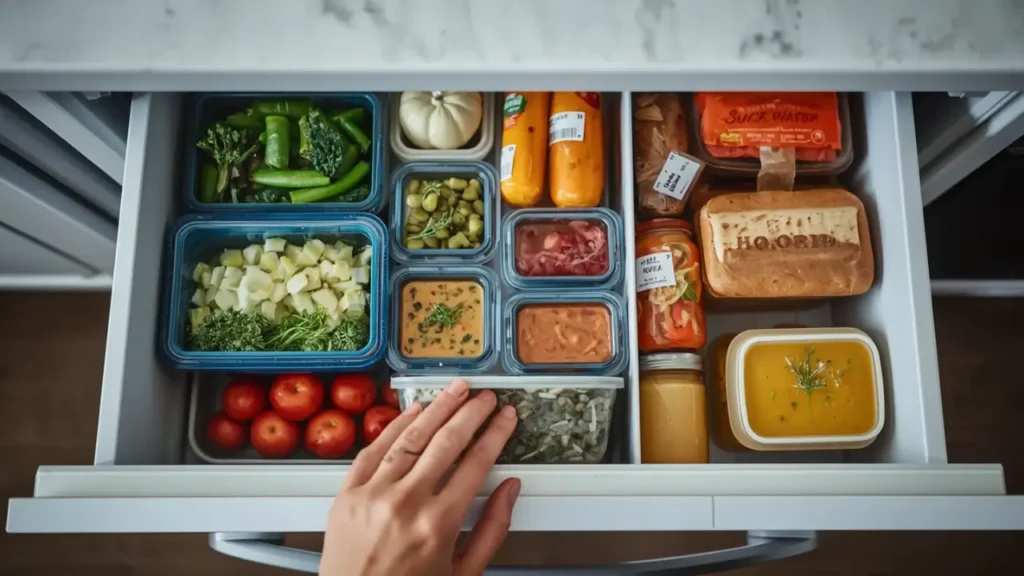
7. What Is Hiding in Your Freezer?
An overcrowded freezer can waste food and money because items disappear before they are used. It also reduces your ability to freeze leftovers, prepare meals ahead, or take advantage of seasonal cooking.
Work quickly and keep frozen food cold while you sort. Follow appropriate food-safety practices if items will remain outside the freezer for more than a brief period.
Remove:
- unidentifiable packages;
- badly freezer-burned foods you know you will not eat;
- items that thawed and were stored unsafely;
- small leftovers that have been forgotten;
- duplicate products purchased because you could not see the first package;
- foods kept only because discarding them feels wasteful.
The waste happened when the food was forgotten, not when you acknowledged that it was no longer usable. The lesson is to create a system that prevents the same problem.
Group foods by category and label homemade meals with the name and date. Keep a freezer inventory on the door, in a kitchen notebook, or on your phone. It does not need to be elaborate. A simple list can prevent unnecessary purchases.
Leave some open space. A freezer filled to the point of chaos is not fully functional.
8. Why Do Kitchen Countertops Become So Cluttered?
Kitchen counters attract objects because they are flat, central, and convenient. Mail, receipts, medications, reusable bags, chargers, water bottles, and unfinished household tasks arrive there even when they have nothing to do with cooking.
Begin by removing everything from one section of the counter. Return only what you use frequently in that exact location.
For everything else, ask where the activity actually belongs:
- Mail may need a sorter near the entrance.
- Medication may need a safe, dry storage area away from heat and moisture.
- Chargers may need a dedicated station outside the food-preparation zone.
- Reusable bags may belong near the door or in the car.
- Receipts may need a small folder or immediate recycling.
- Papers requiring action may need a single inbox rather than several piles.
If incoming objects regularly travel from the front door to the kitchen, consider creating a better drop zone. The ideas in Small Entryway Ideas: 10 Clever Storage Tips can help keep keys, mail, bags, and everyday items from spreading into food-preparation areas.
A clear counter makes the kitchen look calmer, but its greatest value is practical: you can begin cooking without first moving a pile.
9. What Should You Remove From Under the Sink?
The cabinet under the sink often contains cleaning products, plastic bags, old sponges, appliance parts, plant supplies, and objects nobody knows where else to store. Because plumbing occupies much of the space, leaks or moisture can also go unnoticed.
Remove everything and inspect the cabinet for dampness, stains, odors, pests, or evidence of a slow leak. Address plumbing problems instead of organizing around them.
Then discard or safely dispose of:
- empty bottles;
- dried-out wipes;
- damaged gloves;
- worn-out sponges and brushes;
- products you no longer use;
- unidentified liquids;
- unsafe mixtures or leaking containers.
Never combine household cleaning products. Keep labels intact, follow disposal instructions, and store chemicals away from children, pets, food, and anything they could contaminate.
Use one small bin for daily cleaning supplies and another for replacement products if necessary. Avoid filling every inch. You need enough visibility to notice a leak and enough space to reach the plumbing.
10. Are Your Holiday Hosting Supplies Ready?
The final step is not simply decluttering. It is preparing the kitchen for the season ahead.
Bring together the items you use for fall gatherings and holiday meals:
- serving platters and bowls;
- table linens;
- roasting and baking dishes;
- trivets and serving utensils;
- food storage for leftovers;
- candles or simple table decorations;
- coffee and tea supplies;
- extra glasses or place settings.
Check that linens are clean, dishes are intact, and the pieces you need are accessible. If you are missing something, write it down. Do not buy replacements immediately unless they are truly necessary.
Consider how you actually entertain. If your gatherings are informal, you may not need formal serving pieces. If you prefer potluck meals, flexible countertop space and food storage may matter more than matching dishes.
Preparing for guests should not require maintaining a kitchen full of objects you never use. Keep what makes hosting easier and more enjoyable for you.
How Can You Keep the Kitchen Organized After the Reset?
A one-time decluttering session creates space. Small habits protect it.
Try these simple maintenance practices:
- Spend five minutes clearing counters at the end of the day.
- Check the refrigerator before grocery shopping.
- Plan one meal each week around food that should be used soon.
- Return tools to the zone where they are used.
- Remove one old item when a replacement enters the kitchen.
- Review the freezer inventory twice a month.
- Keep a donation box elsewhere in the house for useful items you are ready to release.
- Repeat a smaller seasonal reset before spring.
If you want the room to feel warm without filling it with more objects, use the principles in Warm Minimalism: 10 Ideas for a Calm and Cozy Home. Warm lighting, natural texture, and a few intentional details can make a cleared kitchen feel welcoming rather than empty.
The best organizing system is not the one that looks perfect on the first day. It is the one you can maintain during an ordinary week.
Can You Complete This Reset in One Weekend?
Yes. If you prefer a defined plan, divide the work into two manageable sessions.
Saturday: Food and Storage
- Review spices and pantry foods.
- Match food containers and lids.
- Edit mugs and dishes.
- Clear and organize the freezer.
- Wipe shelves before returning items.
Sunday: Tools and Daily Function
- Review small appliances.
- Edit utensils, pans, and bakeware.
- Store summer items and move fall tools forward.
- Clear countertops.
- Clean under the sink.
- Check holiday hosting supplies.
Stop when your planned session ends. A useful reset does not require exhaustion. If one area needs more attention, schedule it for another day rather than turning the whole weekend into a punishment.
A Calmer Kitchen for the Season Ahead
A fall kitchen reset is not about having perfectly aligned jars or buying an expensive organizing system. It is about removing the small obstacles that make daily life harder.
An expired spice collection makes cooking confusing. A crowded drawer makes one utensil difficult to find. A freezer without a system wastes food. A counter covered in papers delays the simple act of preparing dinner.
Each problem may seem minor, but together they create friction.
When you clear what is expired, broken, duplicated, or unrelated to the way you live now, the kitchen begins to work with you again.
Start with one shelf. Then one drawer. Then one honest decision about what deserves space in your home.
By the time the holidays arrive, you will not only have a cleaner kitchen. You will have a kitchen that is easier to cook in, easier to share, and easier to enjoy.
FREQUENTLY ASKED QUESTIONS
What is a fall kitchen reset?
A fall kitchen reset is a seasonal review of food, storage, appliances, cooking tools, counters, and cleaning supplies. It removes unnecessary items and prepares the kitchen for cooler-weather cooking and holiday gatherings.
How long does a kitchen reset take?
A focused reset can take a few hours, but a crowded kitchen may require a full weekend. Working through one small zone at a time is often more manageable than emptying the entire kitchen at once.
What should I declutter first in my kitchen?
Begin with expired or unwanted food because it immediately creates space and can prevent duplicate grocery purchases. Then move to food containers, everyday dishes, utensils, and countertops.
How do I declutter a kitchen without becoming overwhelmed?
Choose one cabinet, drawer, shelf, or appliance at a time. Use separate containers for items to keep, relocate, donate, and discard. Finish one zone before opening another.
How often should I reset my kitchen?
A brief weekly reset can control surface clutter, while a more complete seasonal reset two to four times per year helps manage food, equipment, and changing household needs.

Gui Perine
Gui Perine is the creator of Your Life in Full Bloom, a lifestyle website for women who want to live with more intention, beauty, and freedom after 50.
Through thoughtful articles on home, travel, reinvention, and everyday choices, she explores what it means to build a fuller life in a new season — one that feels calmer, more personal, and more aligned with who you are becoming.
Her work is inspired by real-life transitions, the desire for independence, and the belief that life after 50 can be a time of clarity, possibility, and renewal.