

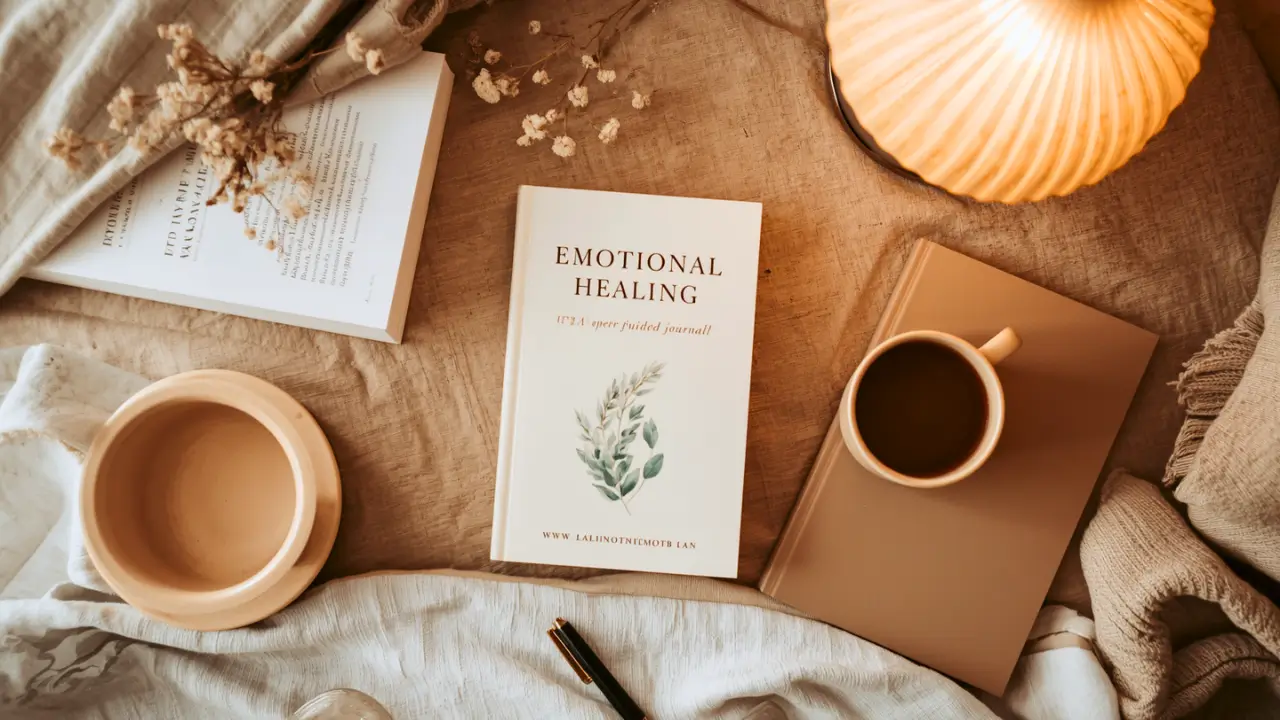
Emotional healing books can become quiet companions during seasons of change, grief, self-doubt, heartbreak, burnout, or personal reinvention.
Sometimes, you do not need a loud motivational message. You need a book that helps you breathe again. A book that gives language to what you have been feeling. A book that reminds you that healing does not have to happen all at once.
Emotional healing is not about pretending the past did not hurt. It is about learning how to carry your story with more compassion, clarity, and strength. It is about understanding old patterns, rebuilding trust in yourself, processing loss, softening self-criticism, and creating space for a different future.
The right emotional healing book can help you feel less alone. It can offer questions, stories, practices, and perspectives that make your inner life easier to understand. Some books are practical. Some are gentle. Some are spiritual. Some are rooted in psychology. Some feel like a conversation with someone who truly understands.
This list is not about quick fixes. It is about books that can support reflection, self-compassion, emotional resilience, and the quiet work of beginning again.
If you are looking for emotional healing books to help you move through a difficult season, these ideas can guide your next read.
Disclosure: As an Amazon Associate, Your Life in Full Bloom may earn from qualifying purchases, at no additional cost to you.
What Are Emotional Healing Books?
Emotional healing books are books that help readers process painful experiences, understand their feelings, rebuild self-worth, and develop healthier ways of relating to themselves and others.
They may focus on topics such as:
- grief;
- trauma;
- heartbreak;
- anxiety;
- self-compassion;
- forgiveness;
- emotional resilience;
- boundaries;
- personal growth;
- starting over;
- inner child healing;
- nervous system regulation;
- rebuilding confidence.
Some emotional healing books offer exercises and journal prompts. Others share personal stories. Some explain emotional patterns through psychology. Others use spirituality, mindfulness, or gentle reflection.
The best book for you depends on what you need most right now.
If you feel overwhelmed, you may need something calming and simple.
If you feel stuck in old patterns, you may need something deeper and more practical.
If you feel alone, you may need a book that feels warm and human.
If you are starting over, you may need a book that helps you imagine life beyond this chapter.
A healing book does not replace therapy, professional support, or medical care when those are needed. But it can become part of a supportive routine.
Reading can give you a place to begin.

1. Books That Help You Understand Your Emotions
One of the first steps in emotional healing is learning to name what you feel.
Many people move through life saying they are “fine,” “tired,” “stressed,” or “over it,” when underneath those words there may be grief, fear, resentment, loneliness, disappointment, shame, anger, or exhaustion.
Books that help you understand your emotions can be powerful because they give you a vocabulary for your inner world.
Look for books that explain:
- why emotions matter;
- how feelings show up in the body;
- why we avoid certain emotions;
- how childhood patterns affect adult reactions;
- how to listen to emotions without being controlled by them;
- how to process feelings instead of suppressing them.
These books are helpful when you feel confused by your own reactions or when you keep repeating emotional patterns you do not fully understand.
A good emotional healing book does not make you feel broken. It helps you become more curious about yourself.
2. Books About Self-Compassion
Self-compassion is one of the most important parts of emotional healing.
Many people are kind to others but extremely harsh with themselves. They replay mistakes, criticize their feelings, judge their past choices, and expect themselves to recover faster than is realistic.
Books about self-compassion can help you change the way you speak to yourself.
They often explore questions like:
- Can I be honest without being cruel to myself?
- Can I take responsibility without living in shame?
- Can I grow without hating who I used to be?
- Can I rest without feeling guilty?
- Can I treat myself with the same patience I offer others?
Self-compassion is not self-pity. It is not avoiding accountability. It is the foundation that allows real growth to happen without emotional punishment.
If you are in a season of starting over, self-compassion can be especially important. A fresh start often requires releasing the idea that you should have known everything sooner.
You are allowed to learn late.
You are allowed to begin again.
You are allowed to be gentle with the version of you that survived.
3. Books for Healing After Heartbreak
Heartbreak is not only about romantic relationships. It can come from friendship loss, family disappointment, betrayal, divorce, rejection, distance, or the quiet ending of a dream you once believed in.
Books for healing after heartbreak can help you make sense of loss without rushing your recovery.
The best books in this category do not simply tell you to move on. They help you understand why the loss hurts, what it awakened in you, what you may need to grieve, and how to rebuild emotional safety.
Heartbreak often affects identity. After a relationship ends, you may wonder who you are without that person, that routine, that future, or that version of your life.
Healing books can help you ask better questions:
- What did this relationship teach me?
- What did I ignore because I wanted it to work?
- What do I need to forgive myself for?
- What kind of love feels safe now?
- What parts of me are returning?
Heartbreak can make the world feel smaller. A good book can open a window.
4. Books for Grief and Loss
Grief changes the emotional landscape of a life.
It may come after the death of someone you love, but it can also come after divorce, illness, relocation, estrangement, job loss, aging, children leaving home, or the loss of a future you imagined.
Books about grief and loss can be deeply comforting because they validate what many people feel but struggle to say.
Grief is not linear. It does not follow a perfect timeline. It can come in waves, disappear for a moment, return unexpectedly, and live beside joy in complicated ways.
The right grief book can help you feel less pressured to “get over it.” It can remind you that love, memory, sadness, anger, gratitude, and longing can exist together.
Look for books that offer gentleness instead of formulas. Grief does not need to be fixed as quickly as possible. It needs space, support, and language.
A book cannot remove grief. But it can sit with you inside it.
5. Books About Boundaries
Boundaries are essential for emotional healing because many emotional wounds are connected to places where your limits were ignored, minimized, or never clearly defined.
Books about boundaries can help you understand where you end and others begin.
They can be especially useful if you often:
- say yes when you want to say no;
- feel responsible for other people’s emotions;
- avoid conflict at any cost;
- feel guilty when you choose yourself;
- attract one-sided relationships;
- over-explain your choices;
- confuse love with self-abandonment.
Emotional healing is not only about feeling better. It is also about living differently.
Boundaries help protect your energy, time, body, emotions, values, and peace. They do not make you cold. They make your relationships more honest.
A good book about boundaries can help you stop treating your discomfort as less important than everyone else’s expectations.
Sometimes healing begins with a sentence you were once afraid to say:
“No, that does not work for me.”
6. Books for Inner Child Healing
Inner child healing books focus on the younger parts of us that still carry old fears, unmet needs, wounds, or protective patterns.
This type of emotional healing can be powerful for people who notice that certain situations trigger reactions that feel bigger than the present moment. A small rejection may feel like abandonment. A disagreement may feel unsafe. A mistake may feel like proof that you are not enough.
Inner child healing does not mean blaming the past for everything. It means understanding how early experiences shaped your emotional responses.
Books in this category often explore:
- childhood emotional needs;
- attachment patterns;
- family roles;
- people-pleasing;
- perfectionism;
- shame;
- emotional neglect;
- reparenting yourself;
- creating safety inside your own life.
These books can be intense, so it is important to move slowly. If a book brings up painful memories or overwhelming emotions, professional support may be helpful.
Inner child healing is not about becoming trapped in the past. It is about bringing compassion to the parts of you that learned to survive before they learned to feel safe.

7. Books About Starting Over
Starting over can be emotional, even when the change is positive.
A new city, new relationship, new career, new season of life, empty nest, retirement, divorce, loss, or personal awakening can all make you feel like you are rebuilding your identity.
Books about starting over can help you move through uncertainty with more courage.
They often remind you that reinvention is not a single dramatic decision. It is a series of small choices repeated over time. You do not have to know your entire future before taking the next step.
These books are helpful when you feel stuck between who you were and who you are becoming.
They may explore:
- letting go of old identities;
- rebuilding confidence;
- making decisions after disappointment;
- finding meaning in transition;
- creating new routines;
- trusting yourself again;
- designing a life that feels more honest.
A fresh start is not always glamorous. Sometimes it is quiet, awkward, lonely, and slow. But it can also be deeply powerful.
You are not too late to become more yourself.
8. Books With Journal Prompts and Reflection Exercises
Some of the most useful emotional healing books are interactive. They do not only offer ideas. They ask you to participate.
Books with journal prompts, reflection exercises, guided questions, and self-discovery practices can help you turn reading into action.
This can be especially helpful if you tend to understand things intellectually but struggle to apply them emotionally.
A guided healing book or journal might ask questions like:
- What am I still carrying?
- What do I need to forgive myself for?
- Where am I abandoning myself?
- What do I want my next chapter to feel like?
- What kind of support do I need?
- What patterns am I ready to release?
- What would I choose if I trusted myself more?
Writing gives your thoughts somewhere to go. It slows the mind down. It helps you notice patterns, desires, fears, and truths that can be easy to ignore in daily life.
A journal does not need to be perfect. It needs to be honest.
9. Books About Nervous System Healing
Emotional healing is not only mental. It is also physical.
Stress, trauma, grief, anxiety, and emotional overwhelm can affect the nervous system. That is why some people know they are safe, but their body still feels tense. They understand what happened, but they still react quickly. They want to rest, but their system remains alert.
Books about nervous system healing can help you understand the connection between the body and emotions.
They may include topics such as:
- stress responses;
- fight, flight, freeze, and fawn;
- breathwork;
- grounding;
- somatic practices;
- emotional regulation;
- rest;
- body awareness;
- trauma-informed healing.
These books can be helpful if you feel chronically tense, easily triggered, emotionally exhausted, or disconnected from your body.
The goal is not to force calm. It is to create safety slowly.
Healing often begins when the body learns that it no longer has to live in constant survival mode.
10. Gentle Books That Feel Like Comfort
Not every emotional healing book needs to be intense.
Sometimes, the most healing book is one that simply feels comforting. A gentle essay collection, a reflective memoir, a poetry book, a spiritual reading, or a quiet book about hope can support you without asking you to analyze every part of your life.
During emotionally heavy seasons, you may not have energy for deep work. You may need softness first.
Comforting books can help you:
- feel less alone;
- slow down;
- reconnect with beauty;
- remember hope;
- breathe through hard days;
- feel accompanied;
- find small moments of peace.
There is value in books that do not push you. There is value in words that sit beside you.
If you are exhausted, choose a book that feels like a warm light, not another assignment.
Healing can be deep. But it can also be gentle.
How to Choose the Right Emotional Healing Book
Choosing from so many emotional healing books can feel overwhelming. The best place to start is not with the most popular book. It is with your current need.
Ask yourself:
- Am I grieving?
- Am I recovering from heartbreak?
- Am I trying to understand my emotions?
- Am I learning boundaries?
- Am I starting over?
- Am I too exhausted for deep emotional work?
- Do I need exercises, stories, or gentle comfort?
- Do I want something practical or reflective?
You can also choose based on your energy level.
If you feel fragile, choose something gentle.
If you feel ready to reflect, choose a guided journal.
If you feel stuck in patterns, choose a book about boundaries, attachment, or emotional healing.
If you feel disconnected from your body, choose nervous system or somatic healing books.
If you feel ready for change, choose books about starting over.
Do not force yourself to read a book just because everyone recommends it. The right book is the one that meets you where you are.
Create a Simple Healing Reading Ritual
A book can be more powerful when it becomes part of a small ritual.
You do not need a complicated routine. You can create a quiet moment with a book, a notebook, a cup of tea, a soft blanket, and ten minutes of attention.
Try this simple ritual:
- choose one emotional healing book;
- read for ten to twenty minutes;
- underline one sentence that feels important;
- write one honest thought in a journal;
- ask yourself what you need today;
- close the book before you feel overwhelmed.
This kind of ritual turns reading into self-connection. It also helps you avoid consuming too much emotional content without processing it.
Healing is not about reading every book. It is about letting the right words change how you listen to yourself.

Helpful Amazon Categories for Emotional Healing
Emotional healing books can be a meaningful part of a wider self-care routine. If you want to create a gentle reading and reflection space, a few simple items can support the process.
Instead of shopping randomly, think in helpful categories:
Emotional healing books
Books about grief, self-compassion, boundaries, trauma-informed healing, starting over, nervous system regulation, and personal growth can support different stages of healing.
Guided journals
Self-reflection journals, gratitude journals, shadow work journals, grief journals, and healing workbooks can help you process feelings more intentionally.
Reading comfort
Soft throw blankets, reading pillows, book lights, bookmarks, tea mugs, and small side tables can make your reading ritual more inviting.
Calm home atmosphere
Candles, warm lamps, essential oil diffusers, cozy socks, and gentle background music accessories can help create a peaceful environment.
Organization for growth
Planners, notebooks, pens, sticky notes, and book tabs can help you keep track of reflections, quotes, and insights.
If you want to begin with one supportive step, explore emotional healing books and guided journals on Amazon.
Shop emotional healing books and journals on Amazon
As an Amazon Associate, Your Life in Full Bloom may earn from qualifying purchases, at no additional cost to you.
When a Book Is Not Enough
Emotional healing books can be supportive, but they are not a substitute for professional help when you need it.
If you are experiencing intense sadness, panic, trauma symptoms, thoughts of self-harm, emotional numbness, or difficulty functioning in daily life, it is important to seek support from a qualified professional.
Books can offer insight. Therapy can offer a safer, more personalized space to process what hurts. Support groups, trusted friends, doctors, and mental health professionals can also be part of healing.
There is no shame in needing more than a book.
In fact, recognizing that you need support is a sign of care for yourself.
Healing does not have to be done alone.
Final Thoughts on Emotional Healing Books
Emotional healing books cannot change your life overnight. But they can help you begin listening to yourself differently.
They can give you words for pain that felt confusing. They can help you recognize patterns. They can remind you that your feelings make sense. They can offer practices for reflection, boundaries, grief, self-compassion, and starting over.
The best book is not always the one with the most beautiful cover or the most famous title. It is the one that meets you honestly in the season you are living.
Maybe you need comfort.
Maybe you need courage.
Maybe you need clarity.
Maybe you need permission to begin again.
Choose the book that feels like a next step, not a performance.
Healing is not a race. It is a return.
A return to your body.
A return to your voice.
A return to your needs.
A return to your life.
And sometimes, one honest page is enough to start.
Read More:

Gui Perine
Gui Perine is the creator of Your Life in Full Bloom, a lifestyle website for women who want to live with more intention, beauty, and freedom after 50.
Through thoughtful articles on home, travel, reinvention, and everyday choices, she explores what it means to build a fuller life in a new season — one that feels calmer, more personal, and more aligned with who you are becoming.
Her work is inspired by real-life transitions, the desire for independence, and the belief that life after 50 can be a time of clarity, possibility, and renewal.



2 thoughts on “Emotional Healing Books: 10 Comforting Reads for a Fresh Start”