
The first trip after a life change is rarely just a trip.
It may look simple from the outside: a suitcase, a ticket, a hotel reservation, a few days away. But inside, it can feel like something much bigger.
It can feel like proof that life is still moving.
After a divorce, loss, empty nest, retirement, burnout, health scare, career shift, relocation, or quiet personal awakening, travel can carry a different meaning. You are not only going somewhere. You are testing what it feels like to move through the world as the woman you are becoming now.
Maybe you used to travel with someone else.
Maybe you planned trips around children, work, family, or obligation.
Maybe you have not traveled in years.
Maybe you are used to rushing through places instead of experiencing them.
Maybe you are craving a journey that feels less like escape and more like return.
A first trip after a life change does not need to be dramatic, expensive, far away, or perfectly planned.
It needs to feel honest.
It should give you room to breathe, notice, choose, and remember that your life is not finished becoming.
This kind of trip is not about proving courage to anyone.
It is about creating a gentle bridge between the life you knew and the next chapter waiting for you.
Why Travel Feels Different After a Life Change
Travel changes when life changes.
The same city, beach, museum, hotel room, train station, or airport can feel different when you arrive carrying a new version of yourself.
After a major transition, even small travel decisions may feel emotional.
Where should I go?
Should I travel alone?
Will I feel lonely?
Will I enjoy it?
Will people notice that I am by myself?
What if the trip brings up memories?
What if I feel more free than I expected?
These questions are not signs of weakness. They are part of entering new territory.
A life change can alter your relationship with time, independence, money, comfort, safety, identity, and pleasure. Travel touches all of those things.
That is why the first trip after a life change should be planned with care.
Not fear.
Care.
You may need a slower pace than before.
You may want a destination that feels beautiful but not overwhelming.
You may want familiar comfort mixed with something new.
You may need time alone, but not isolation.
You may want to feel capable again.
A meaningful trip can help you rediscover what you enjoy now — not what you used to enjoy, not what someone else preferred, and not what looked good in a former chapter.
Travel can become a way to ask: “Who am I when I get to choose the day?”
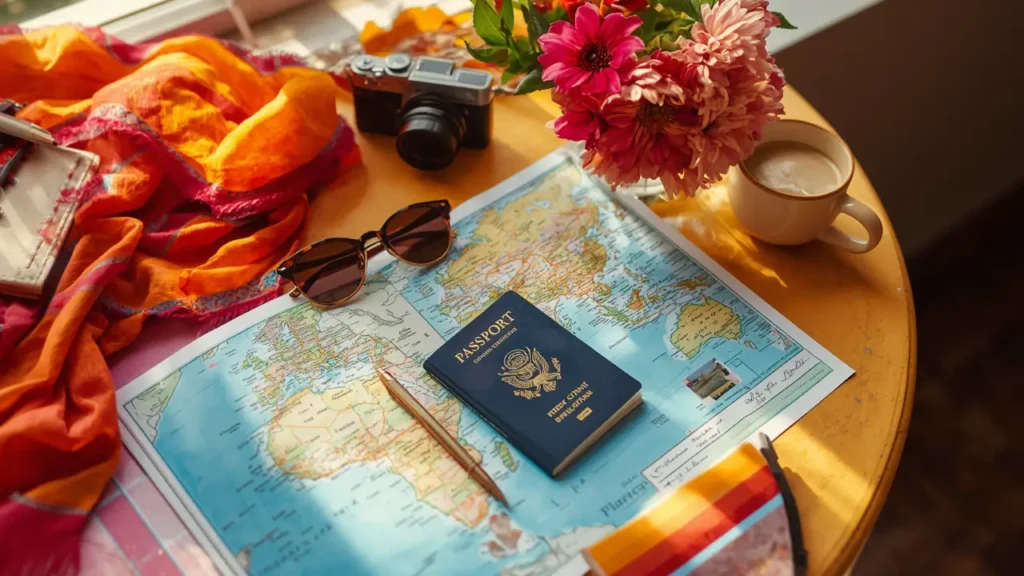
1. Choose a Destination That Matches Your Emotional Energy
Not every destination is right for every season.
After a life change, the best trip is not necessarily the most impressive one. It is the one that matches your emotional energy.
If you feel fragile, you may want somewhere calm, walkable, and beautiful.
If you feel restless, you may want a city with art, cafés, museums, and movement.
If you feel exhausted, you may want nature, water, quiet mornings, and very few decisions.
If you feel ready to expand, you may want a place that gently stretches your confidence.
Before booking, ask yourself:
- Do I want rest or stimulation?
- Do I want familiarity or surprise?
- Do I want to be around people or have more solitude?
- Do I want a short trip or a longer reset?
- Do I want culture, nature, food, history, wellness, or simple beauty?
- What kind of place would support the woman I am now?
This is not the time to choose a destination only because it is trending.
A meaningful trip begins with self-awareness.
For your first trip after a life change, it is often wise to choose a place that feels manageable. A charming city, a familiar region, a peaceful coastal town, a cultural weekend, or a destination with good transportation can be more healing than a complicated itinerary.
The destination should not drain you before you arrive.
It should invite you forward.
2. Start Smaller Than You Think You Should
A first trip after a life change does not have to be a grand international adventure.
Sometimes the most powerful first step is a short trip.
One night in a beautiful hotel.
A weekend in a nearby city.
A train ride to a place you have always wanted to visit.
A quiet coastal escape.
A cultural day trip with an overnight stay.
A few days in a city that feels easy to navigate.
Starting smaller does not mean thinking smaller.
It means giving yourself a successful experience.
If travel feels emotionally loaded, a shorter trip can help you rebuild confidence without overwhelming your nervous system. You learn how it feels to pack again, arrive again, eat alone if needed, sleep somewhere new, make decisions for yourself, and return home with new information.
A small trip can teach you:
- what pace feels good now;
- what kind of accommodation supports you;
- whether you enjoy solo time;
- how much structure you need;
- what brings joy;
- what creates stress;
- what you want to do differently next time.
Do not underestimate the confidence that comes from a trip that goes well.
A gentle beginning can open the door to larger journeys later.
3. Plan Around How You Want to Feel
Many trips are planned around what to see.
After a life change, it may be more useful to plan around how you want to feel.
Do you want to feel peaceful?
Alive?
Curious?
Elegant?
Free?
Rested?
Inspired?
Strong?
Soft?
Connected?
Brave?
This question changes the itinerary.
If you want to feel peaceful, you may not need five attractions in one day.
If you want to feel alive, you may choose music, markets, color, and movement.
If you want to feel inspired, museums, architecture, and beautiful streets may matter.
If you want to feel rested, mornings without alarms may be essential.
If you want to feel confident, a destination with easy transport and a central hotel may help.
Planning around feeling does not make the trip vague.
It makes it more intentional.
You can still visit landmarks, book restaurants, take tours, and enjoy beautiful places. But the trip becomes less about checking boxes and more about creating an experience that supports your next chapter.
Before you create the itinerary, write one sentence:
“On this trip, I want to feel…”
Let that sentence guide the choices.
4. Give Yourself Permission to Travel Differently Now
You do not have to travel the way you used to.
Maybe you no longer want packed schedules.
Maybe you no longer enjoy budget discomfort.
Maybe you prefer better accommodation and fewer days.
Maybe you want slow mornings instead of early tours.
Maybe you care more about food, art, gardens, and conversation than famous attractions.
Maybe you want a room with a view, not because it is extravagant, but because beauty matters more now.
Life changes can clarify what kind of travel no longer fits.
That is not failure. That is growth.
A first trip after a life change can be a chance to redesign your travel style.
You may discover that you prefer:
- one city instead of five;
- trains instead of rushed flights;
- boutique hotels instead of large resorts;
- local cafés instead of crowded attractions;
- guided tours for confidence;
- free afternoons for wandering;
- cultural experiences over shopping;
- a slower pace;
- more comfort;
- less pressure.
There is no prize for traveling in a way that exhausts you.
Meaningful travel is not about doing the most. It is about being present enough to feel where you are.
Let this trip teach you how you like to move through the world now.
5. Create One Anchor Ritual for the Trip
An anchor ritual is a small repeated practice that gives emotional shape to your trip.
It can be simple.
Morning coffee in a beautiful place.
A walk before dinner.
Writing a few lines in a notebook each night.
Taking one photo of a doorway, flower, window, or street each day.
Visiting a local market.
Lighting a candle in your hotel room if allowed.
Reading a few pages before bed.
Sitting quietly in a church, garden, or museum.
Sending yourself a voice note about what the day taught you.
The ritual is not about performance. It is not content creation. It is not another task.
It is a way to stay connected to yourself.
After a life change, travel can bring unexpected emotions. Joy may appear beside sadness. Freedom may appear beside uncertainty. Memories may surface in places you did not expect.
An anchor ritual helps you process the experience gently.
It says: “I am here. I am paying attention. This moment matters.”
The best travel rituals are easy, personal, and repeatable.
Choose one that feels natural enough to actually do.
6. Leave Space for the Unexpected
A meaningful trip needs space.
If every hour is planned, there is no room for the moment that may become the memory you keep.
A street musician.
A conversation in a café.
A sunset walk.
A small gallery.
A garden you did not plan to visit.
A meal that takes longer than expected.
A quiet morning when your body asks for rest.
A shop window that makes you smile.
A view that makes you stop.
After a life change, the unexpected can feel especially powerful because you may be learning to trust life again.
Do not overfill the itinerary.
Choose one main activity per day, then leave space around it. This is especially helpful if you are traveling after a stressful season, emotional transition, or long period of responsibility.
An open afternoon is not wasted time.
It is where the trip becomes yours.
If you feel guilty for doing less, remind yourself: you are not traveling to prove productivity. You are traveling to experience a new rhythm.
Sometimes the best part of a trip is the hour you did not plan.

7. Let Beauty Matter
Beauty is not superficial.
After a difficult life change, beauty can feel like a form of repair.
A colorful market.
A well-set table.
A hotel lobby with fresh flowers.
A museum room.
A bright scarf.
A garden.
A blue sea.
A street full of music.
A beautiful breakfast.
A view from a train window.
A city glowing at night.
Beauty reminds you that life still offers pleasure, surprise, and tenderness.
When planning your first trip after a life change, make room for beauty on purpose.
Not only practical logistics. Not only transportation and schedules. Choose at least one beautiful experience that feels personal to you.
It might be:
- a special lunch;
- a scenic train ride;
- a flower market;
- a concert;
- a museum;
- a garden;
- a coastal walk;
- a room with good light;
- a sunset viewpoint;
- a slow breakfast somewhere lovely.
You do not need luxury for beauty.
You need attention.
Let the trip include something that simply makes you glad to be alive.
That matters.
8. Stay Connected Without Losing Your Freedom
If you are traveling after a major life change, it can help to stay connected to someone you trust.
This is especially true if it is your first trip alone, your first trip after loss, or your first time making all the decisions by yourself.
Share your basic itinerary. Send a message when you arrive. Let someone know where you are staying. Keep emergency information easy to access.
But also protect the freedom of the trip.
You do not need to narrate every moment to everyone. You do not need to spend the whole trip proving that you are okay. You do not need to answer messages constantly or turn the experience into a public performance.
Create a balance.
Connection can support you. Constant availability can dilute the experience.
A simple check-in rhythm may be enough:
- message when you arrive;
- share one photo at the end of the day;
- let someone know about major plans;
- keep your phone charged;
- stay reachable in case of need.
Then give yourself permission to be present.
The trip is not only something to report.
It is something to live.
9. Notice Who You Are When You Are Away
Travel has a way of revealing things.
Away from familiar routines, you may notice what you miss — and what you do not miss. You may notice that you feel lighter without certain obligations. You may notice that you enjoy your own company more than expected. You may notice how much you have changed.
Pay attention.
Ask yourself during the trip:
- What feels easier here?
- What do I enjoy when I get to choose?
- What do I not miss from my usual routine?
- What part of me feels alive in this place?
- What kind of pace do I want more often?
- What do I want to bring home from this experience?
These questions can turn a trip into insight.
You may realize you want more culture in your life. More walking. More color. More independence. More beauty. More simplicity. More connection. More time outside. More courage.
You do not have to make a life-changing decision on the trip.
Just notice.
Sometimes awareness is enough for the next step to become visible.
10. Bring Something Back That Is Not a Souvenir
A meaningful trip does not end when you unpack.
The best thing you bring home may not be an object.
It may be a rhythm.
A decision.
A feeling.
A boundary.
A habit.
A new kind of confidence.
A reminder that you can still surprise yourself.
After your first trip following a life change, take time to ask:
What did this trip give me?
Maybe it gave you courage to travel again.
Maybe it showed you that you are more capable than you felt.
Maybe it helped you grieve.
Maybe it reminded you that beauty is still available.
Maybe it made you want to simplify your home.
Maybe it made you think about moving, studying, working differently, or planning a longer stay somewhere else.
Maybe it simply gave you one peaceful morning that belonged only to you.
Choose one thing to bring into daily life.
It could be a weekly walk, a slower breakfast, a language class, a travel savings plan, a new home ritual, a monthly museum visit, or a decision to stop postponing joy.
A trip becomes part of your next chapter when it changes how you return.

A Simple Planning List for Your First Trip After a Life Change
If this trip feels emotional, keep the planning simple and supportive.
Before booking, decide:
- what kind of energy you want from the destination;
- how many days feel manageable;
- whether you want to travel alone or with someone;
- what level of comfort you need;
- how much structure feels helpful;
- what kind of beauty you want to experience;
- what would make you feel safe;
- what budget feels responsible;
- what you need to avoid unnecessary stress.
Before leaving, prepare:
- travel documents;
- accommodation details;
- transportation from arrival point;
- emergency contacts;
- medication and health information;
- phone charger and portable battery;
- travel insurance, if needed;
- comfortable shoes;
- clothes that match the trip you want to have;
- one small ritual for reflection.
A good trip is not one with no uncertainty.
It is one where you feel supported enough to meet the uncertainty with more calm.
Helpful Items for a Meaningful Trip
A first trip after a life change is not about buying more things. It is about choosing what supports comfort, confidence, and presence.
Still, a few practical items can make the experience easier:
A comfortable crossbody bag
Useful for keeping essentials close while walking, sightseeing, or navigating transportation.
Comfortable walking shoes
The right shoes can change the entire mood of a trip, especially in cities, historic areas, train stations, and museums.
A lightweight scarf or wrap
Helpful for changing weather, flights, trains, churches, restaurants, and feeling more put together with little effort.
A portable phone charger
Useful for maps, photos, translation, tickets, and staying connected.
A small travel journal
Not for pressure or productivity, but for capturing thoughts, memories, and moments you do not want to lose.
Packing organizers
Helpful when you want your suitcase to feel simple, calm, and easy to manage.
Shop meaningful travel essentials on Amazon
As an Amazon Associate, Your Life in Full Bloom may earn from qualifying purchases, at no additional cost to you.
When the Next Journey Begins
The first trip after a life change may not fix everything.
It may not answer every question.
It may not make the past disappear.
It may not instantly turn uncertainty into confidence.
But it can remind you that movement is still possible.
You can arrive somewhere new.
You can choose a different pace.
You can sit at a table alone and still feel whole.
You can see beauty without needing anyone to validate it.
You can change plans.
You can rest.
You can enjoy your own company.
You can discover that the world still has rooms, streets, flavors, colors, and mornings waiting for you.
The next journey is not only about travel.
It is about the courage to meet life again.
One step.
One ticket.
One street.
One morning.
One decision at a time.
And perhaps the most meaningful part is this:
you do not have to know exactly who you are becoming before you go.
Sometimes you travel to find out.

Gui Perine
Gui Perine is the creator of Your Life in Full Bloom, a lifestyle website for women who want to live with more intention, beauty, and freedom after 50.
Through thoughtful articles on home, travel, reinvention, and everyday choices, she explores what it means to build a fuller life in a new season — one that feels calmer, more personal, and more aligned with who you are becoming.
Her work is inspired by real-life transitions, the desire for independence, and the belief that life after 50 can be a time of clarity, possibility, and renewal.