National park rules may not sound like the most exciting part of planning a trip.
Most people would rather think about mountain views, scenic drives, waterfalls, wildlife, old forests, picnic stops, family photos, and the quiet feeling of standing somewhere beautiful.
But knowing the rules before you go can completely change the experience.
It can help you avoid frustration at the entrance. It can protect your dog, your family, the trails, the wildlife, and the landscapes you came to enjoy. It can also save you from arriving with the wrong expectations — especially when you are planning a once-in-a-lifetime trip, a national park road trip, a camping weekend, or a slower travel experience later in life.
The rules are not there to make the parks less enjoyable.
They are there because national parks are not ordinary tourist attractions.
They are living landscapes. They hold fragile meadows, historic places, wildlife habitats, sacred land, ancient trees, narrow trails, limited campsites, changing weather, and millions of visitors trying to share the same space.
This matters even more as searches about national parks become more specific. Travelers are not only asking where to go. They are asking whether dogs are allowed, where camping is possible, whether drones can be used, how e-bikes work, and why some places — like delicate meadows in Sequoia — are protected from foot traffic.
That kind of curiosity is a good thing.
A better trip begins when you understand the place before you arrive.
Here are 10 smart national park rules and planning tips to know before your next visit.
1. Always Check the Specific Park Before You Go
One of the biggest mistakes travelers make is assuming that all national parks follow the same rules.
They do not.
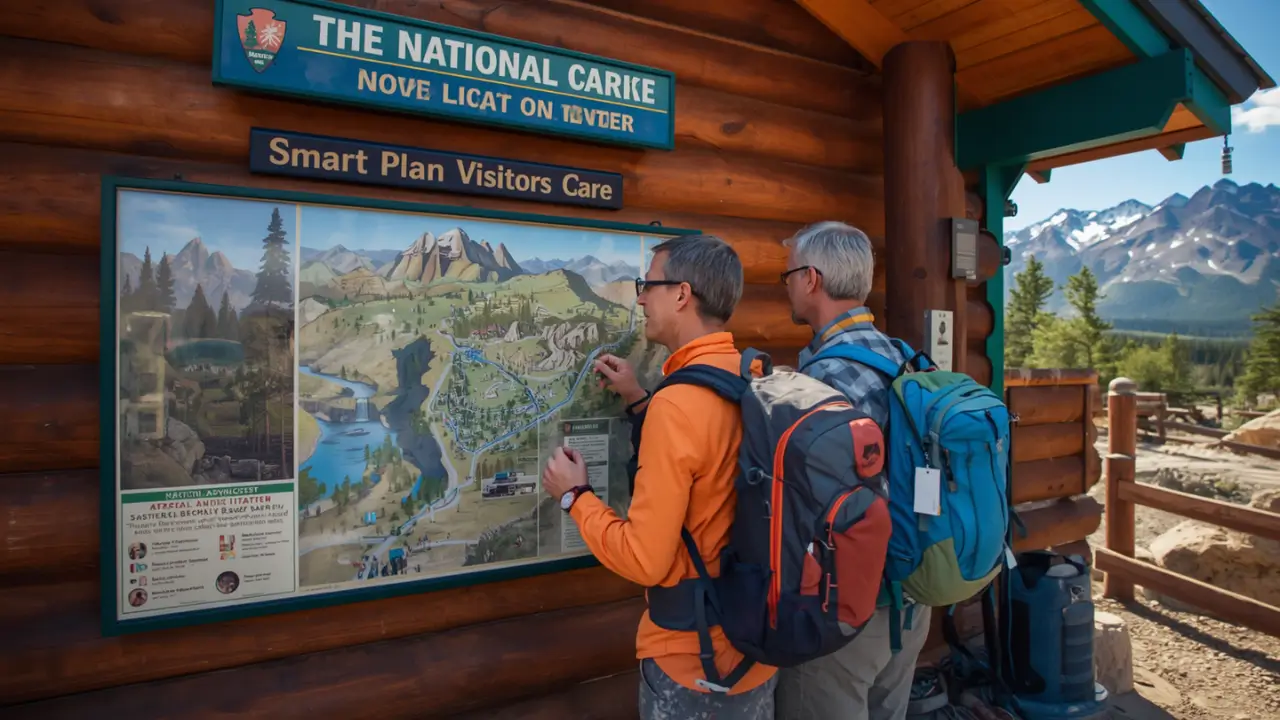
The National Park Service has general policies, but each park can have specific rules based on its landscape, wildlife, trails, roads, weather, visitor volume, and protected resources. A rule that applies in one park may be different in another.
This is especially true for:
- pets;
- camping;
- trail access;
- road closures;
- e-bikes;
- drones;
- permits;
- fire restrictions;
- bear safety;
- parking;
- shuttle systems;
- seasonal access;
- accessibility;
- wilderness areas.
Before visiting any national park, go to the official park website and check the “Plan Your Visit” section. The National Park Service also recommends checking park-specific pet information before traveling with an animal, because rules vary by park.
This simple step can prevent a lot of disappointment.
It is much better to know in advance that your dog cannot join you on most trails, that a campground requires reservations, that a road is closed, or that drones are prohibited than to discover it after arriving.
National parks reward preparation.
The more you know before you go, the more freedom you have once you are there.
2. Do Not Assume Dogs Are Allowed on Trails
Searches for dog-friendly national parks are growing because many travelers want to include their pets in outdoor trips.
That makes sense. Dogs are part of the family for many people.
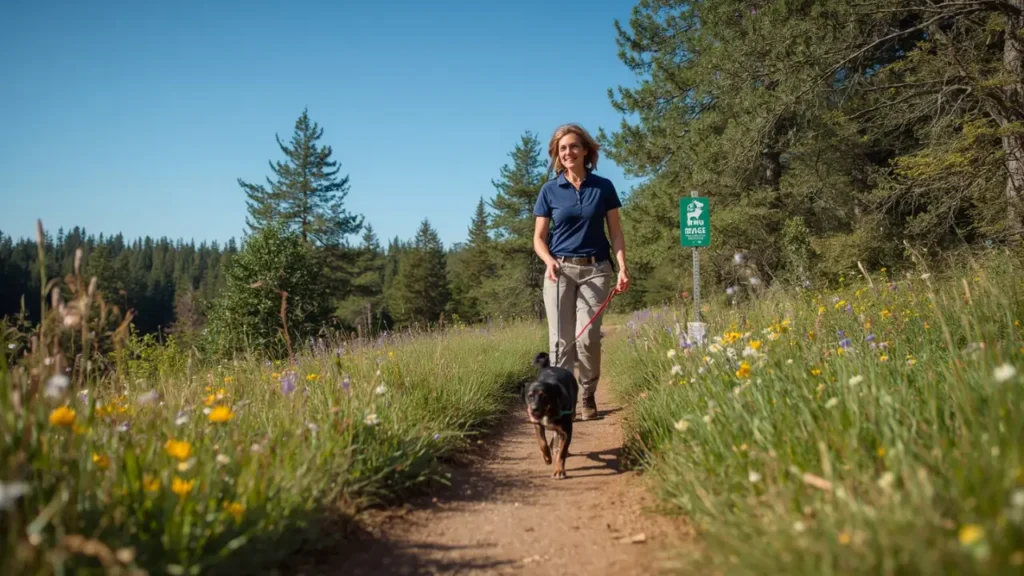
But national parks are not the same as ordinary parks, city trails, or neighborhood walking paths. In many national parks, dogs are allowed in developed areas but not on most hiking trails.
The exact rules depend on the park.
For example, in Great Smoky Mountains National Park, pets are allowed on only two walking paths: the Gatlinburg Trail and the Oconaluftee River Trail. The National Park Service describes the Gatlinburg Trail as one of the only dog- and bike-friendly trails in that park.
In Sequoia and Kings Canyon National Parks, pets are not allowed on any park trails, including pets riding in backpacks.
That does not mean you can never visit a national park with a dog.
It means you need to plan differently.
Before traveling with a dog, check:
- where pets are allowed;
- where pets are prohibited;
- leash rules;
- campground rules;
- whether pets can enter lodging;
- whether nearby national forests offer dog-friendly trails;
- weather and pavement temperature;
- wildlife risks;
- where your dog can safely rest if you visit areas where pets are not allowed.
Do not bring a dog and assume you will “figure it out.”
In a national park, that can quickly limit your visit.
A pet-friendly trip is possible, but it needs honest planning.
3. Understand Why Pet Rules Exist
Pet rules can feel frustrating if you are used to taking your dog everywhere.
But the rules exist for real reasons.
National parks protect wildlife, vegetation, waterways, fragile habitats, nesting areas, and visitor safety. Dogs can disturb wildlife even when they are friendly. Their scent, waste, barking, and presence can affect animals that live in the park.
Pets can also be at risk.
Wild animals may carry diseases that can harm dogs. Dogs may encounter snakes, bears, ticks, heat, cold, cliffs, fast water, or rough terrain. The National Park Service notes that pet waste can spread parasites and disease between pets and wildlife, and Sequoia and Kings Canyon advise visitors not to let dogs eat anything they find in the park.
That does not mean dogs are bad.
It means national parks are sensitive environments.
If you travel with your pet, follow the rules with care:
- keep your dog leashed where required;
- pick up all waste;
- never leave pets unattended in unsafe conditions;
- keep pets away from wildlife;
- bring water;
- check heat and surface conditions;
- avoid assuming trails are pet-friendly;
- use nearby dog-friendly areas when possible.
Responsible pet travel protects your dog and the park.
And it helps keep limited dog-friendly access available for future visitors.
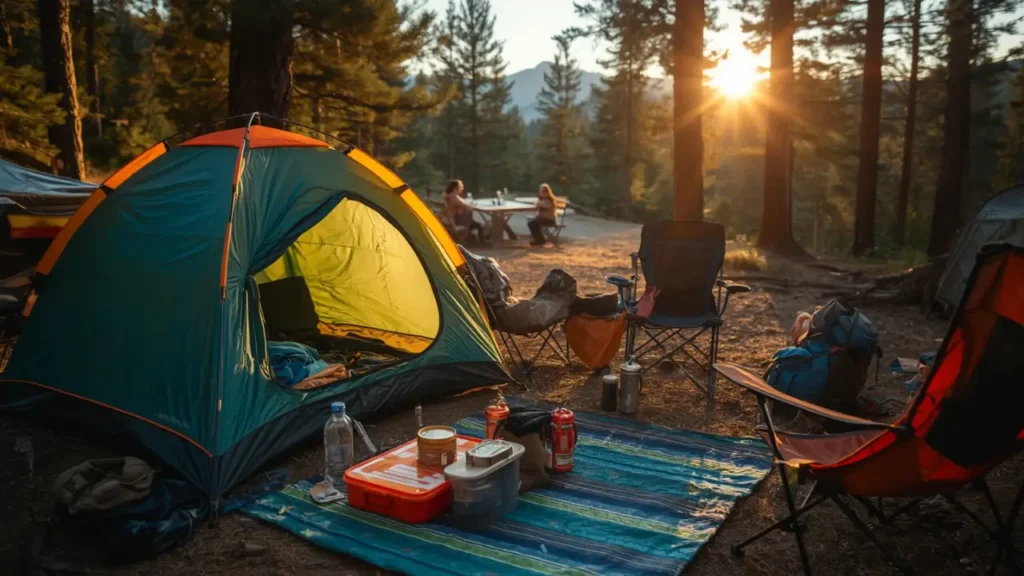
4. Know the Rules Before Camping
Camping in a national park can be unforgettable.
You wake up near mountains, forests, canyons, rivers, or ancient trees. You hear different sounds. You see the sky change. You feel close to the landscape in a way that a hotel rarely allows.
But camping in national parks also requires planning.
You cannot assume you can simply arrive and choose a spot. Many campgrounds require reservations, and popular parks often fill quickly during busy seasons. The National Park Service notes that many campgrounds require reservations through Recreation.gov.
In Sequoia and Kings Canyon National Parks, campgrounds are reservation-only, and availability can be very limited during the summer months.
Before planning a camping trip, check:
- reservation requirements;
- campground opening dates;
- vehicle size limits;
- generator rules;
- food storage rules;
- pet rules;
- fire restrictions;
- quiet hours;
- bear safety;
- water availability;
- bathroom facilities;
- cancellation policies;
- weather conditions;
- road access.
Camping is not only about bringing a tent.
It is about understanding the place.
A beautiful campsite can become stressful if you arrive without a reservation, ignore food storage rules, underestimate the cold, or bring a pet that cannot join you on trails.
Good camping is not overplanning.
It is respect for the land and for your own comfort.
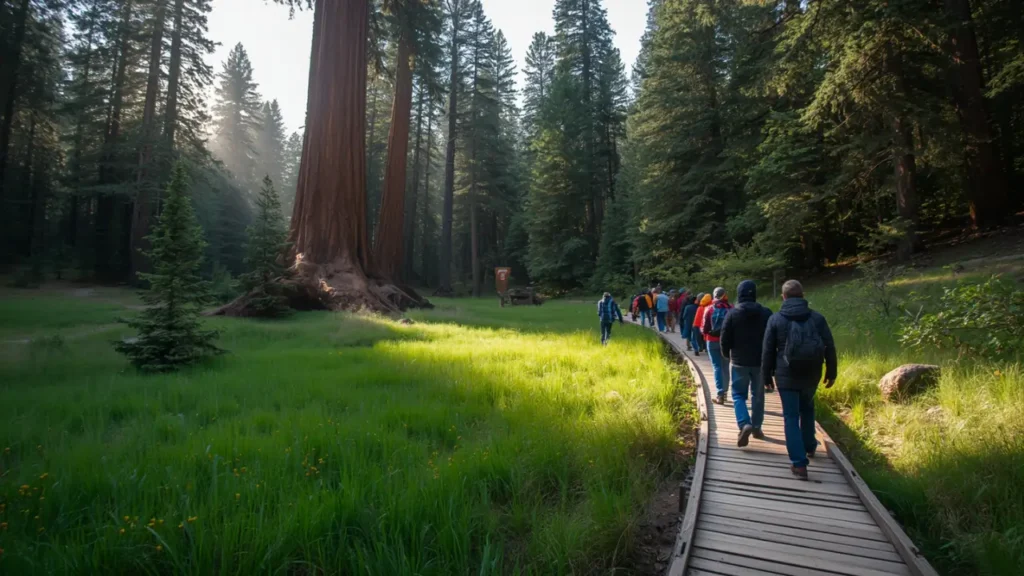
5. Stay on Trails, Boardwalks, and Marked Areas
Some of the most beautiful places in national parks are also the most fragile.
Meadows, thermal areas, desert crusts, alpine vegetation, wetlands, and restoration zones may look open and inviting, but they can be easily damaged by footsteps.
This is one reason visitors often search questions like why they cannot walk into certain meadows, including in places such as Sequoia National Park.
A meadow is not just an empty field.
It can hold delicate plants, insects, soil systems, moisture patterns, nesting habitat, and wildlife movement. When many visitors step into the same area, the impact can last far longer than the visit.
Sequoia and Kings Canyon’s official information on stock use and grazing restrictions references lasting impacts to soils and vegetation in certain wet meadow areas and the need to reduce future impacts to perennially wet areas.
For regular visitors, the lesson is simple:
If a sign, barrier, boardwalk, rope, or trail boundary asks you to stay out, stay out.
Even if the photo would be beautiful.
Even if other people are doing it.
Even if it looks harmless.
Even if you only plan to step in for a moment.
National parks are not photo studios.
They are places we borrow briefly and leave for others.
6. Do Not Fly a Drone Unless It Is Clearly Allowed
Drones are another common source of confusion in national parks.
Many travelers want dramatic aerial footage of mountains, forests, waterfalls, canyons, and coastlines. The problem is that drones can disturb wildlife, affect visitor experience, create safety issues, and damage protected resources if they crash.
In most National Park Service areas, launching, landing, or operating an unmanned aircraft from or on lands and waters administered by the National Park Service is prohibited unless approved in writing by the superintendent. The NPS explains that this direction comes from Policy Memorandum 14-05.
This means you should not arrive at a national park assuming you can fly a drone for personal photos or video.
Before bringing a drone, check the official page for that specific park.
Also remember that airspace and land management can be complicated. Areas near a park may be managed by different agencies, but that does not automatically mean drone use is simple or allowed everywhere.
The safest approach is:
- check the official park rules;
- do not launch inside the park unless clearly authorized;
- respect wildlife and other visitors;
- avoid flying near fires or emergency operations;
- follow FAA rules where applicable;
- do not assume social media videos show legal behavior.
A meaningful trip does not need a drone shot.
Sometimes the most powerful view is the one you experience from the trail.
7. Check E-Bike Rules Before Riding
Electric bicycles can make national parks more accessible for some visitors.
They may help people enjoy scenic roads, longer routes, hills, or distances that would otherwise be difficult. This can be especially meaningful for older travelers, people rebuilding fitness, or visitors who want a more flexible way to explore.
But e-bike rules are not the same everywhere.
The National Park Service explains that superintendents may allow e-bikes, where appropriate, on roads and trails where traditional bicycles are also allowed. Visitors should check the specific park for details about where e-bikes are allowed and what rules apply.
That means you should not assume an e-bike can go anywhere.
Before renting or bringing one, check:
- whether e-bikes are allowed in that park;
- which classes of e-bikes are permitted;
- whether they are allowed on roads only;
- whether they are allowed on bike paths;
- speed limits;
- helmet requirements;
- local state rules;
- shuttle or vehicle restrictions;
- terrain and elevation;
- charging needs.
E-bikes can be wonderful when used responsibly.
They can also create problems if riders enter trails where they are not allowed, move too fast in crowded areas, or misunderstand local restrictions.
As with most national park rules, the answer is not “never.”
The answer is: check first.
8. Respect Wildlife Distance Rules
Wildlife is one of the great joys of visiting national parks.
Seeing deer, elk, bears, bison, foxes, birds, marmots, or other animals in their natural habitat can become one of the strongest memories of a trip.
But wildlife encounters require respect.
Animals in national parks are not props, pets, or background objects for selfies. They are wild, even when they appear calm.
General safety principles include:
- keep your distance;
- never feed wildlife;
- do not approach for photos;
- store food properly;
- keep children close;
- keep pets controlled where allowed;
- do not surround animals;
- use zoom lenses or binoculars;
- follow park-specific guidance;
- leave the area if an animal changes behavior.
In Sequoia and Kings Canyon, black bears are present throughout the parks, and visitors are advised to protect bears by storing food properly and viewing wildlife from a safe distance.
Respecting wildlife is not only about avoiding injury.
It is also about protecting the animals from becoming habituated to people, food, roads, and campsites.
A good wildlife encounter ends with the animal still wild and the visitor still safe.
9. Plan for Limited Cell Service and Changing Conditions
National parks often have limited or unreliable cell service.
This can be part of the beauty. It can also become a problem if you depend entirely on your phone for maps, reservations, directions, weather, trail information, emergency contacts, or campground details.
Before you arrive, prepare offline.
Download maps. Save screenshots of reservations. Write down campground or lodge details. Keep emergency contacts accessible. Check road conditions and weather before entering areas with no service.
Sequoia and Kings Canyon’s FAQ notes that cell coverage is found only in some areas, and not all providers offer service where coverage exists.
Conditions can also change quickly.
Roads may close. Smoke, snow, heat, flooding, rockfall, wildlife activity, fire danger, or construction can affect the trip. A trail that looked easy online may feel different in real weather, at real elevation, with real crowds.
Prepare for flexibility:
- carry water;
- bring layers;
- keep snacks;
- have a paper or offline map;
- check official current conditions;
- know your limits;
- avoid starting late without a plan;
- tell someone where you are going;
- turn around if conditions feel wrong.
A national park trip should feel expansive, not careless.
Preparedness gives you more room to enjoy the experience.
10. Travel With the Mindset of a Steward
The best national park visitors are not only consumers of beauty.
They are stewards of it.
That does not mean you need to be perfect, extreme, or expert. It means you understand that your choices matter.
You stay on the trail.
You give wildlife space.
You follow pet rules.
You do not fly drones where prohibited.
You reserve campsites properly.
You pack out trash.
You avoid walking into closed meadows.
You respect quiet areas.
You read signs.
You check official information.
You make the trip better for the people who come after you.
This mindset is especially powerful for meaningful travel.
A national park visit can be more than a vacation. It can be a reminder that the world is larger than our routines, our screens, our schedules, and our assumptions.
When you visit with respect, you do not lose freedom.
You gain a deeper experience.
You stop treating the park as a backdrop and begin to understand it as a place with its own life, limits, history, and needs.
That is when a trip becomes memorable in a different way.
Not only because of what you saw.
But because of how you paid attention.
A Simple Pre-Trip Checklist for National Parks
Before visiting a national park, take a few minutes to check:
- the official park website;
- entrance requirements;
- reservation rules;
- campground availability;
- pet restrictions;
- trail closures;
- road conditions;
- weather;
- shuttle systems;
- parking information;
- drone rules;
- e-bike rules;
- food storage rules;
- wildlife safety;
- fire restrictions;
- accessibility information;
- cell service limitations;
- emergency contacts.
This may sound like a lot, but it can be done quickly.
And it can make the trip far smoother.
The goal is not to make your national park visit complicated.
The goal is to avoid the avoidable problems.
A little research before you go can protect your time, money, energy, and experience.
Helpful Items for a Better National Park Trip
A national park trip does not require complicated gear, but a few practical items can make the experience easier and safer.
Comfortable walking shoes
Choose shoes that match the terrain, distance, and weather.
Reusable water bottle
Hydration matters, especially in heat, altitude, or long walking days.
Daypack
A small backpack can hold layers, snacks, water, sunscreen, maps, and personal items.
Offline maps or paper maps
Useful when cell service is limited or unreliable.
Binoculars
Helpful for viewing wildlife from a respectful distance.
Layered clothing
Weather can change quickly, especially in mountains, forests, and higher elevations.
Pet travel supplies
If your dog is allowed in certain areas, bring water, waste bags, leash, shade, and safe resting plans.
Camping organizers
Useful for keeping food, gear, and essentials organized where camping is permitted.
Shop practical national park trip essentials on Amazon
As an Amazon Associate, Your Life in Full Bloom may earn from qualifying purchases, at no additional cost to you.
The Better Way to Visit
National park rules are not there to take the wonder out of travel.
They are there to protect the wonder.
They protect the meadow that looks like an ordinary patch of grass but holds a fragile living system. They protect the ancient tree that has survived longer than anything we can imagine. They protect the bear from becoming dependent on human food. They protect the dog that would not understand the risks of a wild trail. They protect the quiet that many visitors came to find.
A better national park trip begins with respect.
Respect for the place.
Respect for wildlife.
Respect for other visitors.
Respect for your own limits.
Respect for the fact that beauty is not ours to damage.
You can still have joy.
You can still take photos.
You can still bring your family.
You can still travel with curiosity.
You can still camp, hike, picnic, explore, and be amazed.
But the best memories often come when you slow down enough to understand where you are.
The park is not just a destination.
It is a living place.
And when you visit that way, the journey becomes richer.

Gui Perine
Gui Perine is the creator of Your Life in Full Bloom, a lifestyle website for women who want to live with more intention, beauty, and freedom after 50.
Through thoughtful articles on home, travel, reinvention, and everyday choices, she explores what it means to build a fuller life in a new season — one that feels calmer, more personal, and more aligned with who you are becoming.
Her work is inspired by real-life transitions, the desire for independence, and the belief that life after 50 can be a time of clarity, possibility, and renewal.