
Airport wheelchair assistance can make a flight more manageable when long terminal walks, standing in line, or moving between gates are difficult. The most useful first step is to tell your airline exactly which parts of the journey require help. Being able to walk around your home does not necessarily mean you can comfortably cross a large airport.
This guide is for travelers planning flights involving U.S. airports, including adults over 50 arranging assistance for the first time. It focuses on practical preparation: requesting the right service, organizing the day, and making each handoff clear. Airport support should fit your actual needs, rather than assumptions about your age.
Start with the journey you need help completing
Picture the trip from the vehicle drop-off point to your destination pickup. Which sections would be difficult without help? You might manage a short walk but struggle with a concourse, need a place to sit during a connection, or require assistance boarding. Write down those differences before contacting the airline.
Describe function in plain language. “I can walk short distances and use steps slowly, but I cannot manage a long terminal walk” is more useful than “I am a senior.” Another traveler might say, “I need help reaching my aircraft seat.” Those requests can involve different equipment and arrangements.
If you use your own wheelchair or mobility device, tell the airline separately. Transporting a personal device involves additional questions about handling, dimensions, batteries, and where it will be returned. This article concerns airport-provided assistance; your device’s travel arrangements deserve their own confirmation.
Distinguish mobility help from personal care
Think through activities that happen between assistance points. Can you manage your belongings while seated? Can you communicate a gate change, use the restroom independently, and handle food or medication? If you need personal help with those activities, discuss the arrangements with your travel companion and airline before booking.
For example, a traveler who walks independently but needs help covering distance may be comfortable traveling alone. Someone who also needs continuous supervision needs a different plan. A wheelchair reservation is one part of that plan, not a substitute for understanding the whole day.
Request airport wheelchair assistance through your airline
Begin with the airline operating your flight. Look for special assistance, accessibility, or special services in the booking process or reservation management page. If the online options do not describe your needs clearly, contact the airline directly and ask an agent to review each flight segment.
American Airlines, for example, explains how to add assistance during booking or through an existing reservation on its special assistance page. Its guidance also describes requests for travel between gates and to baggage claim. Treat that page as an example; follow your own operating airline’s current process.
Ask these operational questions: Where should I report on arrival? Is my request recorded for the connection and return? What help have we arranged for boarding? How do I contact staff if the chair does not arrive? Record the answers beside your flight information, rather than relying on memory.
Keep a short confirmation note
Create one page with the travel date, airline, flight numbers, departure and arrival airports, meeting instructions, and the assistance requested. Add the airline’s contact information from its official website. Keep a paper copy if you would have trouble finding the note on your phone.
You do not need to write an entire medical history on this sheet. A short functional description is easier to use at a busy counter. Store booking references and contact details securely, and avoid leaving the page open on a public table when you step away.

Separate airline assistance from security screening support
Airline mobility assistance and TSA screening support serve different purposes. A wheelchair request concerns movement through the airport. Questions about screening a mobility aid, communicating with an officer, or managing a medical condition at the checkpoint belong with TSA. Arrange both when your journey requires both.
The TSA Cares program provides screening information and a way to request additional checkpoint support. TSA advises contacting it at least 72 hours before travel. Use the current official instructions when planning; do not assume that notifying TSA also places a wheelchair request on your airline reservation.
Prepare a brief explanation you can repeat calmly: “I can stand briefly, but I need to remain seated while waiting.” Ask screening staff how they want you to proceed before moving equipment or belongings. Leave room in your schedule for questions and for the screening process itself.
Choose flights with realistic room for the handoffs
When comparing itineraries, consider how many transitions you are creating. A nonstop flight avoids a connection, but departure time, airport size, ground transport, and the total time away from home also matter. Compare the complete journey instead of choosing only by fare or flight duration.
A short connection that looks convenient on a booking screen can feel very different when you are waiting for an attendant, leaving the aircraft after other passengers, or moving between terminals. Ask the airline about your specific connection before purchasing. There is no single connection length that works for every traveler and airport.
If your itinerary includes different operating airlines, make the responsibility at the connecting airport explicit. Write down whom you should approach after landing. If an agent says the request transfers automatically, ask them to confirm that it appears on the relevant flights rather than assuming the first request covers everything.
Include comfort in the travel budget
A more workable departure time, a simpler itinerary, or a less rushed transfer may deserve priority over an optional upgrade. Our retirement travel budget guide can help you compare those choices within the whole trip. Use actual quotes for your travel dates; a comfortable plan does not require buying every extra.
Also arrange the next part of the journey. A well-managed airport arrival can still become exhausting if the hotel transfer involves a long walk or an unsuitable vehicle. Review our hotel room accessibility questions before committing to accommodations and ground transportation.
Pack for a seated journey
Keep the items you will use during assistance in one small, easy-to-open bag. Think of your identification, phone, glasses, essential medication, and any instructions you need to show staff. Avoid putting every useful item into a different zippered compartment that requires unpacking on your lap.
Practice at home while sitting in an ordinary chair. Can you open the bag without dropping it? Can you reach the paperwork with one hand free? Can you secure the phone before standing up? This simple rehearsal reveals problems that are easy to miss when packing on a bed.
Keep the load manageable and ask how baggage help will work if your disability makes carrying difficult. Do not hang heavy bags on a wheelchair’s handles yourself. Tell the attendant what you have and follow their instructions about placement. Our personal item packing list offers a more detailed way to organize essentials.
Agree on a companion’s role
If someone is traveling with you, decide who holds documents, who watches the flight information, and how you will stay together at security. Your companion should support the conversation without answering every question on your behalf. Staff need to hear your preferences and understand what you can do comfortably.
For a relative meeting you at arrival, share the flight number and a specific meeting location through a private message. “Outside the airport” is too vague when a terminal has several levels and doors. Agree on a backup if your phone battery dies or the pickup area changes.
Make the departure handoff explicit
Arrive according to the airline’s advice for your flight and assistance needs. At the designated point, identify yourself and state that you requested assistance. Do not assume that an entry on the reservation means an attendant already knows you have reached the terminal.
Before moving, explain anything that affects the journey: difficulty standing, a preferred pace, a need to keep a mobility aid close, or a planned restroom stop. Ask where you are going next. You should know whether the attendant is taking you to check-in, security, or directly toward the gate.
At the gate, ask whom to contact when boarding begins and whether further help has been arranged. If you are moved to a waiting area, confirm how you will receive updates. A useful closing question is, “Who should I speak with if the gate changes while I am here?”
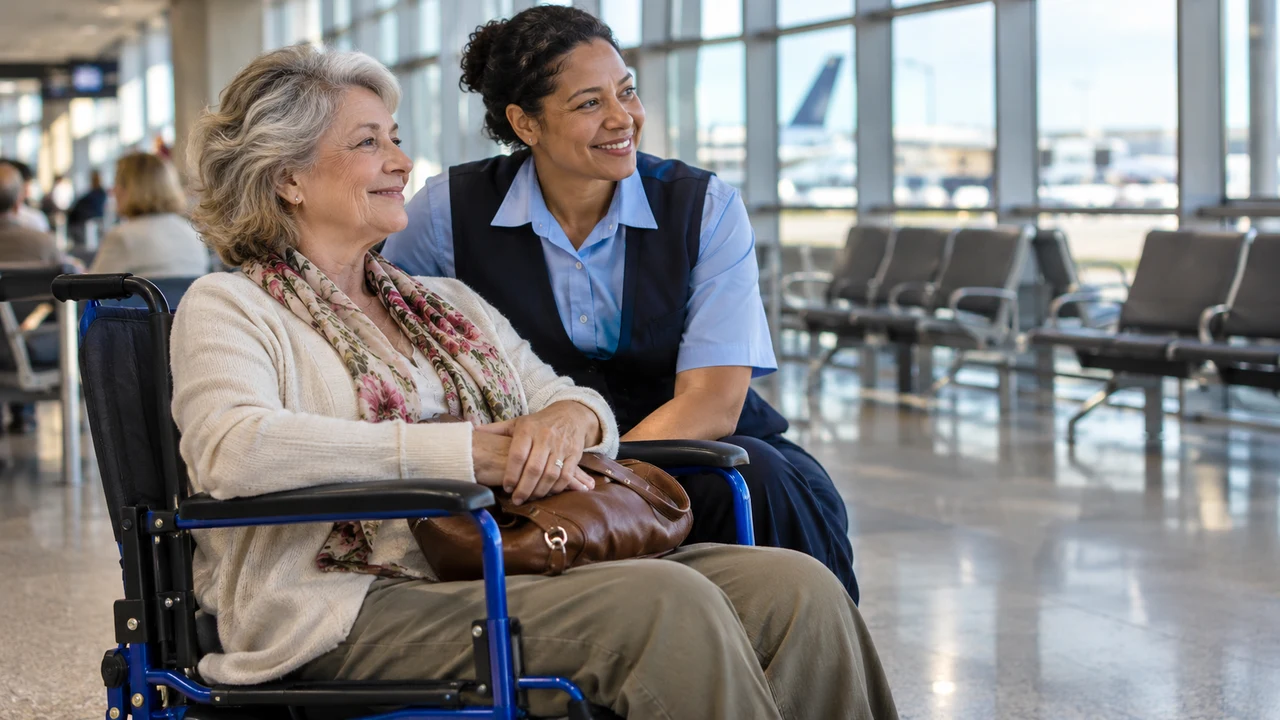
Prepare for connections and arrival before the aircraft lands
Keep the arrival plan where you can reach it without opening an overhead bag. If you are uncertain where assistance will meet you, ask the cabin crew before landing. They can help clarify the handoff; the airline should arrange the assistance itself.
Once you meet the next attendant, restate the destination and any immediate needs. Do not assume that every person in the chain has received the same details. Saying “My next flight leaves from another terminal, and I need help all the way to that gate” keeps the purpose clear.
At the final airport, distinguish baggage claim from vehicle pickup. You may need both. Confirm the location of your ride and tell the attendant before the journey ends. Keep the driver’s instructions available, but avoid letting an unrelated stranger take your phone to read them.
A worked example: one connection with limited walking
Imagine Denise, 61, who can walk around shops but finds large terminals difficult. Before booking, she compares a nonstop afternoon flight with an early itinerary requiring a connection. The nonstop costs more, but it removes an extra transfer and allows her friend to drive her to the airport.
She chooses the simpler itinerary, requests help for the terminal distances, and writes down where to report. Her small bag opens easily while seated. At arrival she tells the attendant that her friend is waiting at the agreed pickup point. These are planning choices, not a promise that the day will run without delays.
Know where to turn if assistance breaks down
If help does not arrive, start with airline staff at the nearest staffed counter or gate. Explain the immediate problem and what you need next. “My connection is approaching and I cannot walk to the other terminal” gives staff a concrete situation to address.
The U.S. Department of Transportation’s wheelchair and guided assistance guidance describes airlines’ responsibilities for passengers with disabilities, including assistance through the airport and connections. It also explains the airline Complaint Resolution Official, or CRO, who handles disability-related accommodation issues. Ask for that official when an accessibility problem remains unresolved.
Keep brief notes of the flight, location, time, and what occurred. Record facts while they are fresh, then use the airline’s official complaint channel if follow-up is needed. For a missed connection, ask about both the replacement itinerary and the assistance arrangements on that new itinerary.
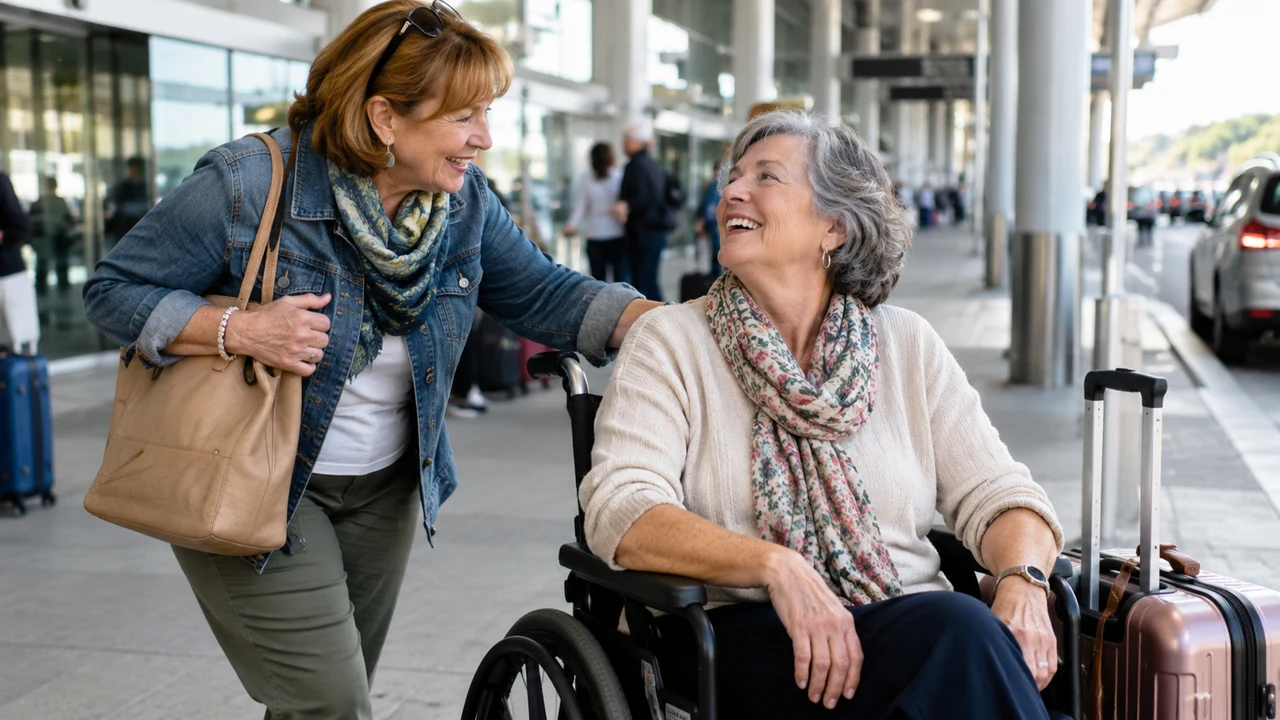
Review the plan when your itinerary changes
A flight change can alter more than the departure time. Check whether the operating airline, terminal, connection, or pickup arrangement has changed too. Contact the airline if necessary and ask it to review assistance on the revised itinerary. Update the paper note so you are not carrying instructions for a flight you no longer have.
The day before departure, charge the phone, put the current itinerary in the accessible bag, and confirm the ride to the airport. Check that a trusted person has the information needed to meet you, without sending a full set of personal documents. If an unexpected overnight stay becomes necessary, tell airline staff which accessibility needs affect the alternative arrangements.
After the trip, keep a short record of what worked: the meeting point, the bag setup, the time you needed, and any handoff that caused confusion. Use those observations when planning your next flight. Your own experience is more useful than assuming another traveler’s preferred routine will fit you.
Frequently asked questions
Can I request help if I can walk short distances?
Describe what you can manage and what creates difficulty. A person may walk short distances yet need mobility assistance across a large terminal. Ask the airline to match the service to your needs; age alone does not explain which assistance is appropriate.
Is airport wheelchair assistance the same as a paid escort?
No. Airline disability assistance and a privately purchased escort are different services. Ask the airline what it provides and what any optional service includes before paying. Do not assume that an escort package is necessary simply because you need help covering terminal distances.
Should I request assistance again for the return flight?
Ask the airline to confirm the request for every relevant flight, including the return and any connections. Recheck if flights or operating airlines change. Keep one note covering the complete itinerary so that a change to one segment does not get overlooked.
Does requesting a wheelchair guarantee a smooth connection?
No reservation can guarantee an uninterrupted travel day. Assistance requests help the airline plan, while sensible connections and clear handoffs reduce avoidable confusion. Keep your itinerary and contact information accessible so you can explain the next step when plans change.
Your next useful action is small: write one sentence describing the assistance you need, then confirm it with your operating airline. With the right information in hand, you can spend less of the day improvising and more of it enjoying where you are going.

Gui Perine
Gui Perine is the creator of Your Life in Full Bloom, a lifestyle website for women who want to live with more intention, beauty, and freedom after 50.
Through thoughtful articles on home, travel, reinvention, and everyday choices, she explores what it means to build a fuller life in a new season — one that feels calmer, more personal, and more aligned with who you are becoming.
Her work is inspired by real-life transitions, the desire for independence, and the belief that life after 50 can be a time of clarity, possibility, and renewal.