To declutter sentimental items, begin with a small collection, decide what you want to preserve, and give each object a clear next step. You can keep meaningful belongings while making your home easier to use. There is no requirement to become someone who owns only one memory box.
The difficult part is often the decision attached to the object. A chipped bowl might represent your mother, a stack of school papers might hold a child’s younger years, and a gift might remind you of someone whose taste was different from yours. Sorting these things deserves more care than clearing expired pantry items.
This guide offers a practical process for deciding what to keep, photograph, offer to someone else, or revisit. It cannot promise that guilt will disappear, but it can help you make deliberate choices instead of rushing through an emotional afternoon.
1. Choose a small collection and a clear stopping point
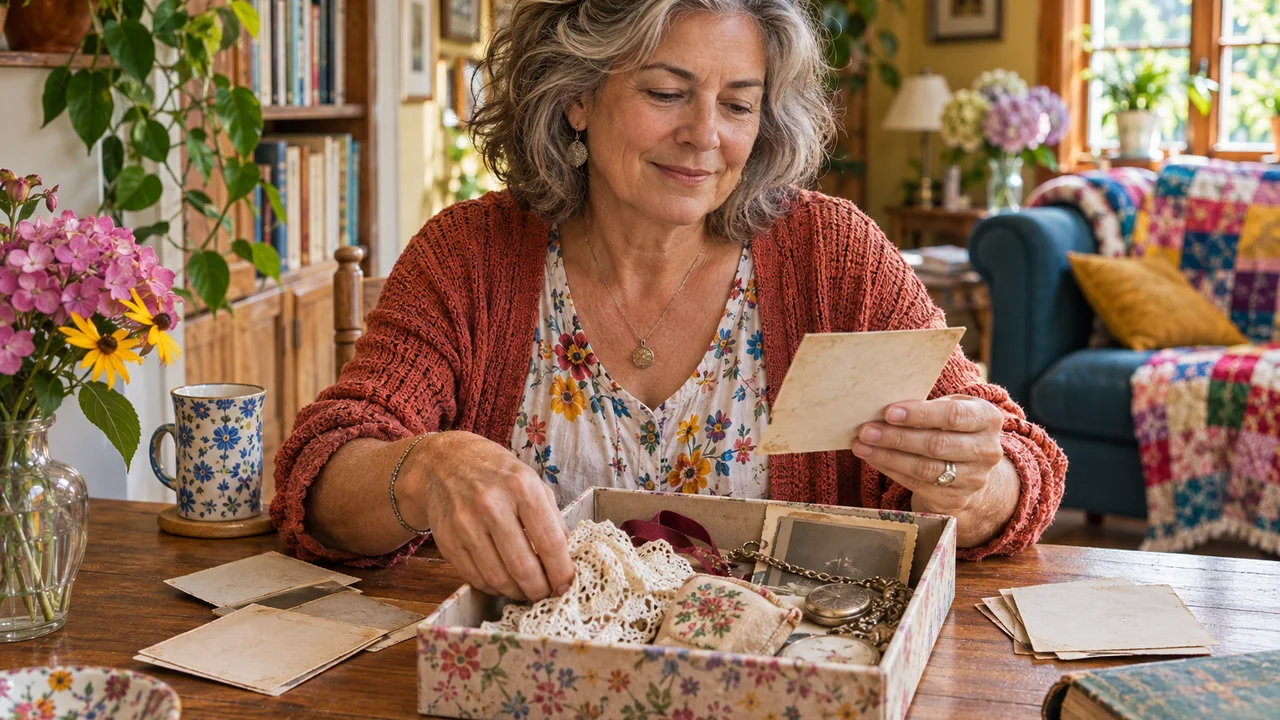
Start to declutter sentimental items with a manageable group: one envelope of cards, five travel souvenirs, or a small drawer of keepsakes. Avoid pulling every family photograph and inherited object onto the floor. A contained session is easier to finish and easier to pause.
Choose a time when you do not need to rush out afterward. Set aside a short period that feels realistic, leave a few minutes for putting things away, and stop if you become tired or distressed. If you are grieving or facing a major transition, keeping a collection unchanged for now is a legitimate decision.
Keep other people’s possessions separate. Before donating shared family belongings, check ownership and discuss the decision with the people affected. Your wish for a clearer home does not automatically give you permission to discard someone else’s property.
2. Name the memory before judging the object
Pick up one item and finish this sentence: “I connect this with…” Write a short note if that helps. You might discover that the story matters more than this particular object, or that the original itself matters deeply. Both answers are useful.
Three questions that make the decision clearer
- Would I choose to keep this if nobody expected me to?
- What would I miss: the object, its texture or handwriting, the story, or the person connected with it?
- How would I like to experience this memory now: use it, display it, read it, share it, or store it carefully?
These are prompts, not a test. A practical object can be sentimental, and something rarely used can still deserve space. You do not have to prove that every keepsake is useful.
3. Use five destinations when you declutter sentimental items
As you declutter sentimental items, give each object a provisional destination. A decision table can keep “I should do something with this” from becoming another indefinite pile.
| Destination | When it fits | Next action |
|---|---|---|
| Keep and use | The item suits your current life and can be used safely | Put it where it will actually be used |
| Keep and preserve | The original matters, but everyday use is unsuitable | Choose appropriate storage and record its story |
| Photograph or record | You value the story more than owning the object | Check the file and backup before deciding about the original |
| Offer or release | You are ready to part with it and have the right to do so | Confirm a recipient or suitable destination |
| Revisit | The decision feels premature or information is missing | Write the unresolved question and a review date |
For example, you might keep a grandmother’s recipe card in its original form, photograph an oversized school project, and use a favorite serving bowl. You are making different decisions because the objects carry different kinds of meaning.
4. Photograph the object and record the story
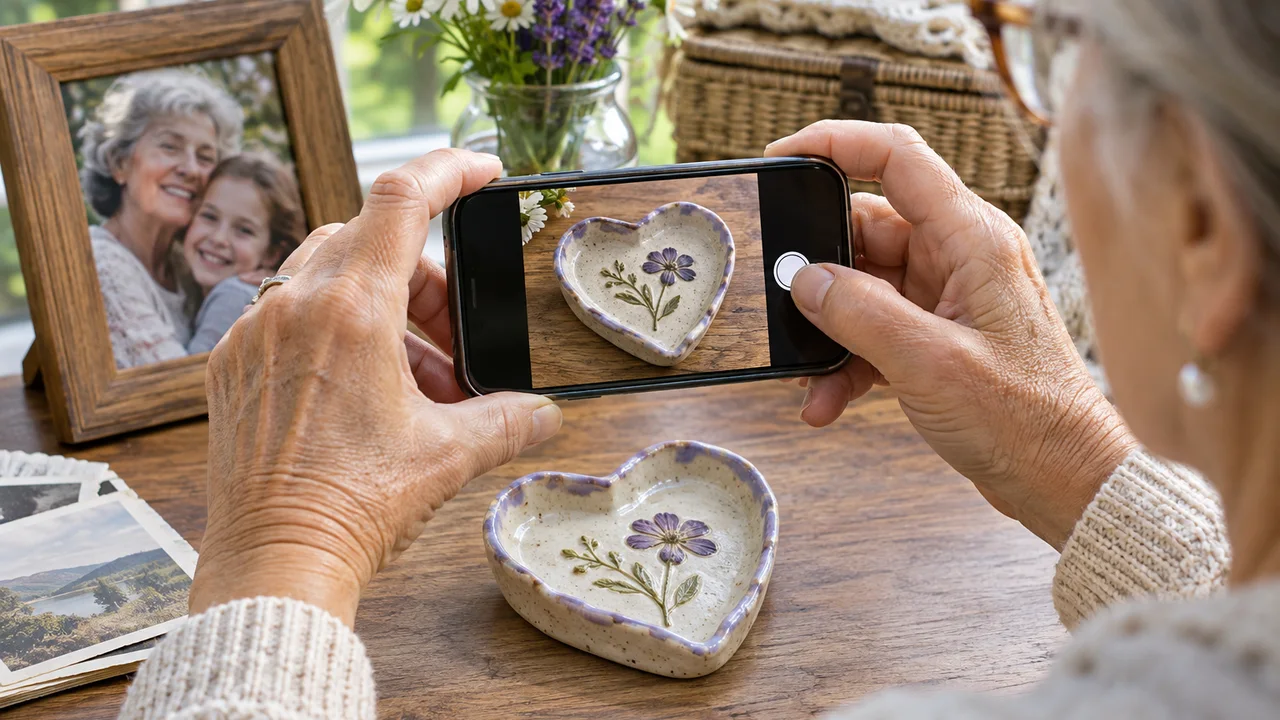
If you are considering keeping a digital memory, take a clear photograph in good light. Include a close view of details that matter: a signature, a pattern, a repair, or the maker’s mark. Record who owned it, what you know about it, and what remains uncertain.
Use a filename or note you will recognize later. “Blue bowl from Aunt June” is easier to find than an unexplained image number. For a family story, a short audio recording may capture the voice and context better than several nearly identical pictures.
Open the saved files to check that they are usable, then keep a backup separately from the device that created them. A photograph is not the same as the original and is not a substitute for legal or otherwise important original records. Decide which format actually preserves what matters before releasing anything.
For practical preservation advice, consult the Library of Congress guidance on caring for collections, especially for fragile photographs, paper, and other materials. Storage choices depend on the object; a decorative box is not automatically appropriate for long-term preservation.
5. Set a storage boundary that suits your home
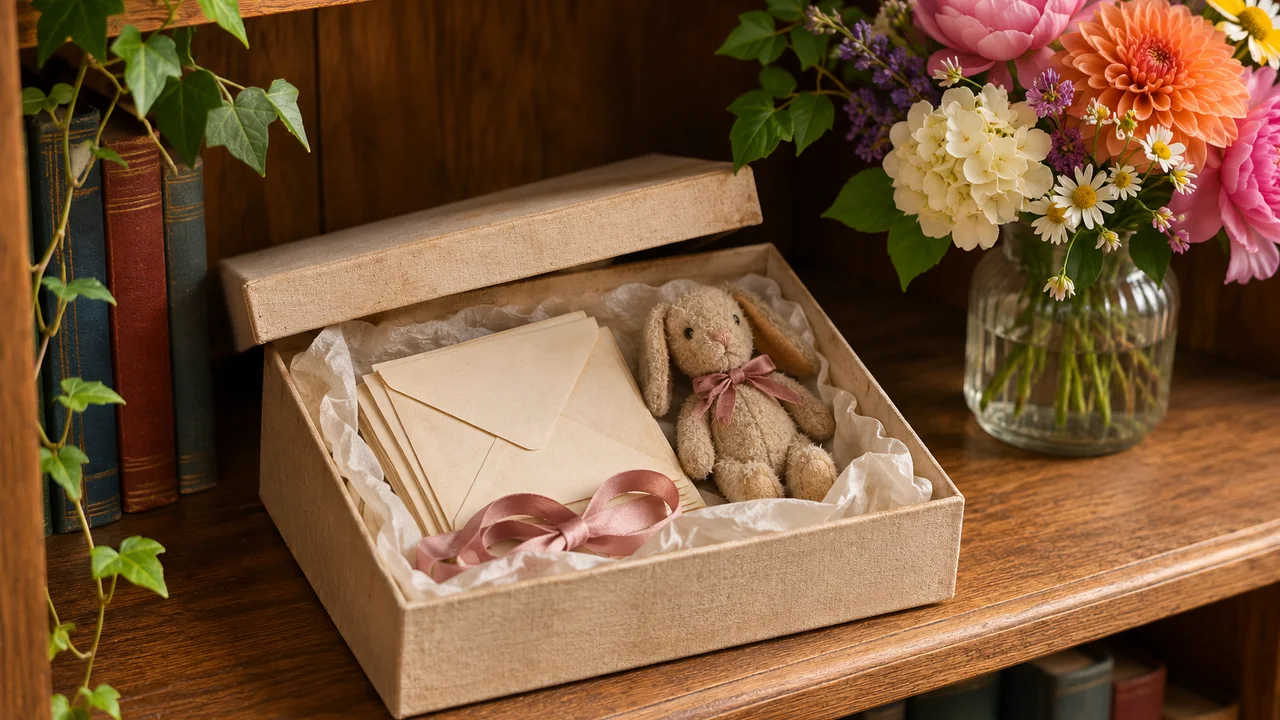
Before you declutter sentimental items, decide where your keepsakes can live comfortably. That might be one shelf, a small cabinet, or several labeled boxes. The boundary should reflect your available space and priorities, rather than a rule borrowed from someone else’s home.
Lay out the items you most want to keep before adding the uncertain ones. This makes it easier to see duplicates. Five cards with meaningful handwritten messages may represent a relationship better than every envelope ever sent, but only you can decide.
Do not force fragile objects into an overfilled container. If the collection will not fit, review the boundary and the contents together. The point is a collection you can understand and care for.
6. Offer family items without handing over guilt
Ask before assuming that an adult child, sibling, or cousin wants an item. Send a photograph and enough context to make the offer clear. Let the person decline without needing to defend their living space or affection for the family.
A simple message you can adapt
“I am sorting some family belongings and thought you might like this bowl because it belonged to Grandma. Would you like it? There is no pressure. If so, can we arrange collection or delivery by a date that works for both of us?”
Agree on transport and timing rather than leaving the item in an endless “for someone” pile. If there are questions about ownership, inheritance, or value, resolve those first. Do not treat silence as permission to dispose of someone else’s belongings.
When sorting your grown child’s possessions, ask them to make decisions about what belongs to them. You can discuss what storage you can continue to provide without deciding what their childhood should mean.
7. Find a realistic destination before filling donation bags
When you declutter sentimental items for donation, check what an organization currently accepts, its condition requirements, and how drop-off works. A donation is useful only if the recipient can use it. Confirm with a person before arriving with a large collection.
For potentially valuable objects, pause and seek suitable expertise before selling or discarding them. A sentimental association does not establish market value, and a quick online listing does not necessarily identify an antique correctly.
Separate private information from anything you release. Check pockets, drawers, frames, books, and boxes for documents or photographs you did not intend to pass on. Use appropriate local disposal or recycling routes for items that cannot be donated.
8. Give uncertain items a written question
A revisit box works best when it holds a question you can eventually answer. Examples include “Does my sister want this?”, “Can I read these letters comfortably yet?”, or “Is there a suitable way to preserve this fabric?”
Label the box with its contents, the open question, and a date to check again. The date is a reminder, not an automatic disposal deadline. When you return, decide whether anything has changed.
If the box keeps growing, reduce the size of your next sorting session. You may need information, support, or more time rather than a stricter decluttering rule.
9. Make room to enjoy what you keep
After you declutter sentimental items, return the collection to a place you can access. Label containers clearly and record any stories that only you know. Use a small display for objects that can tolerate the conditions, rotating them if you prefer.
A favorite bowl on a shelf may bring you more pleasure than the same bowl under a crowded bed. But display is optional: a private letter can remain private, and a delicate photograph may need protection rather than constant light.
If you want to continue beyond keepsakes, our guide to creating a calmer home can help you choose one everyday area to improve next. For a room affected by a family transition, see what to do with an empty nest bedroom.
A short session you can try this week
- Choose one small collection and clear a comfortable surface.
- Put aside anything that belongs to someone else or requires specialist advice.
- Select one item you definitely want to keep and record why.
- Use the five destinations for the remaining items.
- Complete one action: label a box, save a checked photograph, or ask a relative a clear question.
- Put everything away before starting another collection.
You do not need to finish a lifetime of belongings in one weekend. A session that ends with fewer unanswered questions has already done something useful.
Frequently asked questions
How do I declutter sentimental items without feeling guilty?
Start with a small group, name the memory, and choose deliberately what to keep. Photographing an object or recording its story may help when you are ready to release it. Guilt may still appear; it does not mean you have made a wrong decision or that you must rush to make one.
What sentimental items should I keep?
When you declutter sentimental items, keep the objects whose original form, story, or presence matters to you, within storage you can realistically maintain. Important records, shared belongings, and potentially valuable objects need separate consideration. There is no universal list of keepsakes everyone should discard.
Should I keep gifts I do not use?
You can appreciate the gesture without necessarily keeping every object forever. Consider whether it belongs to you outright, whether another family member has a legitimate interest, and whether you are ready to release it. You can also keep it for now while deciding.
What if my adult children do not want family heirlooms?
Accept their answer without treating it as a judgment of the relationship. You can keep the item yourself, ask another appropriate person, or explore a suitable sale or donation if you have the authority to do so. Record the story before passing it on if that feels meaningful.
Keep the meaning with less pressure
Learning to declutter sentimental items is a series of individual choices. Keep what you want to care for, preserve the stories you value, and make thoughtful plans for the things you are ready to release. The aim is a home that holds your memories without asking you to manage every object from every chapter.

Gui Perine
Gui Perine is the creator of Your Life in Full Bloom, a lifestyle website for women who want to live with more intention, beauty, and freedom after 50.
Through thoughtful articles on home, travel, reinvention, and everyday choices, she explores what it means to build a fuller life in a new season — one that feels calmer, more personal, and more aligned with who you are becoming.
Her work is inspired by real-life transitions, the desire for independence, and the belief that life after 50 can be a time of clarity, possibility, and renewal.