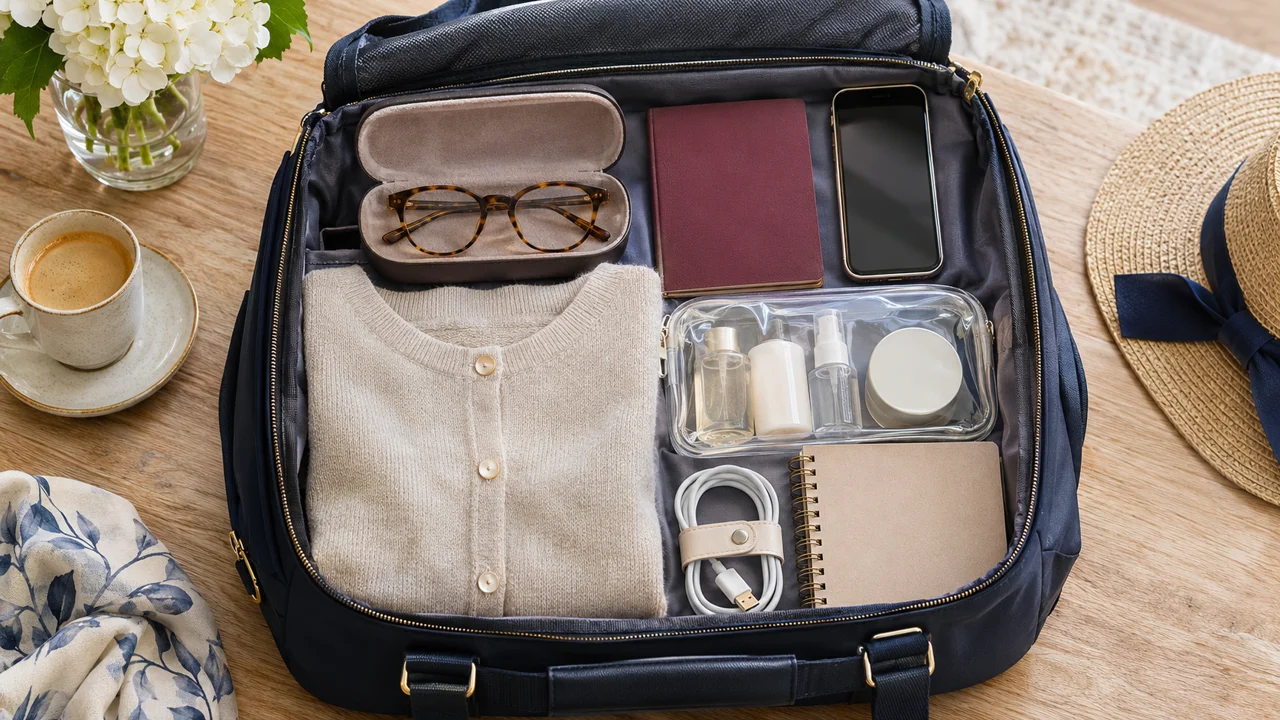
A personal item packing list should help you reach what you need without lifting your suitcase, emptying your bag in the aisle, or spending the flight searching for your glasses. Start with the essentials you cannot comfortably lose access to: identification, necessary medication, glasses, your phone, a charging cable, and a small amount of everyday comfort.
This guide is for the bag that stays near you in the cabin, whether you also bring an overhead carry-on or check a suitcase. It is especially useful when you want a manageable travel day after 50. You do not need a separate product for every possible inconvenience. You need a bag you can carry, a few clearly defined sections, and a plan for a delayed arrival.
Start with the airline allowance, not the bag label
A personal item usually means a smaller bag that fits under the seat in front of you. A carry-on commonly refers to a larger cabin bag, often stored overhead. Those terms describe baggage categories, not a universal set of dimensions. A retailer calling a tote “airline approved” does not establish that it meets your particular ticket’s rules.
Check the airline operating each flight, including a connection booked through a different airline. Read your fare’s baggage allowance and the rules for the aircraft where available. A bag that works on an outbound flight may be awkward on a smaller connecting plane. Take a screenshot of the relevant allowance before you pack so that you are working from the actual conditions.
For one concrete example, American Airlines currently lists a personal-item maximum of 18 by 14 by 8 inches and requires it to fit under the seat. That is one airline’s rule, not a recommendation to use those measurements everywhere. Recheck the airline’s current information before departure.
Measure the bag after packing
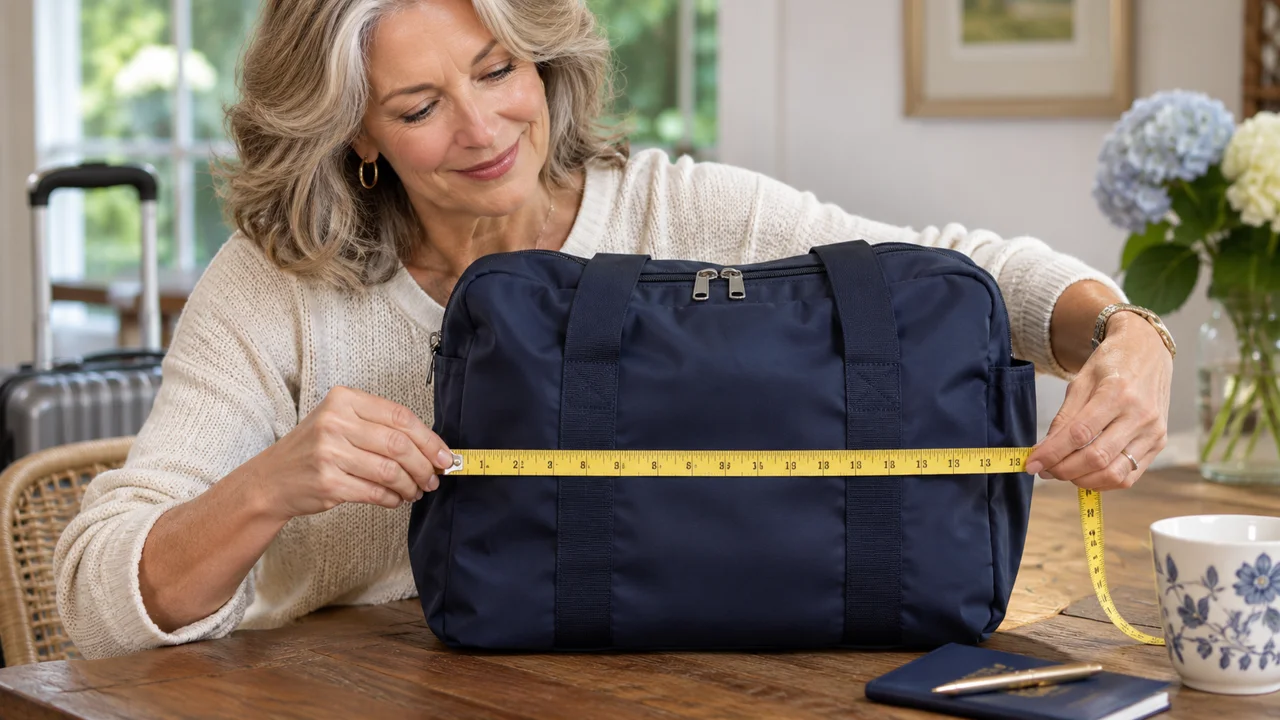
Put everything inside, close the zippers, and measure the outside at its widest points. Include protruding pockets and handles where the airline’s rules require them. A soft bag can become substantially larger when a bottle or thick sweater fills an outside pocket. Avoid relying on the empty dimensions printed on a sales page.
Then pick it up and walk around your home for several minutes. If it pulls your shoulder, interferes with your walking, or requires two hands to control, remove weight or change the carrying method. The most useful bag is one you can manage through a real terminal, not just fit into a photograph.
Your personal item packing list: the essentials
Build the bag in order of importance. Documents and essential personal items go in first; optional entertainment goes in last. This prevents a paperback, bulky pillow, or second pair of shoes from displacing something you actually need during the trip.
The following checklist is a starting point. Adjust it for your itinerary, accessibility needs, and airline requirements. A short daytime flight may need less than an overnight international journey, but the basic organization can stay the same.
Personal item packing list at a glance
- Accepted travel ID and required documents
- Wallet, necessary cards, keys, and arrival details
- Necessary medication and appropriate documentation
- Glasses and other essential personal aids
- Phone, charging cable, and compact wall charger
- Compliant power bank, if you choose to bring one
- One light layer and headphones or earplugs
- Tissues, lip balm, and a modest permitted snack
- Accessible liquids bag and basic toiletries
- Optional underwear and a lightweight top for delays
Documents and valuables
Pack your accepted travel identification, wallet, necessary travel documents, house keys, and emergency contact information. Keep jewelry and other small valuables with you rather than placing them in a bag you may need to surrender at the gate. Bring only the cards and valuable objects the trip requires.
Use a consistent zipped pocket for identification and your wallet. Before leaving a security checkpoint, café, or boarding area, check that pocket deliberately. Avoid distributing essential documents across five tiny compartments simply because the bag has them. A memorable home for each item is more useful than elaborate storage.
Keep an accessible copy of the first night’s address and arrival instructions. Download the details to your phone and consider a brief paper backup. A dead battery or unreliable airport connection should not prevent you from telling a driver where you are going.
Medication and personal aids
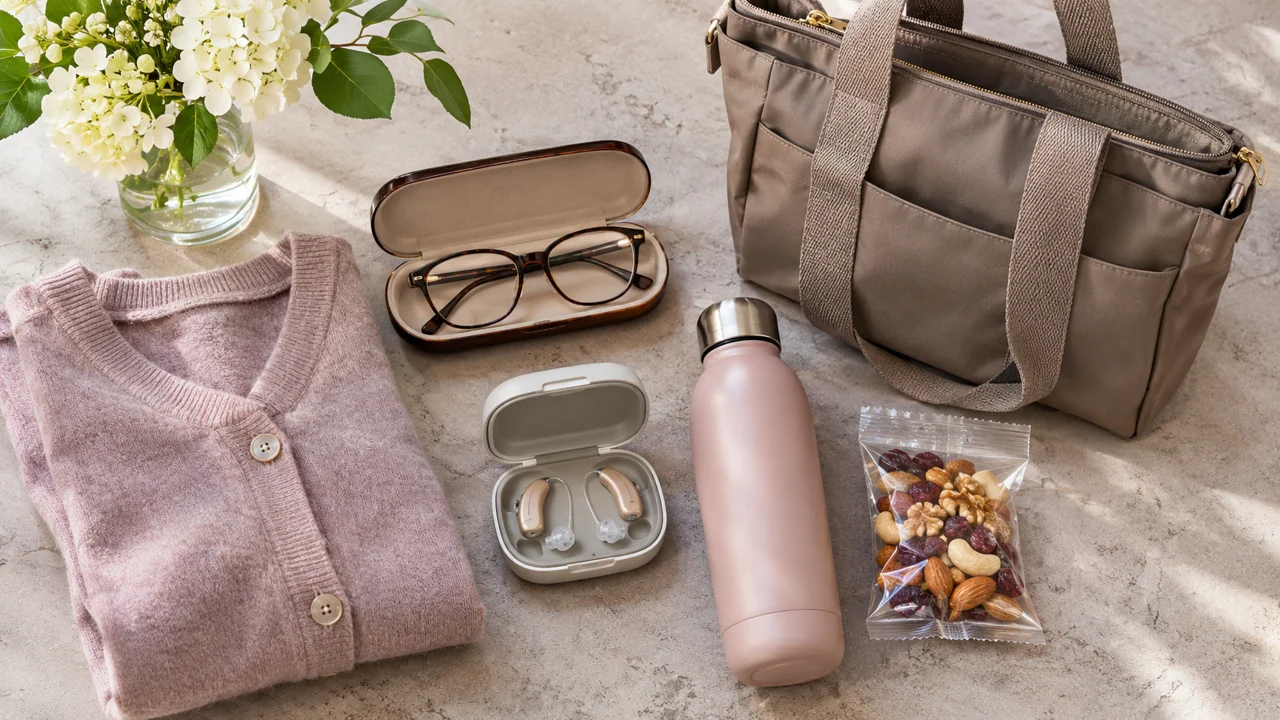
Keep necessary medication, glasses, contact-lens supplies, hearing-related essentials, and other items you rely on in the bag that stays with you. Plan quantities with your prescriber or pharmacist when appropriate, including a reasonable buffer for delays. Do not change dosing to make packing easier.
Medication rules can differ by country, particularly for controlled substances. Check the destination’s official requirements before an international trip and retain appropriate labels and documentation. Cooling requirements also need advance planning; an ordinary insulated pouch is not proof that a medicine will remain within its required temperature range.
Separate essential personal aids from your general toiletry kit. If you need reading glasses to interpret a boarding pass, keep them in a protective case in an easy pocket. Having to unpack shampoo and spare socks to find them defeats the purpose of keeping the bag nearby.
Phone, power, and connection
Bring your phone, an appropriate charging cable, a compact wall charger, and any adapter your destination requires. Download tickets, maps, booking information, and entertainment before departure. Test that important files open without an internet connection instead of assuming that a saved link will work offline.
If you carry a power bank, check its marked capacity and the airline’s rules. The FAA requires spare lithium batteries and power banks to remain in cabin baggage; remove them if another bag is checked at the gate. Protect terminals from short circuits and protect the battery from damage. Airlines may impose stricter limits or restrictions on use, so confirm with the operating carrier.
Do not pack a damaged, swollen, or recalled battery. If a device becomes hot, expands, smokes, or burns during a flight, alert the crew immediately. A charging accessory is optional; being able to identify and follow the applicable rules is essential.
Pack comfort without turning the bag into a second suitcase
Comfort is personal. A traveler who gets cold may value a light cardigan more than a travel pillow. Someone who reads easily on a phone may have no reason to carry a tablet and two books. Begin with your actual habits on previous trips rather than a shopping list.
Choose a small set: one light layer, comfortable headphones or earplugs, tissues, lip balm, and a modest snack that meets applicable rules. A reusable water bottle can be useful, but follow the departure airport’s liquid restrictions and fill it after screening where permitted. Check food import restrictions before arriving in another country.
A scarf that works as a light wrap can earn its space if you will also wear it at your destination. A large blanket that fills half the bag may be less helpful. Give multipurpose items priority, but do not expect a thin accessory to replace equipment you genuinely need.
Make a small seat-use pouch
Gather the items you expect to use during the flight into one light pouch: glasses, headphones, tissues, lip balm, and your charging cable. Keep documents and medication organized according to your own needs rather than automatically placing them in that pouch too.
At your seat, retrieve only what you need and stow everything as directed. The pouch should simplify access, not create loose items around your feet. Follow crew instructions, keep aisles clear, and do not assume you can hold a bag on your lap during takeoff or landing.
Keep liquids and screening items easy to reach
For standard U.S. screening, TSA’s published liquids rule limits ordinary carry-on liquids, gels, creams, and aerosols to containers of 3.4 ounces or 100 milliliters or less, collected in a quart-sized bag. A larger bottle with only a little product remaining is still a larger container. Check current TSA guidance before departure.
Medically necessary liquids have separate provisions and may require declaration and additional screening. Consult TSA’s information for your specific items rather than squeezing necessary supplies into an ordinary toiletry allowance. At airports outside the United States, consult the relevant security authority; procedures and allowances can differ.
Keep the liquids bag and any items you may need to remove near the top. Follow the instructions given at your actual screening lane because equipment and procedures vary. An organized bag makes either process easier without requiring you to predict exactly what an officer will ask.
Choose toiletries by the next stage of the journey. Toothbrush, small toothpaste, and a few genuinely necessary items may be enough for an overnight flight. Leave your complete bathroom routine in other luggage unless you are traveling with this bag alone.
Prepare for one delayed-bag day
Your personal item should let you manage the first stretch of a disruption without turning it into a full emergency kit. Think about the period between landing and obtaining replacement necessities. Identification, medication, phone access, a payment method, and arrival details matter more than a perfectly coordinated backup outfit.
If space allows, include a clean change of underwear and a lightweight top. Pack them in a small soft pouch so they remain easy to identify. Choose a piece you would actually wear at the destination rather than an old garment included only because it folds small.
For a trip built around an event, decide which single item would be hardest to replace. It might be prescription eyewear or a particular document rather than formal clothing. Keep that item accessible if permitted, and place replaceable extras elsewhere. This is prioritization, not an attempt to anticipate every possible problem.
Organize the bag into three useful zones
You do not need an expensive organizer insert. Three simple zones are enough: an access pocket for documents, a small essentials pouch for the flight, and a main section for your layer and backup clothing. Keep heavier objects positioned so they do not drag the bag outward or press against you.
Use pouches that are easy to distinguish by color, texture, or shape. Three identical black pouches may look tidy but require repeated opening. A slightly more obvious system is often easier when you are tired, the lighting is poor, or a line is moving.
Leave some space unfilled. You will want somewhere for a cardigan after the cabin warms up or for an item you temporarily removed at screening. If the bag only closes after a careful ten-minute packing sequence, it will be frustrating during the travel day.
Run a seated-access test
Place the packed bag on the floor beside a chair at home. While seated, try retrieving your glasses, phone cable, and document pouch. Notice whether the zipper opens toward you and whether an object at the bottom requires removing everything else.
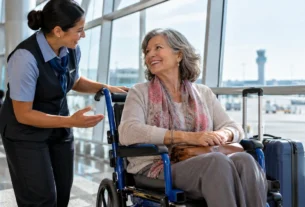
Adjust the layout before departure. This test does not recreate an aircraft or determine whether the bag meets its rules, but it reveals practical problems. If bending is difficult, plan a lighter, simpler arrangement and request appropriate assistance rather than relying on repeated floor-level searches.
Adapt the list to the trip you are actually taking
For a short domestic flight with a checked suitcase, prioritize the access pouch, personal essentials, and a minimal delay kit. For an overnight international flight, give more space to a light layer, basic hygiene supplies, and downloaded arrival information. Neither version requires every accessory marketed to travelers.
If the personal item is your only luggage, the problem changes. Clothing and toiletries must fit the same limited space, and a strict fare may count a separate purse as another item. Plan room to place it inside when required. Check whether laundry access and repeated outfits make the trip realistic.
For a cultural city break, comfortable walking plans and a manageable arrival day are as useful as careful packing. A bag cannot compensate for an itinerary that requires rushing across town while exhausted. Leave time between arrival, check-in, and your first reservation.
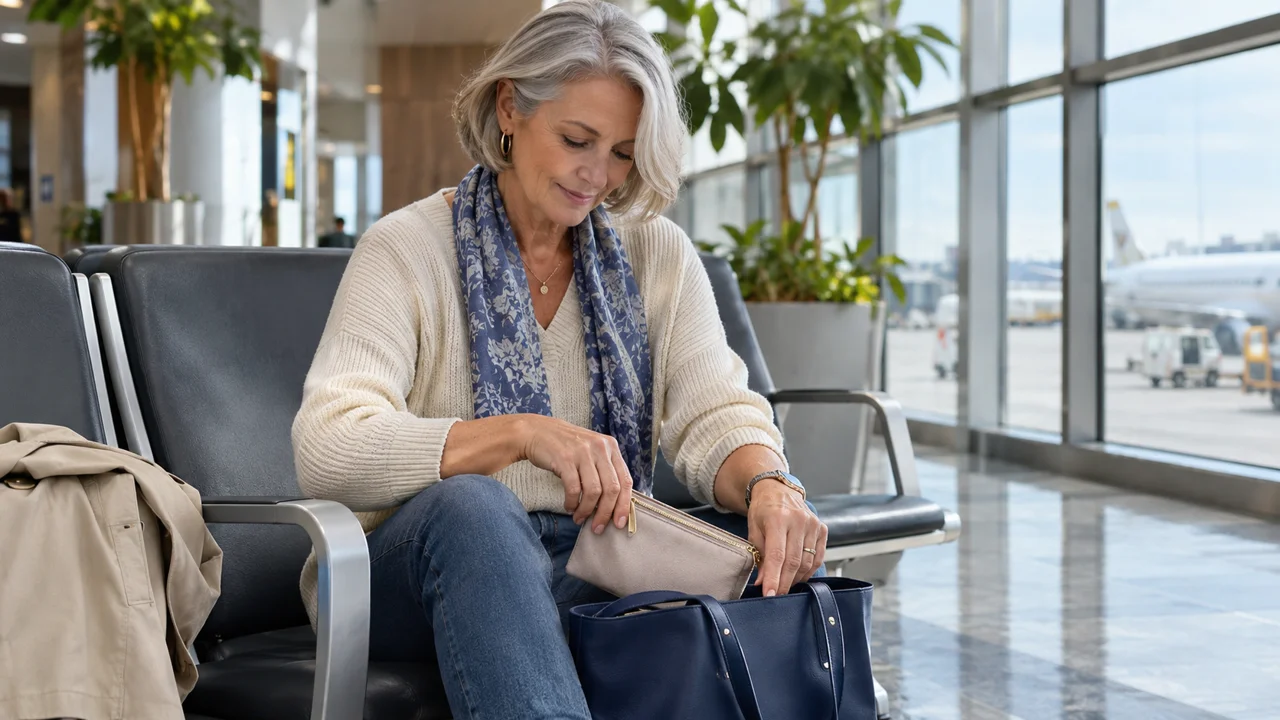
Avoid the small mistakes that make a bag feel heavy
Start by removing duplicate chargers, several books, full-size cosmetics, loose coins, and “just in case” items you have not used on recent trips. Check the pockets of your everyday handbag before moving its contents into the travel bag; old receipts and unrelated keys add clutter without helping the journey.
Be selective with rigid organizers. Their empty weight and fixed compartments can consume much of a small bag. A simple zip pouch may do the same job with less bulk. Equally, do not sacrifice a protective case for glasses or essential equipment merely to shave a little weight.
Finally, repack after your last errand. Adding a purchase at the airport can change the bag’s size and leave important items buried. Keep the access system intact throughout the day instead of treating the initial packing as the only moment that matters.
For the rest of the itinerary, use our guide to hotel room accessibility questions to check the details that matter before booking. Our tips for eating alone while traveling can make the first meal easier, and our Amtrak roomette versus bedroom comparison helps if a rail journey follows your flight.
Frequently asked questions
What belongs in a personal item rather than an overhead carry-on?
Prioritize identification, necessary medication and personal aids, valuables, your phone, and things you need during the flight. If an overhead bag must be checked, remove cabin-only restricted items such as spare lithium batteries. Confirm the carrier’s current requirements.
Can a purse count as a personal item?
Often, yes, but the fare and operating airline determine the allowance. If you bring a purse plus another underseat bag, they may count as two items. Check before departure and leave space to combine them when required.
Should I pack an entire change of clothes?
Only if it fits without crowding out higher-priority essentials. Underwear and a light top may be a more practical delay kit than a full second outfit. A personal-item-only trip needs a separate clothing plan based on its length and conditions.
Is there one personal-item size that works on every airline?
No universal dimension guarantees acceptance. Airlines, fares, and aircraft can differ. Measure the packed bag, read each operating carrier’s current allowance, and check any additional itinerary restrictions.
Before your next trip, set the packed bag by a chair and do one final access check. When the essentials have obvious homes and the weight feels manageable, stop adding things. The aim is to begin the journey with what you need close at hand and enough room to move comfortably.

Gui Perine
Gui Perine is the creator of Your Life in Full Bloom, a lifestyle website for women who want to live with more intention, beauty, and freedom after 50.
Through thoughtful articles on home, travel, reinvention, and everyday choices, she explores what it means to build a fuller life in a new season — one that feels calmer, more personal, and more aligned with who you are becoming.
Her work is inspired by real-life transitions, the desire for independence, and the belief that life after 50 can be a time of clarity, possibility, and renewal.