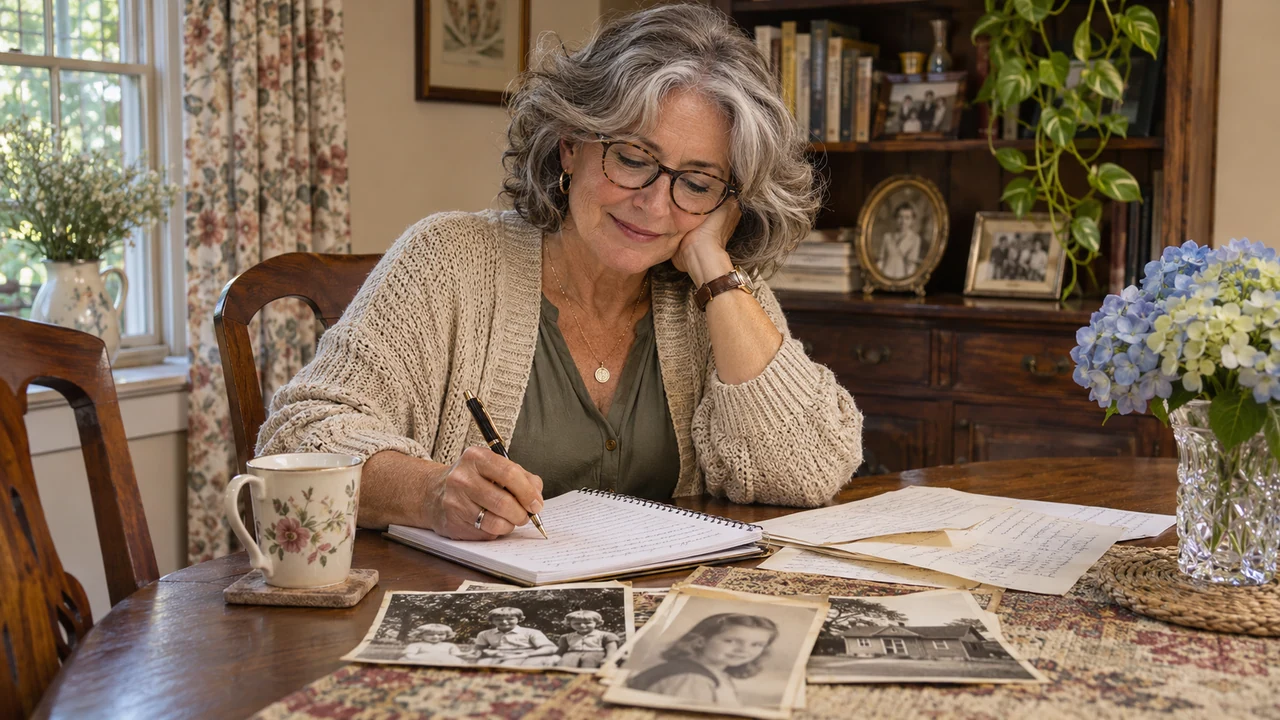
If you’re wondering how to write a memoir for your family, start with five memories and one person you want to read them. Picture that person asking what it felt like to take your first job, leave the town you grew up in, or make a decision the family still talks about. The answers are the beginning of a book small enough to finish and specific enough to give away.
This six-week plan leads to a private booklet or PDF. You’ll get a first story onto the page in the second week and spend the remaining time writing, checking, and sharing. The schedule fits two short sessions a week, although you can spread the work out. If a story calls for more time, swap it for one you can tell comfortably now. You can return to the harder one in a second collection.
Week 1: Decide Who Will Read It and Choose Five Stories
Write a one-sentence note to your future reader. A workable version might be, “For my grandchildren, so you know what our family’s Sundays were like before anyone had a car.” Another might be, “For my sister’s children, so you can hear about the years she and I ran the shop.” Picture your reader in an ordinary setting, turning a page at the kitchen table. What would that person already know? Which detail would need explaining?
A family memoir can use selected scenes from your life. A family history usually tries to document a wider set of relatives or events. You can borrow a little from both, but keep your first booklet anchored in events you witnessed or clearly attribute to someone who did. A blank spot in the timeline can stay blank. Pick events that make sense together, such as five lessons you learned at work, five addresses that changed you, or five recipes you can connect to specific people and moments.
Use objects as an index to your memory
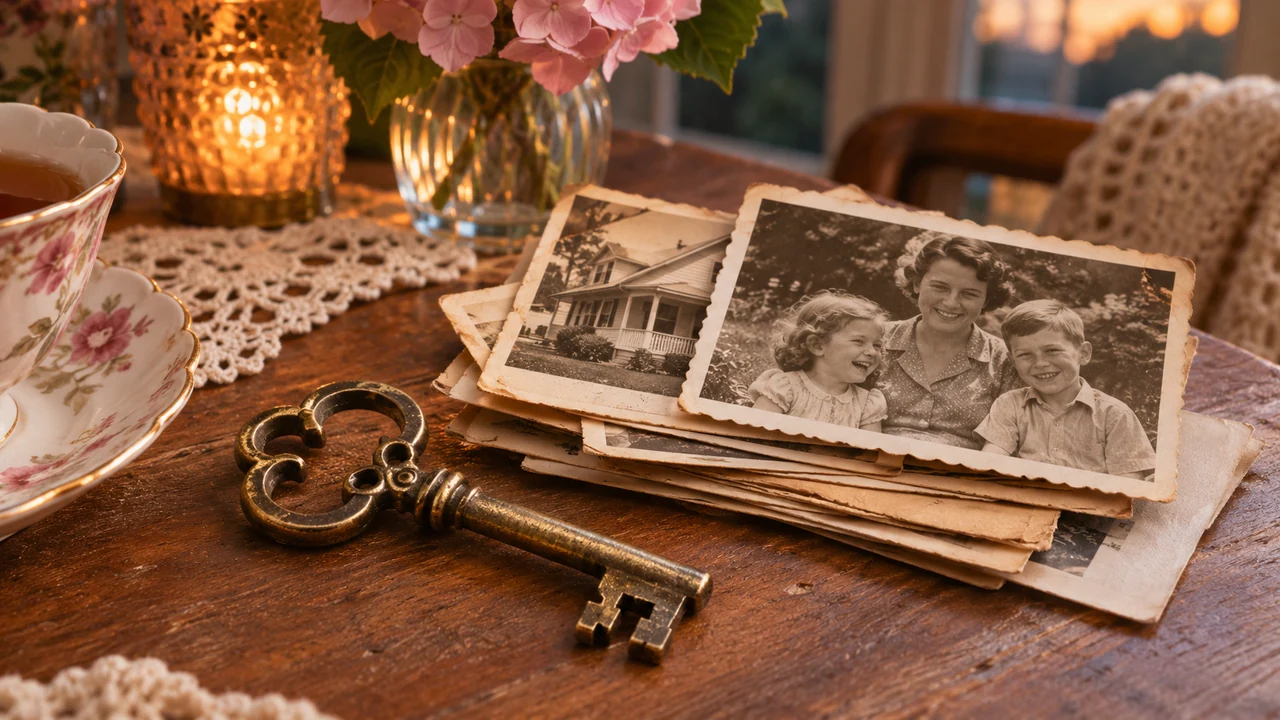
Choose one folder of photos, a drawer, or a single box. Take out three things and set the rest aside. For each object, write who used it, when you last saw it in use, and what you would tell a child who couldn’t identify it. A house key might lead straight to the afternoon you moved into your first apartment with the radio and the dishes in the same box. If you get stuck listing objects, try one of these self-reflection journal prompts to get from an object to a decision or a scene.
Add a sentence about what someone did. “My father had a blue work shirt” tells you what he wore. “My father ironed his blue work shirt every Sunday while we laid out the week’s bus fare” gives you an action and a room to put it in. Go through your memories and put a star beside the five with a clear moment you can describe. Leave room beside each title for a date, a photo, or the name of someone you could ask.
Week 2: Write One Scene From Beginning to End
Choose the easiest story, even if it happens late in the collection. Write the moment something changed as a plain sentence. For a first job story it might be, “At closing time, June handed me the shop keys and told me I could open the next day.” Begin a little before that moment. Show what the narrator wanted, what happened, and how it affected the next hour or the next decision. Readers can follow the story when they can tell where it happens and what it costs the person to act.
Try writing for 20 minutes without stopping to research the year or fix a sentence. When memory runs out, put a brief note in your own draft, such as “check the street name,” and move on. At the end, underline one detail only you or another person in the room would know. It could be the sound of the lock sticking or the paper bag the keys came in. Keep that detail when you revise. It does more work than a paragraph of general background.
Try a short before-and-after exercise
Here is an invented example. A first pass might read, “I was nervous on my first day working at the bakery, but eventually I learned the job.” The scene version could start, “The bell rang before I had untied my coat. A man asked for the usual. June reached behind me for the rye, then quietly pointed to the small brown bag instead of the large one. By Saturday I had it waiting when he came in.” The second version leaves enough room for readers to notice how the narrator learned.
When you’ve written a scene, add a sentence of reflection from your perspective today. You might realize that June was teaching you how to pay attention to people, an idea that only became clear later. Keep both voices when they add something: the person who was there can show what it felt like, and the person telling the story now can explain why she still remembers it. Read the paragraph aloud and keep the words you would naturally say.
Weeks 3 and 4: Build the Rest of the Collection
Set up a page for each story with a working title and its central moment at the top. Use the first session each week for a rough draft and the second for another story. If you have 15 minutes rather than half an hour, write until something happens and return to that line next time. A collection of five scenes can hang together even when the individual stories vary in length. Spend more space on the event with more moving parts, and let a small memory stay small.
This is also the point to choose a spot in your week you can defend. Suppose the house has grown quieter since the children left, but your evenings still get taken over by calls, appointments, and chores. Try one standing session before lunch and a second after an existing errand. The guide to navigating an empty nest after 50 offers ways to give new activities room in a changed routine. If you want another creative project when the booklet is done, keep the same time slot for one of these hobbies to start at home.
Invite one relative to remember with you
Ask for a short conversation with someone who remembers an event you’re writing about. Tell them whom you plan to share it with. Ask before recording and give them the option to talk without being quoted. Start with one object or question. “What do you remember about the bakery when we first opened?” is more likely to get you an account in their words than “You hated the morning shift, didn’t you?” The Library of Congress family story activity offers a simple way to prepare questions and gather memories.
Take notes on what you saw yourself, what they told you, and what you’ve located in a document. A cousin’s recollection of a party may fill a gap, but write down whose memory it is. If you disagree about whether your grandmother arrived before or after the cake was cut, you can say which part you clearly trust your memory on and leave out the rest. A reader may enjoy the difference if it sheds light on the family. They will have a harder time trusting the booklet if a shaky memory appears as a precise fact.
Week 5: Verify the Details and Protect People’s Privacy
Start by checking the things a relative could easily look up. Read names against invitations or photo captions, compare approximate dates with an address book or school record, and make a note about the source. If you remember the year only because it was the summer before school started, say that. Mark any dialogue that you reconstructed as approximate or paraphrase the conversation. Save the memorable line for a case where you wrote it down at the time or where it’s clear you are quoting your recollection.
Read a second time for personal information, especially when a story involves illness, a conflict, or a decision that belongs partly to someone else. Ask what a family reader needs to understand what happened to you. Keep the specific detail that does that work. Consider removing names or leaving a sensitive scene in a private copy if sharing would reveal someone else’s story before they’re ready. Ask permission before adding someone else’s letter, recording, or photograph to a version you plan to distribute.
Give a trusted reader a focused assignment
Choose one person willing to read for clarity. Give them two questions: Where did you get confused about who or when? Which moment would you like to hear a little more about? If you ask them to tell you everything that could improve, you may get writing advice when you need a check on the family relationships. You can use different readers for different stories if the material is sensitive or if relatives remember different periods.
Read the collection straight through after you make those edits. Put the story that needs the least background near the front. If two scenes use the same setup, keep it in the first and give the reader a shorter reminder in the second. Finish with a scene that gives the reader a sense of what carried forward into your life. A handwritten note after the last story can say whom you hope will add their own memories one day.
Week 6: Make a Copy You Can Hand to Someone
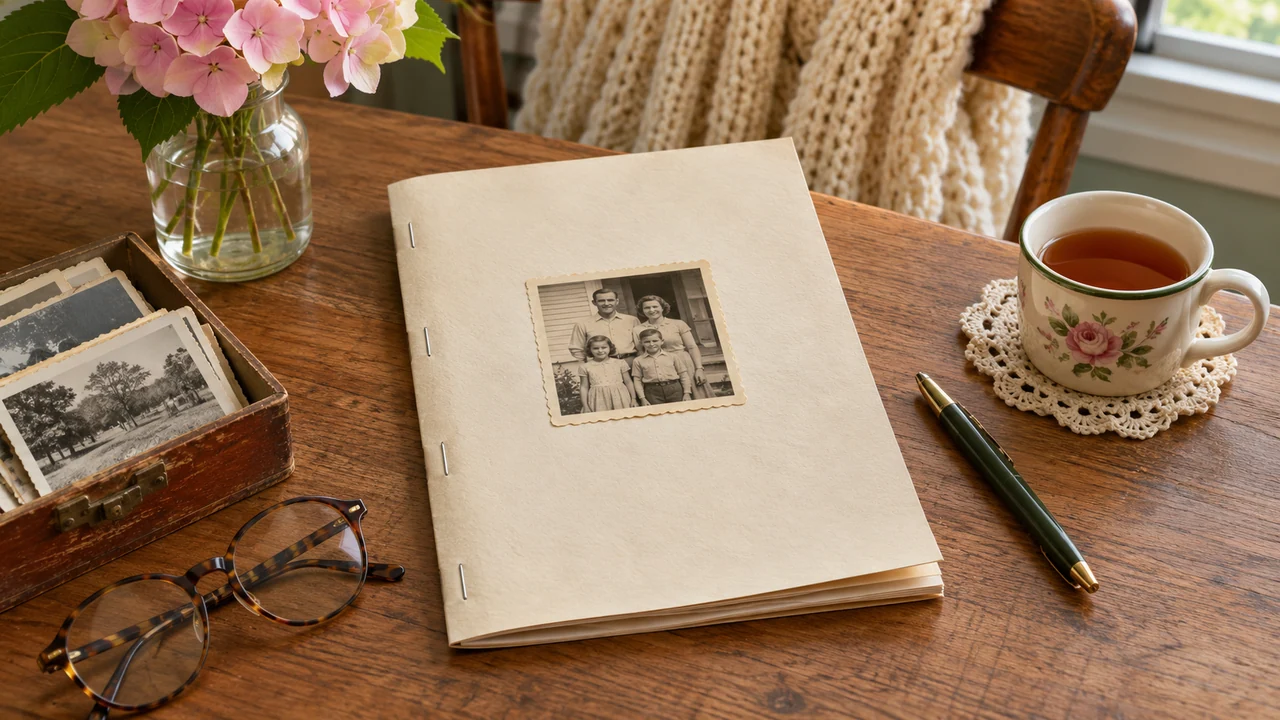
Open an ordinary document and place each story under its own heading. Add a title, your name, the year you assembled the collection, and a brief note to your reader. Set the type large enough to read on paper and check it in natural light. If you have five photos, try starting with two. Caption them with who, where, and when, including any uncertainty. On a printed proof, check that a caption is on the same page as its picture and that a new story starts where you intended it to start.
Export a PDF for relatives who want a copy on a device. Keep the editable file and a backup separately. When sending a copy, tell recipients whether they may forward or post it. If the family wants an oral version, record yourself reading one finished story before you commit to recording the rest. Leave a pause between scenes so a listener can follow along. The StoryCorps interview guide can help if you decide to make a separate conversation with a relative.
Keep the next edition easy to make
Keep a short notes page for dates you confirm later, memories relatives send back, and corrections to photo captions. Include a version date, even if the document stays in your family. When you revise, you’ll know which copy a relative is looking at. Start a second collection if someone gives you a new thread worth following. A ten-minute phone conversation about the corner store might lead to a whole set of stories about the neighborhood, with your finished first booklet safely in their hands.
How to Write a Memoir for Your Family: Common Questions
A family booklet can take several forms. Decide how much you can write, which details you can verify, and how your readers will want to receive it.
How long should a family memoir be?
Start with a size you can finish and someone can read in one or two sittings. Five stories of 500 words each would give you about 2,500 words before captions and the opening note. A single story with a well-captioned photo also makes a complete first installment. Add length when the events need more room to make sense.
What if I have no photos or documents?
Start with a scene you remember well and be honest about approximate dates and places. A hand-drawn room layout or a short description of a familiar object can help a reader picture the scene. Ask a relative a focused question if knowing the answer would clarify the story. You can leave the remainder open.
Can I speak my stories instead of typing them?
Yes. Make a short recording about one moment, then turn it into a rough transcript and check names and details. Read the result aloud to keep your natural cadence. If you share the recording itself, label the file with a title and date and send a written summary so relatives can find the story again.
What if relatives disagree with my version?
Distinguish what you saw from what you heard later. Ask about the specific point they remember differently and note which perspective each detail comes from. If the disagreement touches a private matter, discuss what each of you is comfortable sharing and consider leaving the detail out of the family copy.
How do you write a family memoir if you have only an hour this week?
Pick one photo or address. Write where you were, who was there, and what changed in the time you’re describing. Spend the last ten minutes reading aloud and writing down what you would like to check later. Save the file with a specific name you’ll recognize when you return.
The scene you finish first can stand on its own. Give it a title, put your name on it, and date it. When someone asks what happened the next day, you’ll have a natural place to start again.

Gui Perine
Gui Perine is the creator of Your Life in Full Bloom, a lifestyle website for women who want to live with more intention, beauty, and freedom after 50.
Through thoughtful articles on home, travel, reinvention, and everyday choices, she explores what it means to build a fuller life in a new season — one that feels calmer, more personal, and more aligned with who you are becoming.
Her work is inspired by real-life transitions, the desire for independence, and the belief that life after 50 can be a time of clarity, possibility, and renewal.